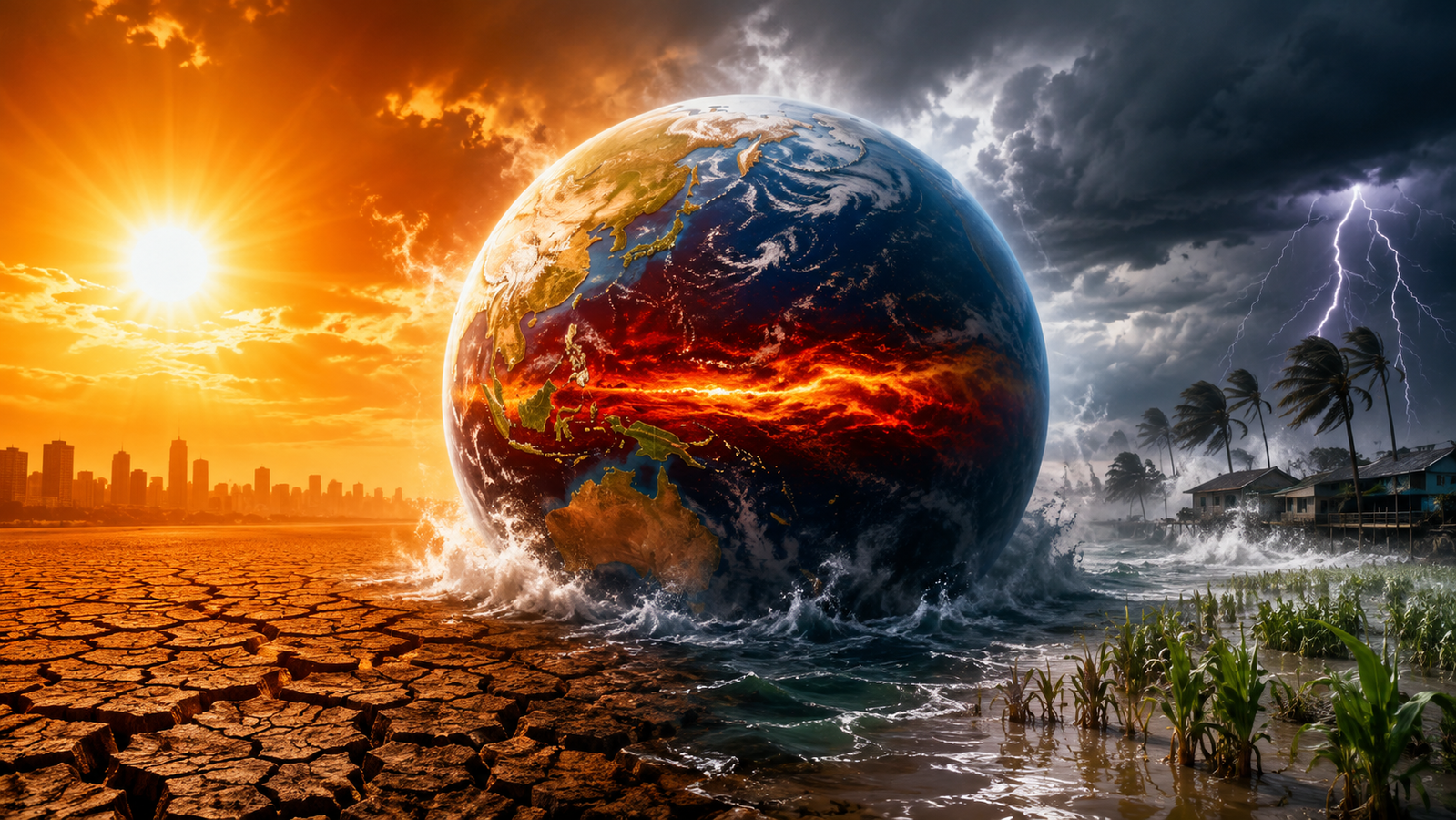
A powerful El Niño event is developing in the tropical Pacific Ocean, prompting scientists to warn that 2027 could become the hottest year ever recorded. The United States National Oceanic and Atmospheric Administration (NOAA) confirmed that El Niño conditions have now emerged and may strengthen significantly in the coming months.
As per a report by The Guardian, scientists have already begun referring to the phenomenon as a "Super El Niño," with some even calling it "Godzilla" El Niño because of its expected intensity. United Nations Secretary-General António Guterres has described the development as an "urgent climate warning."
What is El Niño?
El Niño is a naturally occurring climate pattern marked by unusually warm sea surface temperatures in the equatorial Pacific Ocean. The phenomenon can disrupt global weather systems and often weakens monsoon rainfall in several regions.
Also Read | WHO warns extreme heat killed over 200,000 people in Europe in four years, issues safety guidelines
According to NOAA's latest outlook, there is a 63 per cent chance that the current El Niño could strengthen further by late 2026 and become one of the strongest events recorded since 1950. It follows the end of La Niña, its cooler counterpart, earlier this year.
Why are scientists watching 2027 closely?
Climate researchers believe the warming influence of El Niño, combined with already elevated global temperatures, could push 2027 into record territory. The World Meteorological Organisation (WMO) has also pointed to unusually warm Pacific Ocean waters as a key driver behind the event.
Moderate to strong El Niño conditions are often associated with heatwaves, shifting rainfall patterns, droughts and pressure on food and water resources. Some experts have also warned about potential disruptions to global food supplies as major crops such as rice and maize are vulnerable to prolonged dry conditions.
Global impact will differ by region
NOAA National Weather Service Director Ken Graham stressed that the effects of El Niño are never identical."Every El Nino is not the same; each one is unique with its own imprint on our weather."
"Advanced monitoring and an improved understanding of El Niño patterns allow the NWS to better predict and better prepare the public and our core partners for what is to come”, he further explained.
Also Read | El Nino officially declared: Will India’s monsoon, crops and water supply take a hit?
While some regions could face floods and intense rainfall, others may experience drought and extreme heat. Parts of the US may see wetter winters, while countries such as Australia could face heightened risks of droughts, heatwaves and wildfires.
What it could mean for India
For India, the biggest concern remains heat and rainfall variability. Scientists say strong El Niño events have often coincided with weaker monsoons and severe drought years, although the relationship is not absolute and several climate factors influence rainfall patterns.
During the last Super El Niño in 2015-16, India received only 86 per cent of its long-period average monsoon rainfall, highlighting the potential risks if a similarly powerful event unfolds again.