The Union Budget is a significant day for the markets, businesses and households who follow tax alterations, spending initiatives and economic indicators. The Budget provides direction to the government of the economy for the upcoming year, including outlining targets to promote economic growth, assist the public and manage budgetary resources.
Historically, the Union Budget was associated with bulky files and printed documents. On the day of the Budget presentation, papers were distributed throughout the Parliament and detailed printed copies were available in vast amounts. However, this tradition has now changed.
The evolution of Budget
The transition from a colonial-era briefcase through a distinctly 'Indian Bahi Khata' to a digital tablet is indicative of the shift towards India becoming a self-reliant country.
Also Read | Here are some lesser-known facts we bet you didn't know about the Union Budget
For many years, the Indian Finance ministers presented their Union Budgets while carrying a briefcase to the Parliament. The tradition of carrying a leather bag started with the first Finance minister (1947) RK Shanmukham Chetty who adopted the British tradition of carrying a leather bag. For more than 70 years, the briefcase was the visual identification for the documents of the Union Budget as captured in innumerable news reports.
Briefcase replaced with 'Bahi Khata'
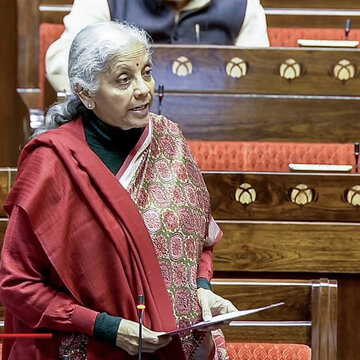
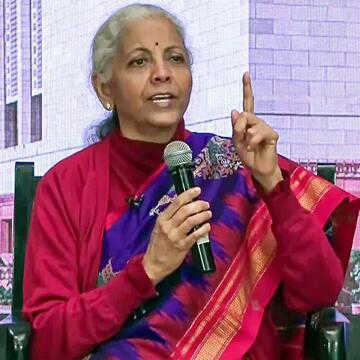
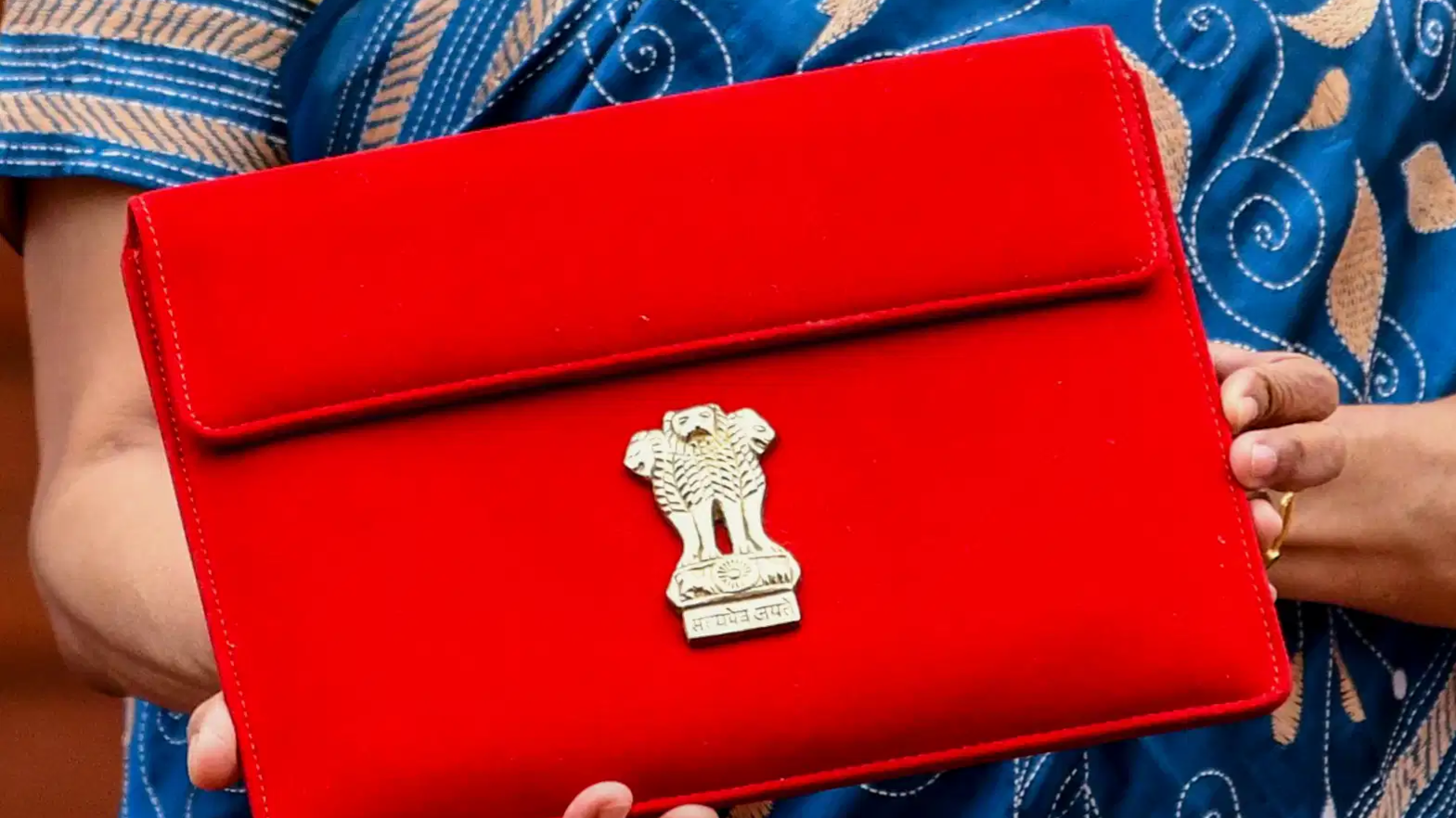
In 2019, Finance minister Nirmala Sitharaman made a significant change to this long-standing practice by using a red "bahi khata" in place of the traditional briefcase. Historically, business owners in India have used a 'bahi khata' as a ledger for their bookkeeping.
According to the Finance minister, this change also made the 'bahi khata' "very Indian" and "easier" to carry than the old briefcase.
The clearest indication of modernisation came in 2021 when Sitharaman used electronic media for the first time for the Budget following COVID-19. This was the first time that she used an electronic tablet to present her proposal, and the tablet was said to have been manufactured in India.
Tablet enters Parliament
As part of the recent custom, the tablet was carried inside a red pouch that was meant to resemble the 'bahi khata'.
For the last 40 years, the Union Budget documents have been created using a dedicated print shop located in the basement of the Ministry of Finance's building on North Block, New Delhi.
Since 2020, the majority of the Union Budget documents have been created electronically with only a small number printed out on paper.
Also Read | Is the stock market open on Budget Day 2026? Here's what we know about NSE, BSE operations on Feb 1
As a result of moving towards electronic creation, there has been a practical effect on the confidentiality requirement. The "lock-down period" (the period of time when the Union Budget cannot be disclosed) has decreased from as long as two weeks before its scheduled release to just five days.
Why was digital shift necessitated?
The main reason for the shift to a paperless Budget process was the COVID-19 pandemic, which created challenges for physically handling documents. However, the decision to move away from paper was based on more than just health concerns. Every year, a lot of money, time and materials were required to print all of the Budget papers, so it made sense for the government to digitise the Budget process as much as possible, for the sake of being faster, cheaper and more sustainable.
The shift to a paper-free Budget aligns with the government's commitment to the digital governance initiative by providing access to information online and improving the ability of citizens to obtain access.