Over the last eight decades, India's Union Government Budgets have demonstrated how the economy and aspirations of the nation have changed. The 2026–27 Union Budget, to be delivered on February 1, will be another first and mark multiple milestone events in this long tradition.
With only one day left before the presentation of the annual Budget, this Sunday (February 1), the government has prepared for the historic occurrence of delivering the financial report.
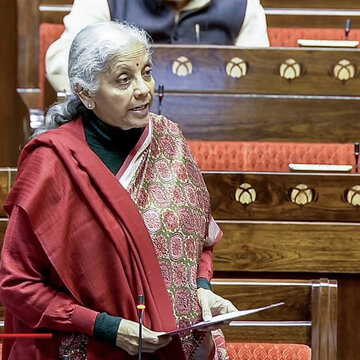
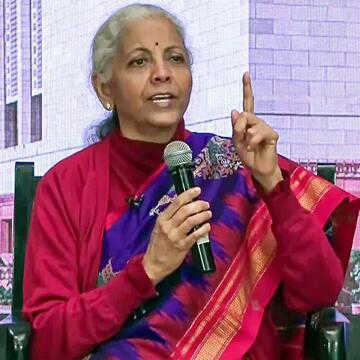
With this, the 2026 financial statement will be Finance Minister Nirmala Sitharaman's ninth consecutive Union Budget to India. She will also make history by being the first Finance minister to deliver an annual Budget on a Sunday.
Also Read | Union Budget 2026: Five key railway reforms on the cards
As India is the fastest growing economy in the world, let's look at the timeline of the Indian economy and see how it has changed over time:
Mahalanobis and Planned economy (1953)
India's five-year plan for strengthening its economy started after gaining Independence. After its first five-year plan focused on agriculture, it transitioned to a second five-year plan based on the Mahalanobis Model, named after Prasanta Chandra Mahalanobis, which advocated capital goods development through investments in heavy industries providing job opportunities. As a result, industrial companies such as BHEL, BEL, SAIL were established.
Green Revolution (1965)
Since its inception, agriculture has been a backbone of India's economy. It was under the direction of Prime Minister Lal Bahadur Shastri that India underwent a transformation in its agricultural industry through industrialisation in 1965. The principal architect of this change was MS Swaminathan, who was part of the Green Revolution, which introduced high-yielding varieties (HYV) of seed and modern implements to farmers, especially using equipment like tractors. This innovation raised the income of farmers by almost 70 per cent.
Nationalisation of Banks (1969)
In 1969, Prime Minister Indira Gandhi made an important decision to nationalise 14 banks. This aimed to make banking more accessible for the people.
Economic Reforms (1991)
In 1991, when Prime Minister Narsimha Rao was in-charge and Manmohan Singh was the Union Finance minister, India initiated the LPG (Liberalisation, Privatisation and Globalisation) policy. India introduced this Policy by devaluing its currency by 18 to 19 per cent to address the balance of payments crisis. As a result, India allowed more foreign investment by eliminating the control of the "License Raj" over commerce and reduced Its tariffs on imported goods so as to open up its economy to the global economy.
Also Read | Before the Budget speech, here’s how the government decides where every rupee goes
Demonetisation (2016)
In 2016, Prime Minister Narendra Modi made a controversial choice to demonetise Rs 500 and Rs 1,000 currency notes. This decision aimed to combat black money and move India toward a cashless economy. Ultimately, it helped people adjust to cashless transactions, and attention shifted to the Unified Payments Interface (UPI).
GST (2017)
India introduced the Goods and Services Tax (GST) under Prime Minister Narendra Modi in 2017. The purpose of this was to implement a new system with only one tax and one nation. GST was designed to combat corruption and improve transparency. In addition, GST was reformed again in 2025 (GST 2.0) to simplify the tax system into three main slabs. GST is intended to increase business opportunities.