A rare joint warning from the United States and its closest intelligence partners has highlighted what officials describe as a coordinated effort by Chinese military intelligence operatives to recruit individuals with access to sensitive government information through online job platforms.
Five Eyes agencies issue joint alert
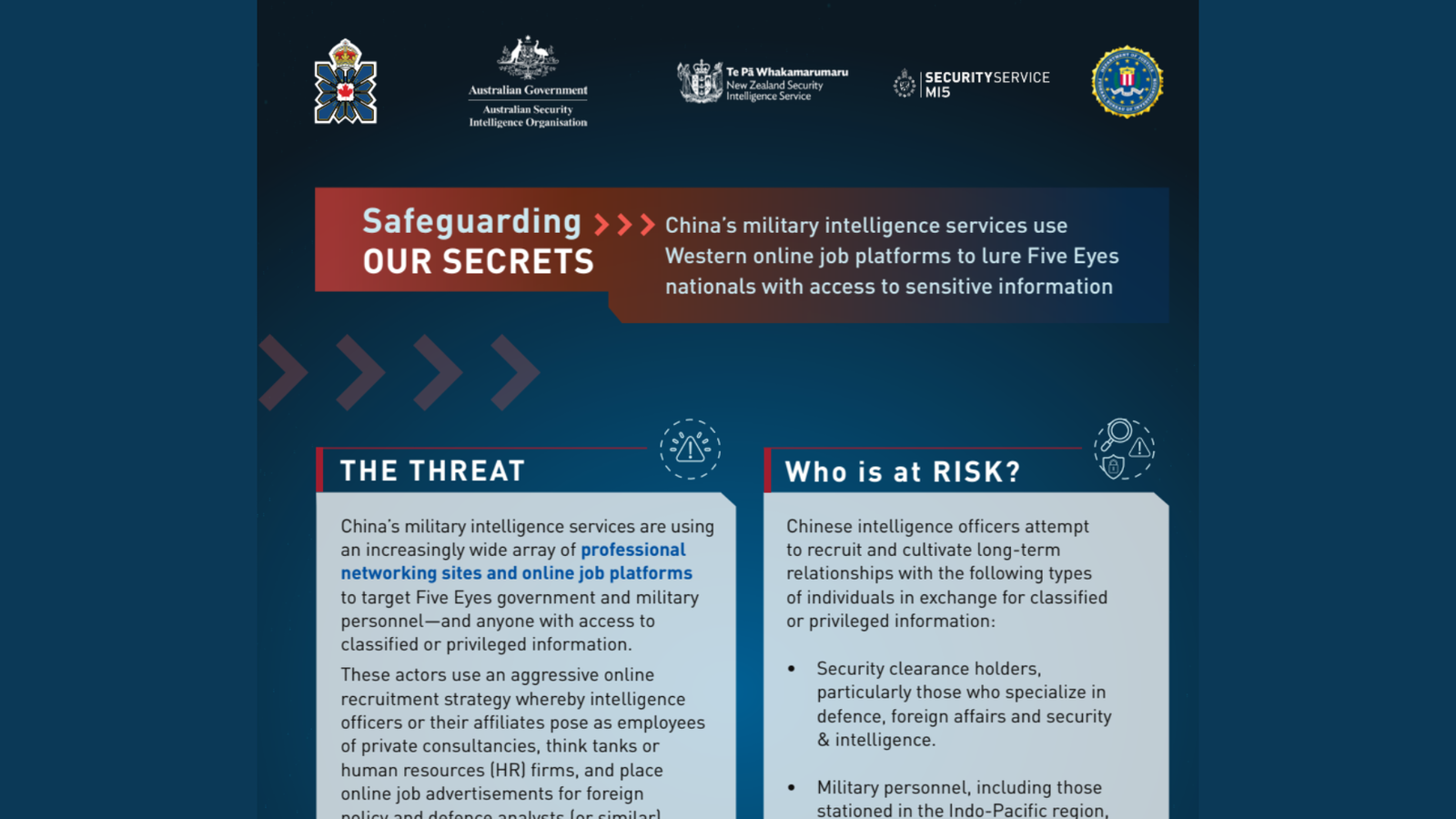
The advisory, titled "Safeguarding Our Secrets", was released on Wednesday by the intelligence and security agencies of the United States, United Kingdom, Canada, Australia and New Zealand. Together, these nations form the "Five Eyes" alliance, one of the world's most prominent intelligence-sharing partnerships.
Officials quoted by NDTV described the warning as one of the strongest public alerts issued by the group regarding an ongoing foreign intelligence operation targeting professionals seeking employment opportunities online.
How the alleged recruitment scheme works
According to the bulletin cited by NDTV, Chinese military intelligence officers are allegedly creating fake identities and posing as recruiters or human resources consultants for companies that appear legitimate and are often based outside China.
These entities reportedly advertise jobs on widely used platforms such as LinkedIn, Indeed and Upwork. The objective, agencies say, is to identify individuals who may have access to government, military or defence-related information.
The report states that security clearance holders, defence experts and military personnel are among the primary targets. However, academics, journalists, think tank researchers and freelance writers with links to public policy or defence issues may also be approached.
Also Read | US man tries to demolish own house with family inside after divorce argument
From job application to intelligence gathering
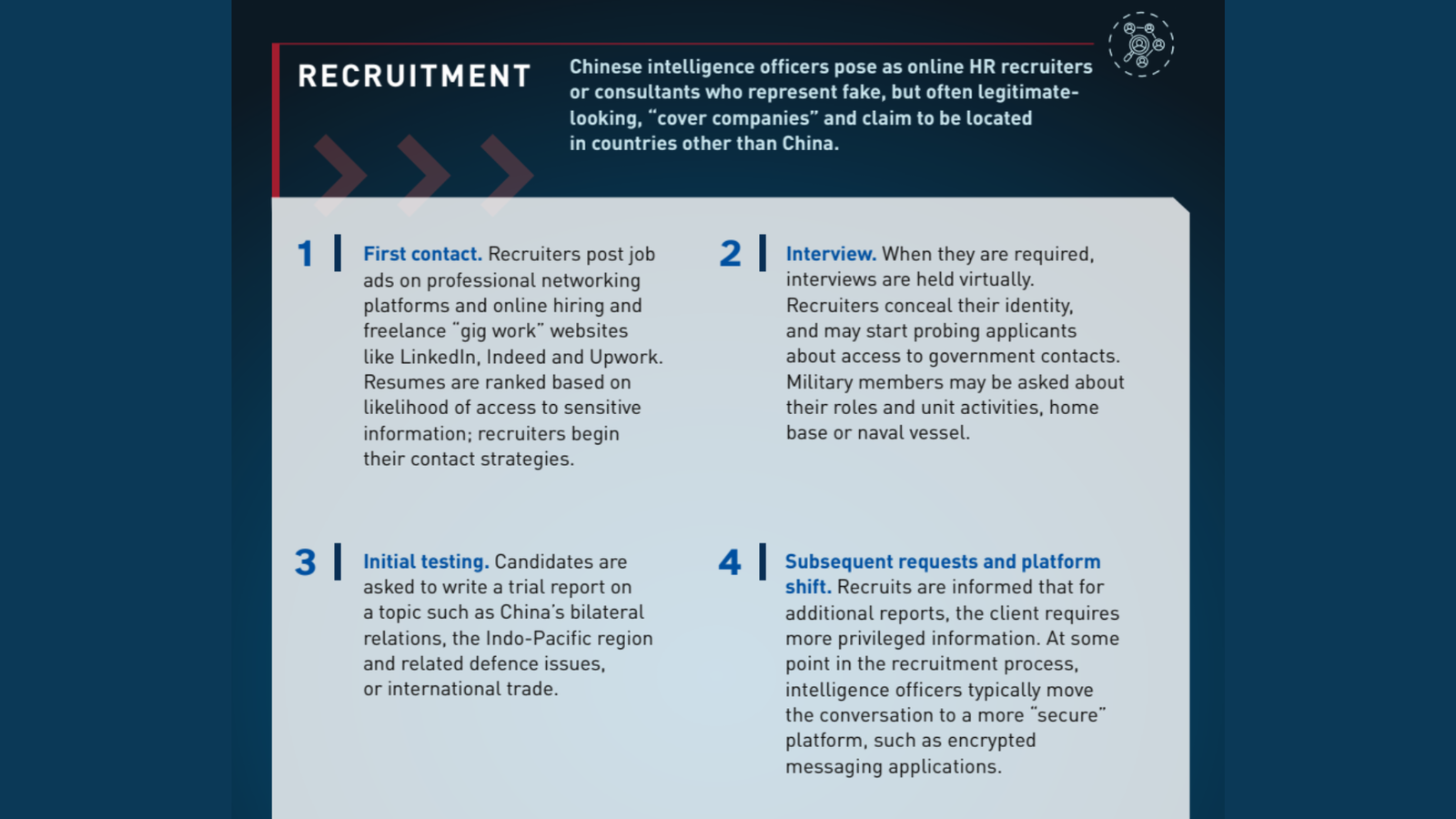
The agencies outlined a structured recruitment process. Initial contact typically begins through a job application, followed by virtual interviews conducted by recruiters who conceal their true identities.
Candidates may then be asked to prepare reports on topics such as China's foreign relations or defence matters in the Indo-Pacific region. Authorities say these assignments are used to assess a person's willingness and ability to provide information.
As the relationship develops, recruits may be encouraged to share increasingly sensitive or non-public material. Communications are often shifted to encrypted messaging platforms, while payments may be made through services such as PayPal, Wise, Zelle or cryptocurrency.
Authorities warn of serious consequences
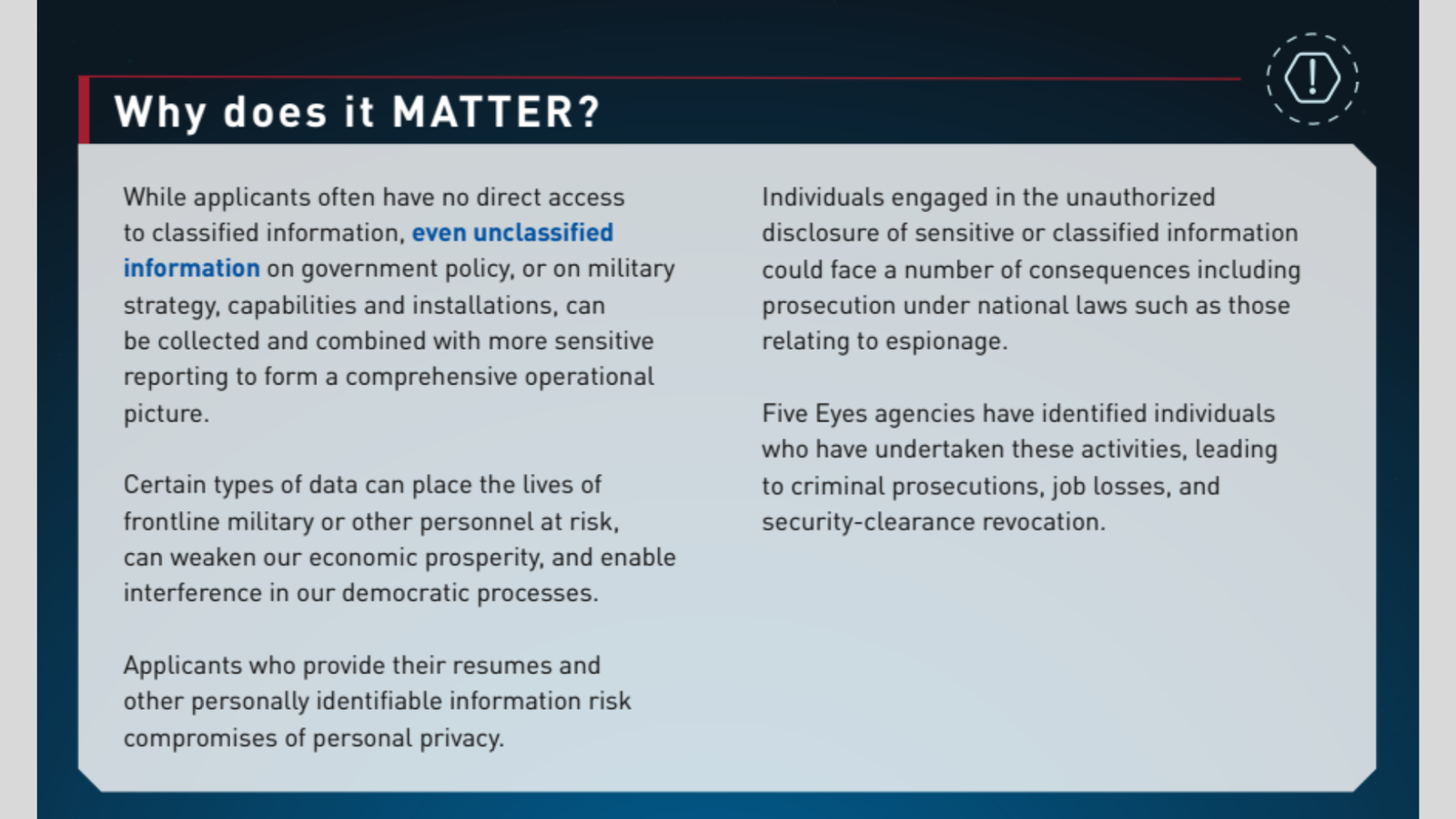
The advisory notes that individuals linked to such activities have already faced criminal prosecution, job losses and the revocation of security clearances.
The joint statement also warns that even information that is not formally classified can be valuable when combined with other intelligence. Officials urged job seekers to remain vigilant and referred them to guidance published by the UK's National Protective Security Authority under the title "Applicant Beware" to help identify and avoid potential recruitment traps.