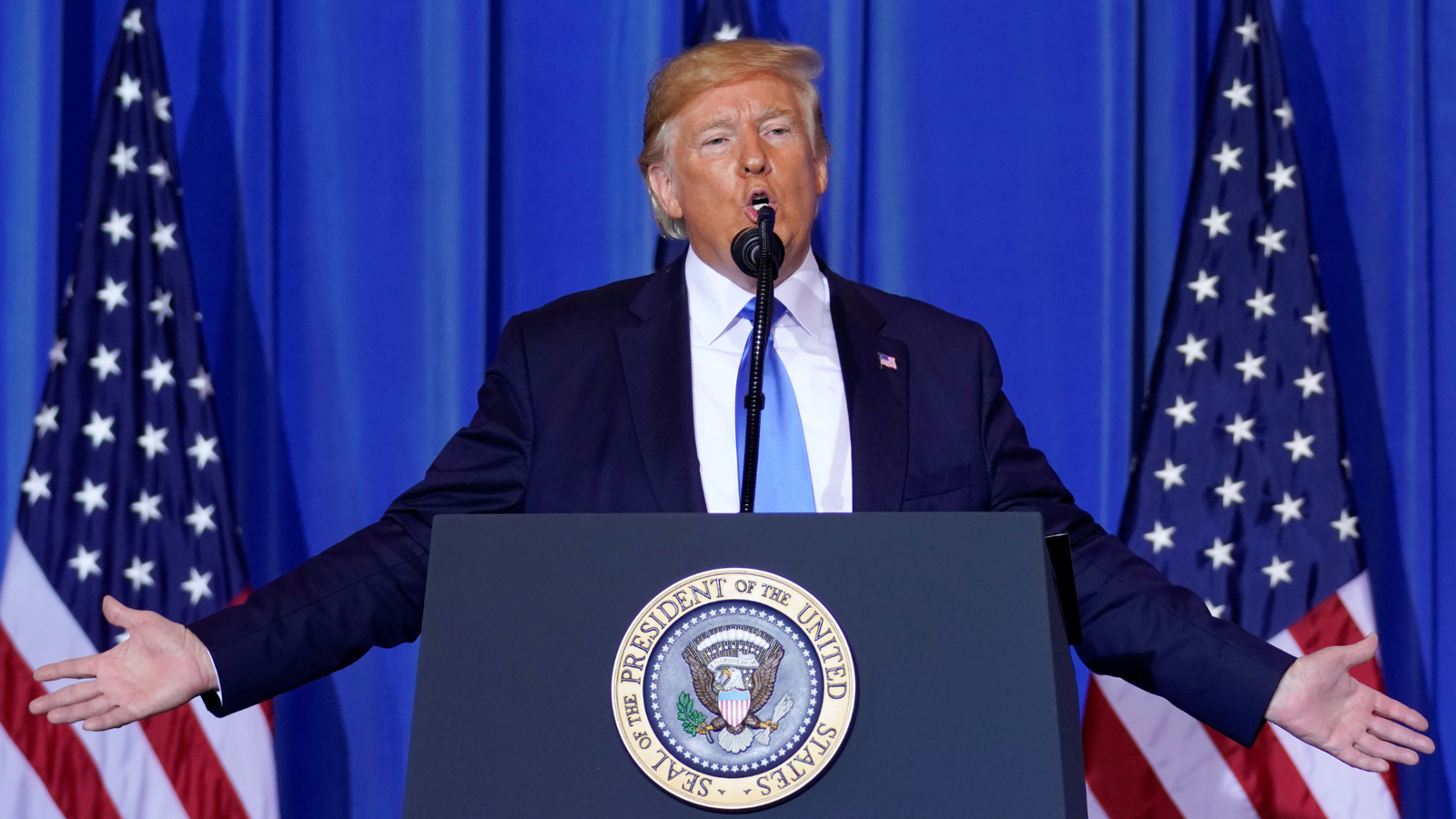
Just days after taking power in Venezuela and capturing President Nicolas Maduro, US President Donald Trump stated that the US would withdraw from over 60 international organisations, including several UN organisations and the India-France-led International Solar Alliance. The White House cited these bodies’ operations as conflicting with US national priorities.
'Globalist agenda' behind withdrawals
Shortly after the commencement of the second term in office, Trump reiterated the fact that the US funds international agencies excessively, while the results benefit other countries around the world and even the Chinese. This argument was central to the US’s exit from the World Health Organisation (WHO) in January 2025, citing “failure to adopt urgently needed reforms, and its inability to demonstrate independence from the inappropriate political influence of WHO member states.”
“The WHO continues to demand unfairly onerous payments from the United States, far out of proportion with other countries’ assessed payments. China, with a population of 1.4 billion, has 300% of the population of the United States, yet contributes nearly 90% less to the WHO,” the US stated then.
Also Read | United States further retreats from global cooperation, set to leave 66 international organisations
In a statement on the latest withdrawals, Trump said ending US involvement in these entities would allow taxpayer dollars to be better allocated. “These withdrawals will end American taxpayer funding and involvement in entities that advance globalist agendas over US priorities, or that address important issues inefficiently or ineffectively, such that US taxpayer dollars are best allocated in other ways to support the relevant missions,” the statement read.
Key UN bodies on the exit list
Several major United Nations bodies that focus on climate change and gender are also impacted. The United States intends to withdraw from the United Nations Framework Convention on Climate Change (UNFCCC), which is the foundation of all international climate action that facilitates agreements like the 2015 Paris deal.
Manish Bapna, president and CEO of the Natural Resources Defence Council, said that the US the first nation to withdraw from the UNFCCC. He said, “Every other nation is a member, in part because they recognise that even beyond the moral imperative of addressing climate change, having a seat at the table in those negotiations represents an ability to shape massive economic policy and opportunity.”
The U.S. will pull out of UN Women and the UN Population Fund (UNFPA), which deal with gender equality and women empowerment as well as family planning and maternal and child health. It is worth noting that Trump had earlier withheld funding from the UNFPA last year.
“The President reserves the right to use the United States military, if necessary, though it is not something he wants to do. Diplomacy is always the first option. He pursued that path with Nicolás Maduro, but the administration views him as an illegitimate dictator and an unserious actor”, in a press briefing, President Secretary, Karoline Leavitt said.
Also Read | US finally 'buying' Greenland? Marco Rubio to meet Denmark leaders next week
Balancing Influence and Independence
Despite the withdrawals, US officials told France 24 that a complete UN exit is unlikely. Trump’s administration plans to retain influence in strategic global organisations, such as the International Telecommunication Union, International Maritime Organisation, and International Labour Organisation, partly to counter China. Military power and economic leverage, including tariffs, remain key tools for advancing US interests abroad, with diplomacy still highlighted as a first option in foreign interventions.
As per multiple reports, Trump has also sought to extend the strategic reach of America, with his interest in Greenland, an autonomous territory of NATO ally Denmark, which has raised questions about NATO dynamics. The administration has been adamant that the USA will continue to shape and capitalise on the role it plays in international institutions. Trump had said previously, “We will always be there for NATO, even if they won’t be there for us. The only nation that China and Russia fear and respect is the DJT rebuilt U.S.A.”