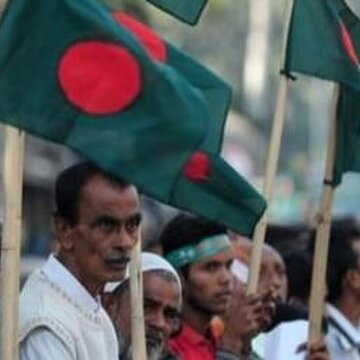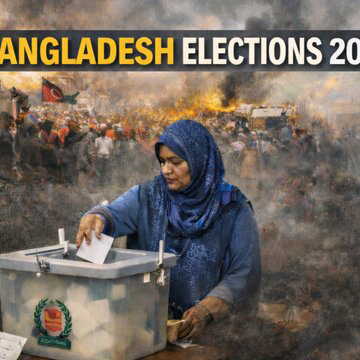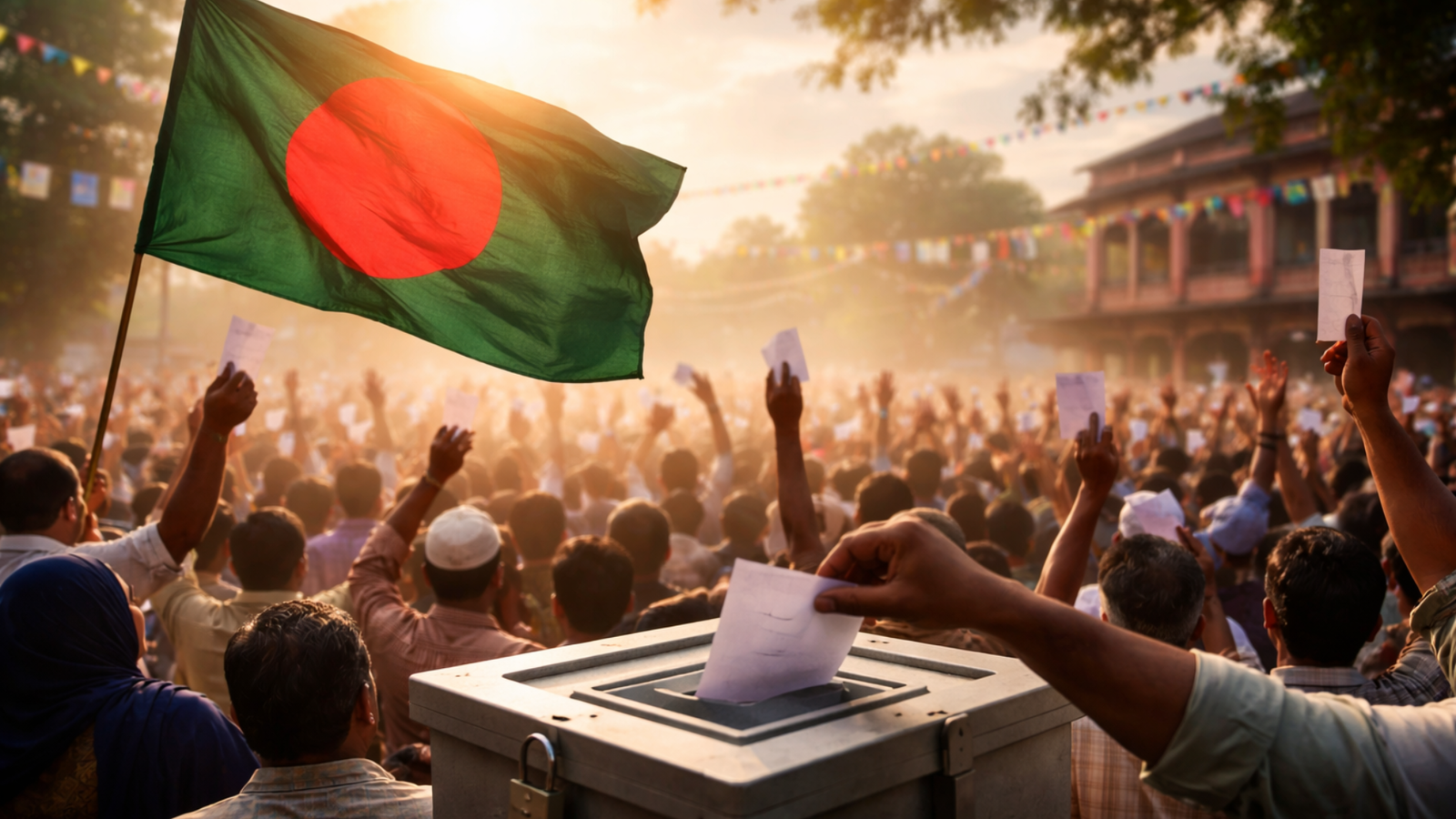
Bangladesh heads to polls on Thursday, February 12, marking one of the most widely seen and consequential elections in decades. The vote comes 18 months after youth-led protests that overthrew previous Prime Minister, Sheikh Hasina, about a year-and-a-half ago. The uprising created an interim administration under the leadership of Nobel laureate Yunus. A constitutional referendum on political reforms will also mark the conclusion of the transition period.
Here are seven issues likely to shape the outcome:
The Sheikh Hasina factor
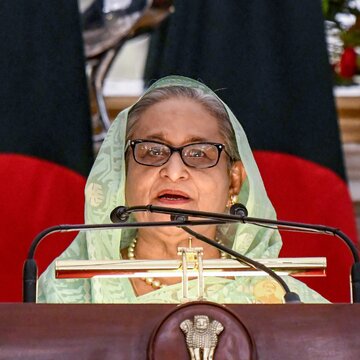
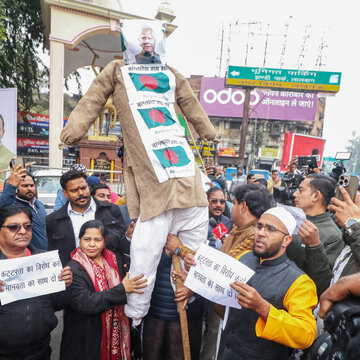
The ruling Awami League has been barred from contesting, and Sheikh Hasina remains in exile in New Delhi. The Bangladesh Nationalist Party (BNP), led by Tarique Rahman, has made her extradition a campaign theme. While some of her supporters may abstain, surveys suggest many former Awami League supporters are crossing over to the BNP.
Corruption concerns
As per a report by Reuters, the Dhaka-based Communication Research Foundation and Bangladesh Elections and Public Opinion studies found corruption as one of the primary issues voters care about. Bangladesh has a very poor position in the global corruption tables. The BNP and Jamaat-e-Islami have promised good governance in terms of corruption. Jamaat ranks higher in public perceptions as a cleaner party than the BNP.
Also Read | Bangladesh Elections 2026: First vote after Sheikh Hasina’s ouster, what’s at stake?
The economy’s fragile recovery
Bangladesh, which was one of the fastest-growing economies in Asia, has struggled since the pandemic and the events of 2024. The garment industry, which played a big role in the export drive, has been severely impacted. The International Monetary Fund (IMF) projects the real GDP growth at around 4.9 per cent in 2026 compared to around 3.7 per cent in 2025. Voters might not necessarily look at these numbers.
Jobs and rising prices
As per a report by Reuters, the inflation rate in January stood at 8.58 per cent, with food prices squeezing household budgets. The country had a high percentage of its population, around 40 per cent, of the age of 30 or younger, thus making employment a critical issue. The BNP has pledged to create 10-15 million jobs in the country within the next 18 months.
Attacks on Hindus and law & order
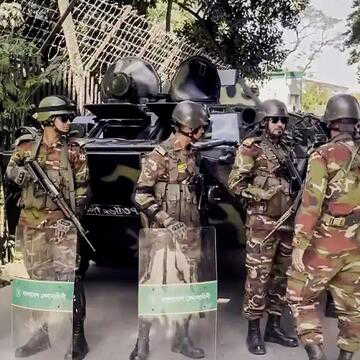
Incidents of violence against Hindu minorities ever since August 2024 have given rise to concern. Thousands of such incidents have taken place over the last 18 months.
Bangladesh is a predominantly Muslim country, with Muslims making up about 90 per cent of its population. It is also home to more than 1.3 crore Hindus, alongside over 16 crore Muslims. As per a report by the Indian Express, with the renewed prominence of the BNP and Jamaat-e-Islami parties that have faced criticism in the past over minority protection, sections of the Hindu community have expressed concern about their safety.
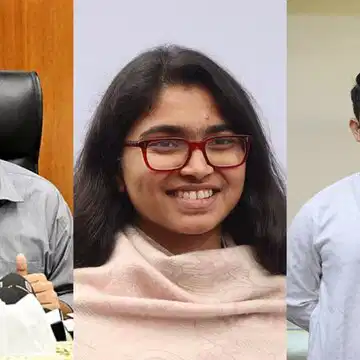
Also Read | Nahid, Tasnim, Sarjis: Where are the Gen-Z protest leaders as Bangladesh votes tomorrow?
Women’s representation
In the past, Bangladesh has been long led by women leaders. This time, female representation appears lower, even when they have played a significant role in the demonstrations. New voters claim that issues concerning women have not received the attention they deserve.
The rise of Islamists
The resurfacing of the Jamaat-e-Islami party, previously banned under the Hasina regime, has created much unrest among voters. Critics worry about its conservative positions, particularly on women’s rights.
With 175 million eyes on polls Thursday, the mood of the nation as well as the direction of its politics will become clear after a turbulent transition.