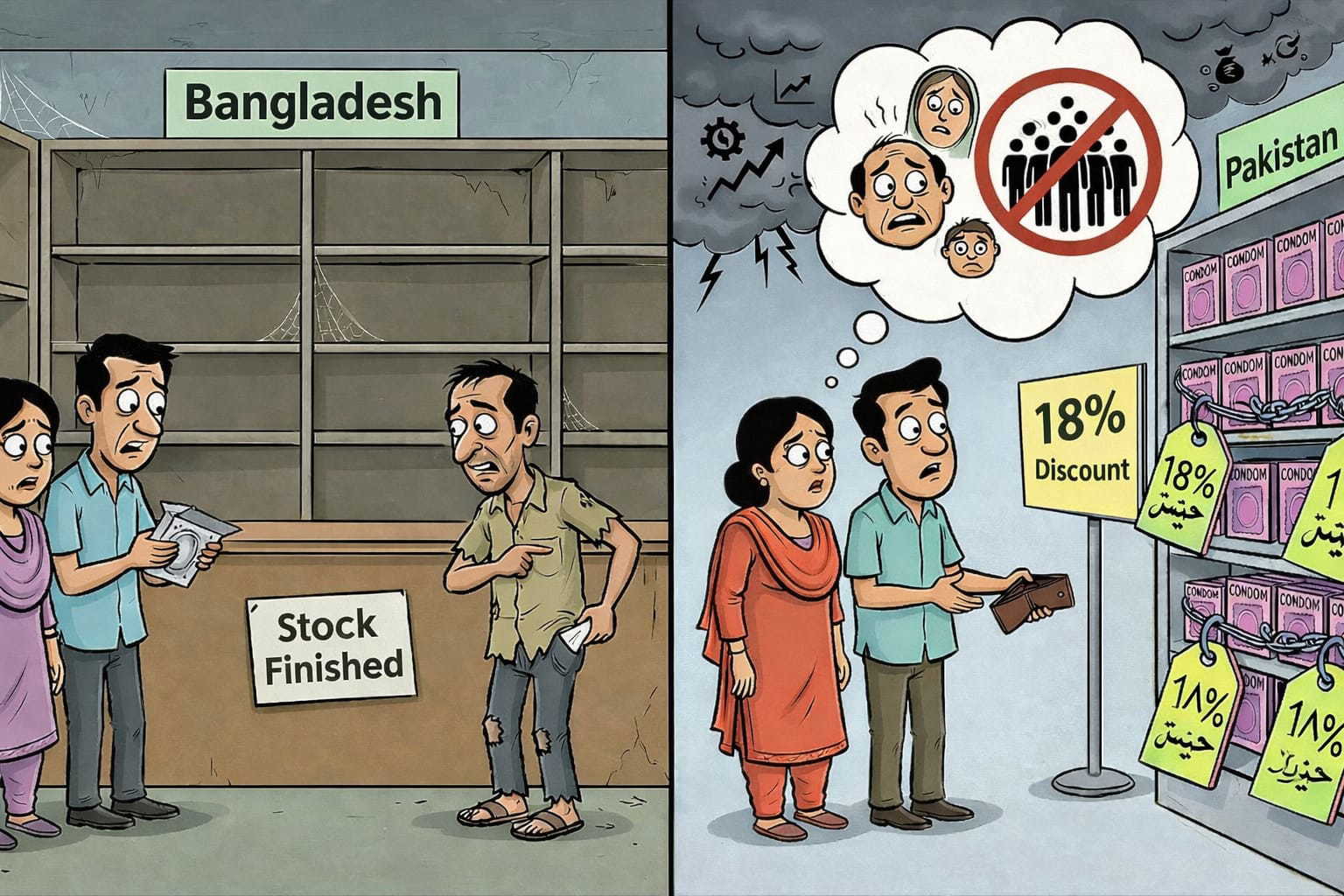
The shock of economic and political instability has now reached an unexpected area: public health and birth control. India’s two neighbours, Bangladesh and Pakistan, are facing serious challenges in this regard. In Bangladesh, condom stocks have run critically low, while in Pakistan, condoms are available but largely unaffordable for ordinary citizens.
Reports indicate that Bangladesh, once a model in population control, is now in a dire situation. Government data shows that warehouse supplies of condoms are down to only 39 days’ worth. Over the past six years, the distribution of condoms has fallen by nearly 57 per cent. The shortage extends beyond condoms, affecting contraceptive pills and injections as well. Experts attribute the crisis to the government’s inability to make timely purchases due to budget constraints, raising the risk of unplanned pregnancies.
Also Read | Bangladesh Hindu man jumps into pond to escape mob, dies
Across the Indus, the situation in Pakistan is also concerning. Condoms are available, but they carry an 18 per cent GST, and under pressure from the IMF, the government has no leeway to reduce taxes. With the financial strain on ordinary households, purchasing condoms has effectively become a luxury.
Taken together, the economic and political instability in both countries, coupled with these health challenges, points toward potential public health risks, including a population surge and increased vulnerability to sexually transmitted diseases. In both Bangladesh and Pakistan, access to contraception has become a pressing concern, with implications for family planning and marital health.