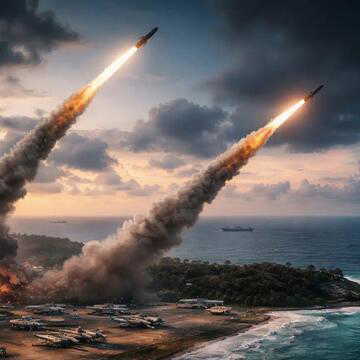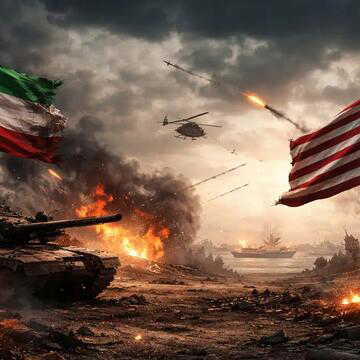
The ongoing conflict involving Iran, the United States and Israel has entered a new phase, with Tehran reportedly launching more than 3,000 projectiles towards Gulf Cooperation Council (GCC) countries over the past three weeks. The escalation has not only widened the conflict zone but also deepened divisions within the region, particularly along the Shia-Sunni axis.
Gulf countries drawn into conflict
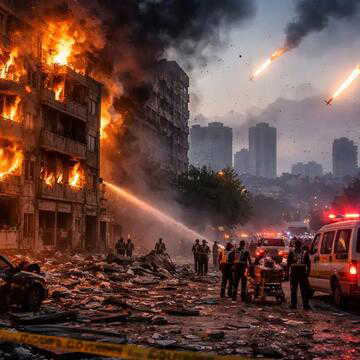
Iran's strikes, including those targeting the UAE with ballistic missiles, cruise missiles and drones, have brought all six Sunni-majority GCC nations into the conflict's impact zone. These developments have altered the regional balance and added strain to already fragile relations.
Also Read | Iran's missiles reach 4,000 km? Diego Garcia target claim raises big questions
The attacks have also affected the concept of unity within the Muslim world, as tensions rise between different sectarian and political blocs.
Concerns over missile capabilities
Iran's use of intermediate-range ballistic missiles, including those reportedly aimed at the US base in Diego Garcia, has drawn attention to its expanding missile programme. The development suggests a growing long-range capability that could potentially extend beyond the Middle East.
At the same time, Gulf nations have expressed concern over both security risks and economic fallout. Saudi Arabia has publicly acknowledged a breakdown in trust, while other GCC members are reportedly assessing their response options amid disruptions to oil-based economies.
Impact on global oil routes
The situation has also affected global energy supply chains. The Strait of Hormuz, a key route for oil transport, has seen disruptions, posing challenges for international trade.
The United States is now focused on restoring navigation through the region, with support from European allies and Japan. Ensuring the safety of shipping lanes remains central to maintaining global oil flow and sustaining military operations in the region.
Continued hostilities and regional uncertainty
Despite strikes on its leadership, Iran's military apparatus continues its offensive. Reports suggest that Tehran had pre-identified strategic targets in the Gulf region and is using advanced missile systems in its operations.
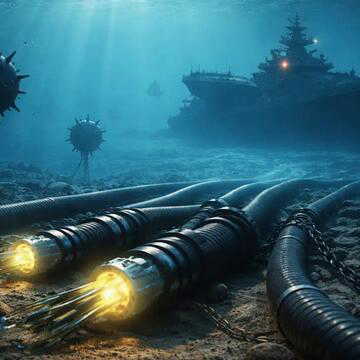
Also Read | Not just oil — is the world's internet at risk in Hormuz crisis?
The use of cluster munitions and evolving missile technologies has added complexity to defence efforts, raising concerns about interception challenges.
As the conflict continues, regional dynamics are shifting, with Gulf nations increasingly drawn into the broader geopolitical confrontation.