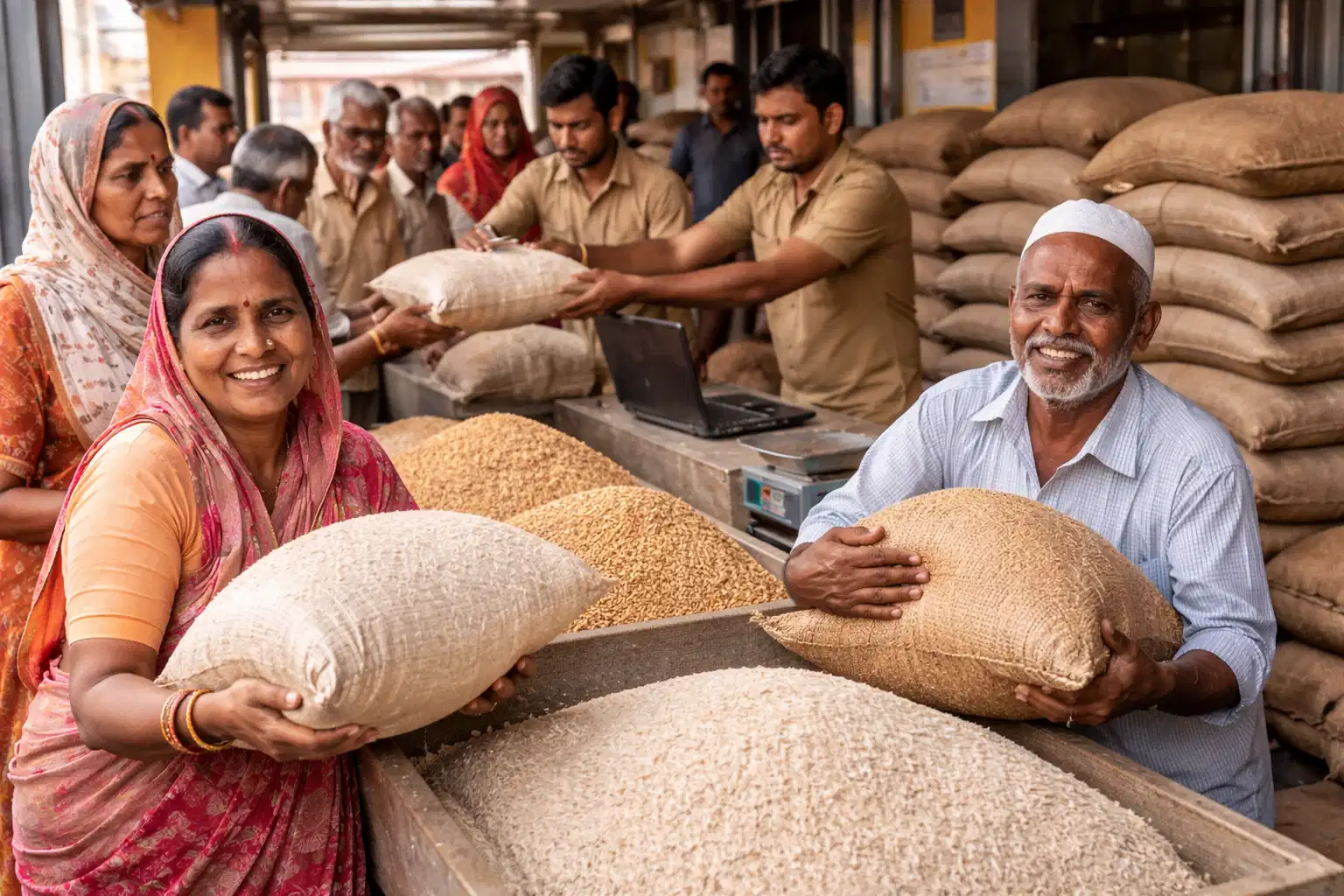
The department of Food and Public Distribution has announced a major relief for ration card holders across India. In April 2026, beneficiaries will receive three months’ worth of food grains in a single distribution. This includes supplies for April, May and June, which will be provided together through Fair Price Shops.
This decision comes at a time when rising prices are affecting household budgets. By providing ration for three months at once, the government aims to reduce the burden of frequent visits to ration shops and make access easier for millions of families who depend on the public distribution system.
Ration for three months in one go
Under the new system, eligible beneficiaries will not have to visit ration shops every month. Instead, they will receive their full quota for April, May and June together.
ALSO READ | Fact check: Is the ‘3,000 Ukrainians in India’ claim fake? Centre responds
This move is expected to save time, reduce long queues and simplify the distribution process. It will especially help those who are unable to collect ration every month due to work or other constraints. By ensuring that the entire quota is given at once, the system also aims to prevent people from missing out on their entitled share.
How to collect ration
To receive the ration, beneficiaries must visit their nearest Fair Price Shop as per the schedule announced by local authorities. It is important to follow the given date and time to avoid delays.
In many areas, distribution is being carried out using digital systems and e-POS machines to ensure transparency. Beneficiaries should carry their ration card or Aadhaar-linked details to complete the process smoothly.
Under the Pradhan Mantri Garib Kalyan Anna Yojana (PM-GKAY), nearly 80 crore people across India receive free ration every month, with each beneficiary getting 5 kg of rice, wheat or a combination of both. To support this large-scale distribution, the government supplies around 33–34 lakh tonnes of rice and 15–16 lakh tonnes of wheat every month, taking the total to nearly 50 lakh tonnes of food grains. This extensive system plays a crucial role in ensuring food security for millions of poor and vulnerable households across the country.
ALSO READ | Centre forms expert panel after NCERT judiciary chapter row reaches SC
Big relief for rural and remote areas
The decision is expected to benefit people living in villages and remote areas the most. Many beneficiaries currently have to travel long distances every month to collect ration, which involves both time and cost.
With three months’ supply being distributed at once, this effort will significantly reduce repeated travel. It will also provide relief to elderly citizens and women who may find it difficult to visit ration shops frequently.
Overall, the move is aimed at making the distribution system more efficient while offering practical relief to millions of ration card holders across the country.