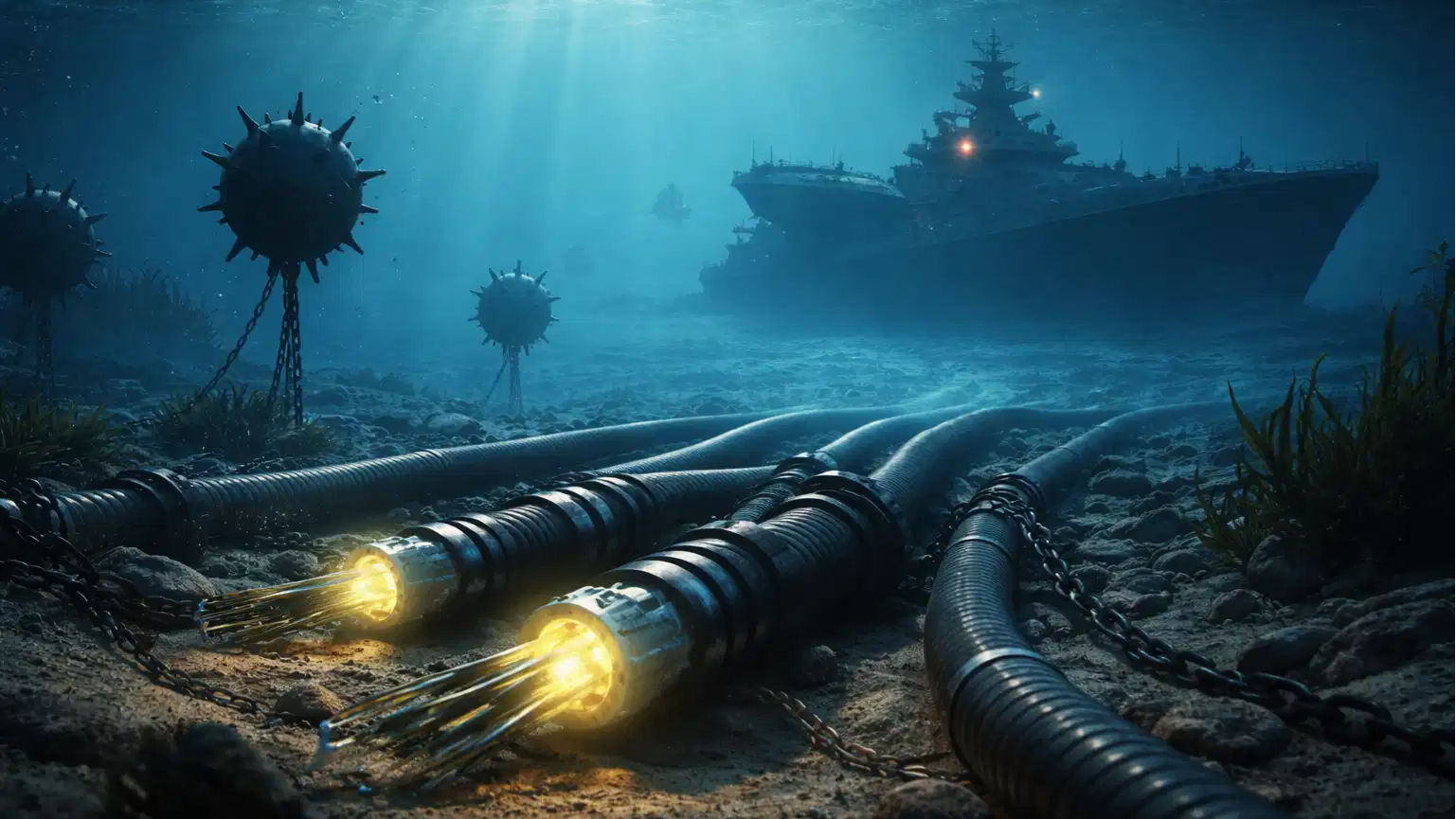
As the US-Israel conflict with Iran stretches into its third week, concerns are growing beyond oil and shipping routes. With the Strait of Hormuz already blocked, attention is now turning to a less visible but equally critical network: undersea internet cables that run beneath these waters.
Strategic choke points for data and energy
The Strait of Hormuz and the Bab el-Mandeb in the Red Sea are not just vital for global oil shipments. They also sit atop dense networks of fibre-optic cables that carry the bulk of international internet traffic. From banking systems to video calls and AI services, a lot of the world's digital activity depends on these routes.
Also Read | 'Every drop of spilled blood comes at a price': Iran's new Supreme Leader sends stark warning to US, Israel
At least 17 submarine cables pass through the Red Sea, forming a key link between Europe, Asia and Africa. In the Persian Gulf, systems such as AAE-1, FALCON, Gulf Bridge International Cable System and Tata-TGN Gulf play a major role in supporting connectivity, including India's overseas data links.
Rising risks as conflict intensifies
Iran has reportedly placed sea mines in the Strait of Hormuz, forcing shipping and insurance firms to halt movement, reported India Today. At the same time, Houthi attacks in the Red Sea have made another crucial passage unsafe. This has created a dual threat to both shipping and cable infrastructure.
Repairing damaged cables in such conditions is extremely difficult. Specialised vessels cannot operate in active conflict zones. "Cable ships are not going to operate in areas where there is active military operations happening, it's too risky," As Alan Mauldin of TeleGeography was quoted as saying by Bloomberg.
The shallow waters of Hormuz, about 200 feet at its narrowest, make cables more exposed to accidental or deliberate damage.
The risks are not theoretical. In 2024, Houthi-linked attacks damaged multiple Red Sea cables, slowing internet speeds across parts of Asia and Africa. Repairs were delayed for months due to security concerns.
Internet analyst Doug Madory of network firm Kentik warned of wider consequences, and was quoted as saying by India Today, "Closing both choke points simultaneously would be a globally disruptive event."
Also Read | Lottery out, entrance tests back from 2027; fears grow over coaching and donation culture in Bangladesh
What a disruption could mean
A major cable cut would impact far more than internet browsing. Financial systems, healthcare networks and cloud-based services could face disruptions. Gulf countries would feel the immediate effects, but nations like India could also see slower connectivity as traffic reroutes through longer paths.
For now, the cables remain operational. However, with mines in the water and conflict ongoing, the risk to these critical digital lifelines remains high.