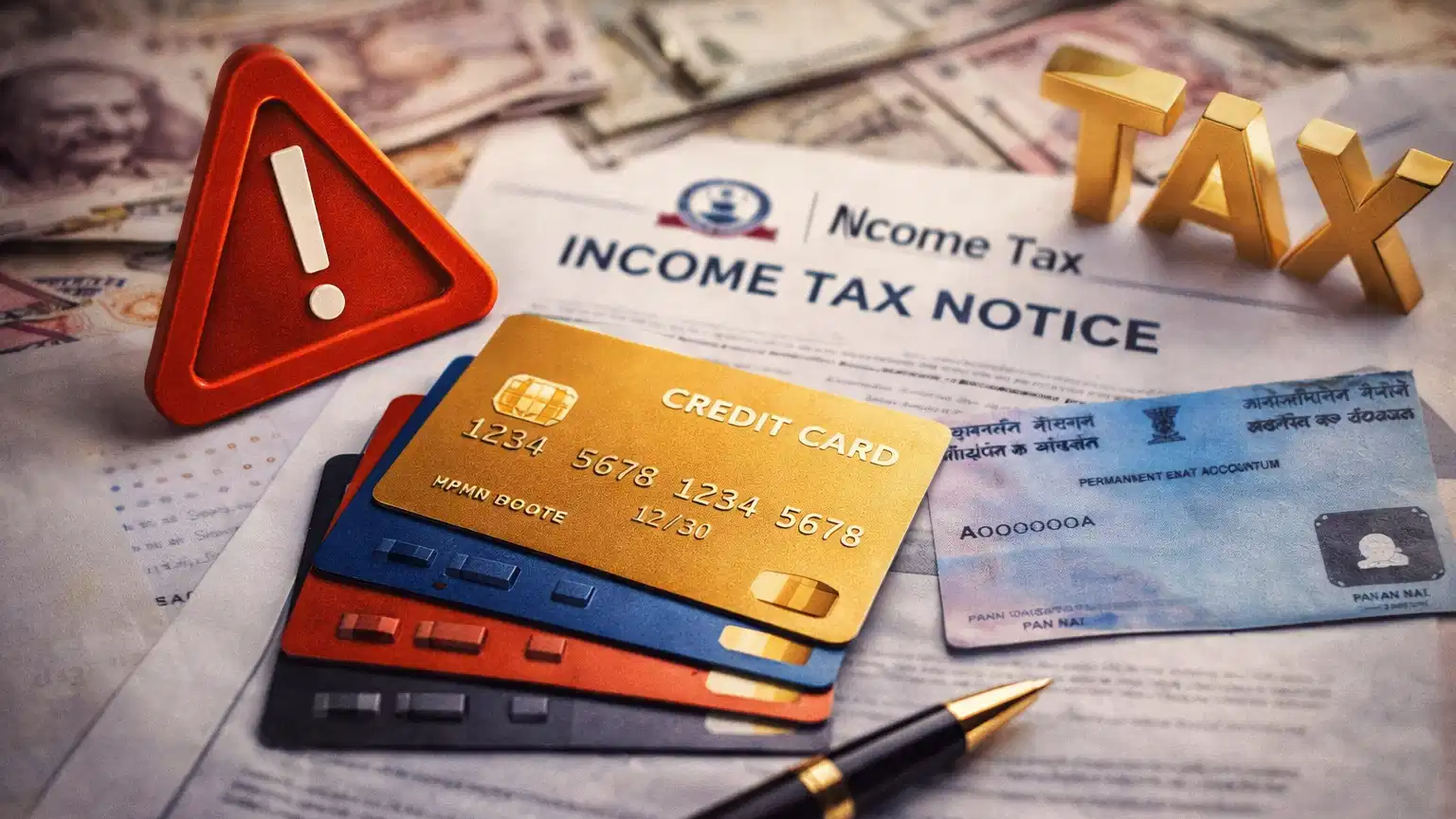
A series of changes in the usage of credit cards will be implemented from April 1, 2026. These changes will further strengthen the compliance regulations for credit cards. According to reports, there will be greater coordination between banks and the Income Tax Department. Moreover, new regulations will be implemented for the usage of credit cards by users.
High spending to be reported, tax mismatch may trigger notices
As part of the new regulations, banks will be required to report spends on credit cards that exceed ₹10 lakh in a financial year directly to the Income Tax Department. International spends will also be included in this category.
Also Read | Bank stocks under pressure as RBI moves to defend rupee, what’s behind the slide?
If there is a mismatch in the spending on credit cards and the income declared in tax returns, users may be asked to explain. This may result in formal notices being sent to users.
PAN linkage mandatory for all credit cards
Issuance of a credit card without a valid PAN will not be permitted from April 1. Card holders will also have to link their credit cards to a PAN. This means all credit card transactions will be traced to a person’s tax profile.
New rules for credit cards: Misuse of corporate credit cards will not go unpunished. Any personal expenses incurred through a credit card issued by a company, such as shopping, entertainment, or travel, may be considered part of the user’s income.
Also Read | Gold, silver prices jump sharply as stock market falls, check latest Kolkata rates
Such expenses may invite tax implications, depending on how they are reported and accounted for.
Credit cards can now be used to pay income tax
One can use credit cards to pay income tax, and this may prove useful in times of cash flow problems. However, banks may charge fees for such transactions. One needs to be careful as credit card dues may attract high interest if not settled.
As part of a move to ease documentation, credit card bills may be used as a valid proof of address. This may be useful for PAN registration or updation, if the credit card statement carries accurate residential information.