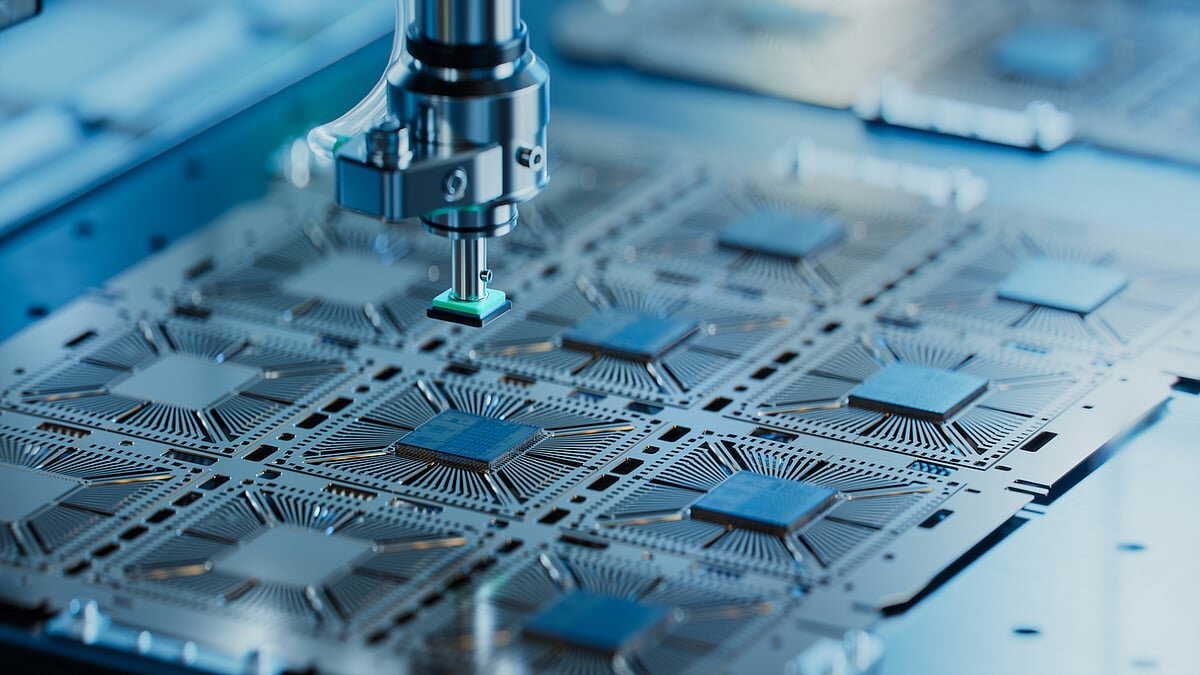
India has officially entered the second phase of its semiconductor push. In the Union Budget, Finance Minister Nirmala Sitharaman proposed a sharp increase in investment for the semiconductor sector, raising the allocation from ₹22,500 crore to ₹40,000 crore. In her Budget speech, she said the Centre wants to develop semiconductors as the backbone of future technology and the digital revolution, with the larger aim of building India into a “tech superpower”.
Semiconductor chips have become crucial in today’s digital world, powering everything from smartphones and computers to automobiles and defence systems. At present, India depends heavily on imports for most semiconductor chips.
The increased budget allocation is expected to reduce this dependence significantly and strengthen domestic manufacturing. Experts believe the move will give a major boost to the electronics and IT sectors.
ALSO READ | Did India spend most of its Budget on Defence? This is what the numbers say
Along with semiconductors, the Budget has placed strong emphasis on artificial intelligence. The Finance Minister announced the formation of a high-level committee to study the impact of AI and modern technologies on India’s service sector and employment.
The committee will examine how developments in artificial intelligence, automation and other emerging industries are reshaping jobs and how much employment these sectors can generate in the future.
ALSO READ | Banks to remain closed on these days in February 2026: Check full list
The Union Budget has also made key announcements for space research. The allocation for the space sector has been increased to ₹13,415 crore, up from ₹11,725 crore last year. Out of this, ₹6,103 crore has been earmarked specifically for space research.
Nirmala Sitharaman also announced the creation and upgradation of four major telescopes and astronomy centres in the country. These include the National Large Solar Telescope (NLST), National Large Optical Infrared Telescope (NLOT), Himalayan Chandra Telescope and the Cosmos 2 Planetarium.
Separate budget provisions have been made for these projects, which will help in observing the sun, stars, galaxies and deeper space.