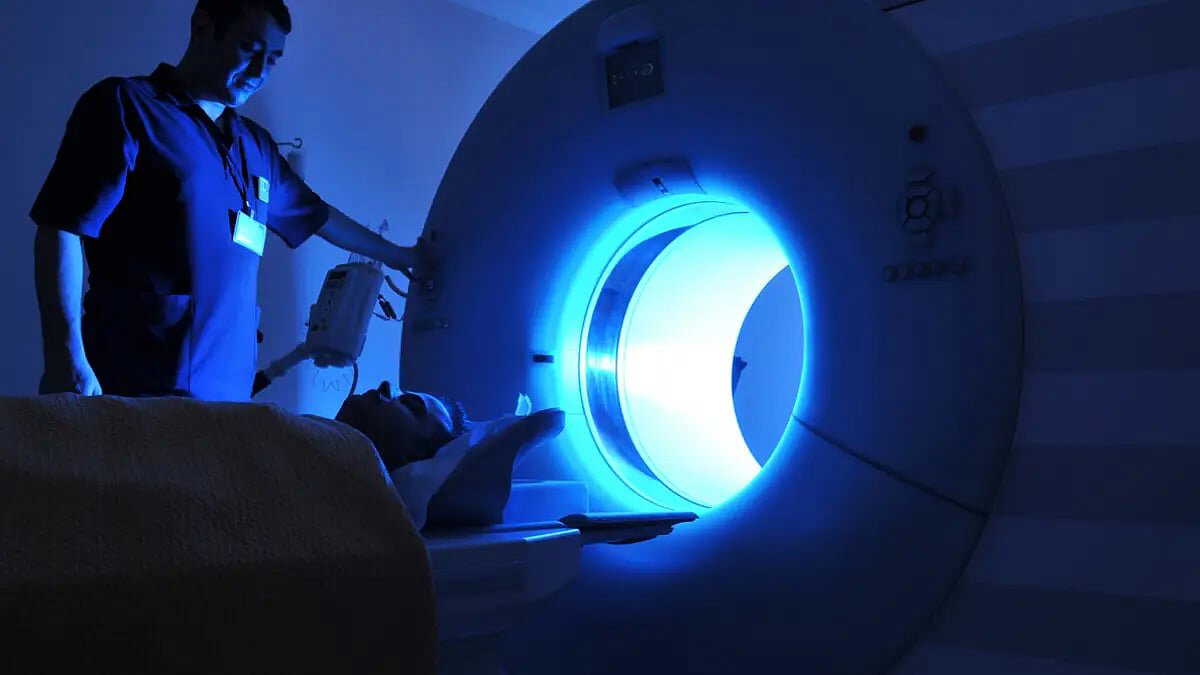
As the old saying goes, when kings fight, the grass suffers. Today, that “grass” might just be your medical bill. While missiles fly nearly 2,800 kilometres away in Iran and West Asia, the ripple effects are quietly inching closer to home, potentially making MRI scans more expensive in Kolkata and across India. The connection may seem distant at first, but it’s surprisingly direct.
How MRI machines depend on liquid helium
Magnetic Resonance Imaging (MRI), widely used for more precise diagnostics than CT scans, relies on powerful superconducting magnets. These magnets function only when cooled to an extreme temperature of around 269C, a feat made possible using liquid helium.
A standard MRI machine requires approximately 1,700–1,800 litres of liquid helium to operate efficiently. Without it, the machine simply cannot function.
Supply shock: How the Iran conflict disrupts helium flow
Liquid helium is not mined directly; it is extracted during Liquefied Natural Gas (LNG) processing. This is where the crisis begins.
Recent explosions at Iran’s South Pars gas field and Qatar’s Ras Laffan industrial hub, together responsible for nearly 20% of global LNG supply, have triggered alarm bells. Any disruption here directly impacts helium production.
According to Medical Technology Association of India Chairman Pawan Choudhry, India currently has only 15–20 days of liquid helium stock. If supply constraints persist, a sharp rise in MRI scan costs is almost inevitable.
Also Read | Petrol, diesel prices unchanged despite crude surge: Check fuel rates in your city
The situation worsened after missile strikes targeted facilities linked to QatarEnergy, the world’s largest LNG supplier. The company temporarily shut operations, sending shockwaves through global energy markets.
Joint Secretary of the Central Petroleum Ministry Sujata Sharma noted that even if hostilities cease immediately, damaged facilities in Qatar, including Ras Laffan, may take 3–5 years to return to full production capacity.
For India, this is particularly concerning. The country imports nearly 50% of its natural gas needs, with a significant portion sourced from Qatar. Unlike crude oil, where alternatives like Russian imports exist, gas sourcing is far more constrained.
Beyond MRI: Wider healthcare supply risks
The impact isn’t limited to diagnostic imaging.
Market experts warn that disruptions in LNG and helium supply chains could also lead to shortages of essential hospital consumables, including:
IV bags and lines
Syringes and cannulas
Urine bags and other disposables
This could put additional pressure on India’s already stretched healthcare system.
Global helium crisis deepens amid war
The ongoing conflict has already tightened global helium availability:
25–30% of the global helium supply is used in MRI machines
20–25% goes into semiconductor manufacturing
Global helium supply has dropped by 42–45%
Spot prices have more than doubled
This has implications far beyond healthcare, affecting semiconductor chips and even AI technologies worldwide.
LNG prices surge, Europe feels the heat
Following reports of attacks on Ras Laffan, gas prices in Europe surged by 35%, highlighting the global scale of disruption.
Qatar remains one of the top LNG producers globally, alongside the US, Australia, and Russia. However, according to energy consultancy Wood Mackenzie, even in a best-case scenario, it could take up to five years for Qatari production to return to pre-war levels.
Also Read | ‘I told him, don’t do that’: Are cracks emerging between Trump and Netanyahu on Iran strike?
What lies ahead for India?
With nearly half of its gas imports already disrupted and limited alternatives available, India faces a complex challenge. The immediate concern is rising costs from MRI scans to essential medical supplies, but the long-term question remains:
How quickly can India diversify its energy and helium supply sources in an increasingly volatile geopolitical landscape?
For now, a conflict thousands of kilometres away is steadily finding its way into everyday life and into hospital bills.