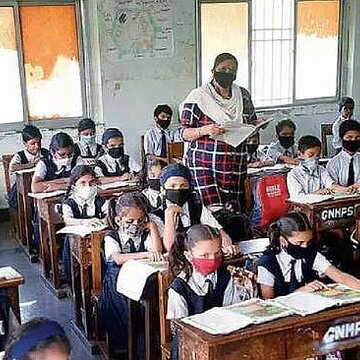
The Uttar Pradesh government has made newspaper reading mandatory for students in government schools. The Yogi government has taken this decision to enhance students' ability to think logically, reduce addiction to mobiles and laptops, and increase focus on studies. This measure applies to students in all government primary and secondary schools.
Additional Chief Secretary of the Primary and Secondary Education Department Parthasarathi Sengupta issued a directive on December 23 announcing this. The directive states that students must regularly read newspapers in both Hindi and English. Earlier in November, a directive from Uttar Pradesh's Primary and Secondary Department had mentioned taking specific plans and measures to reduce students' addiction to digital devices. This new directive has also given prominence to that issue. It states that to reduce screen time (how much time a person spends looking at digital devices like phones or laptops), students must read printed versions of newspapers, not e-papers.
Also Read | NEET-UG syllabus to remain largely unchanged, minor topics pruned
What to read and how to read?
The directive states:
At least ten minutes will be allocated in the school routine for newspaper reading
This newspaper reading can be done during morning prayer and singing time
Which sections have been emphasised for reading?
Editorial articles
National, state, international and sports news
Also Read | After Supreme Court order, SSC teachers face confusion over extensions and rejoining old posts
Additional Chief Secretary of the Department Parthasarathi Sengupta has stated that all government schools must follow this directive. Other private schools may follow this directive. According to him, reading newspapers will enhance students' ability to think logically. They will be able to understand what is good and what is bad. Additionally, their knowledge of general knowledge and current events will increase. Moreover, if students read editorial articles carefully, their vocabulary will expand, and their writing quality will also improve.
Sengupta has highlighted another aspect of newspaper reading. According to him, newspapers contain many human-interest stories. They include stories about common people's sorrows and hardships, and also news about how they have overcome these challenges and progressed in their lives. Parthasarathi hopes that reading such articles will enhance students' humanitarian sense and empathy.