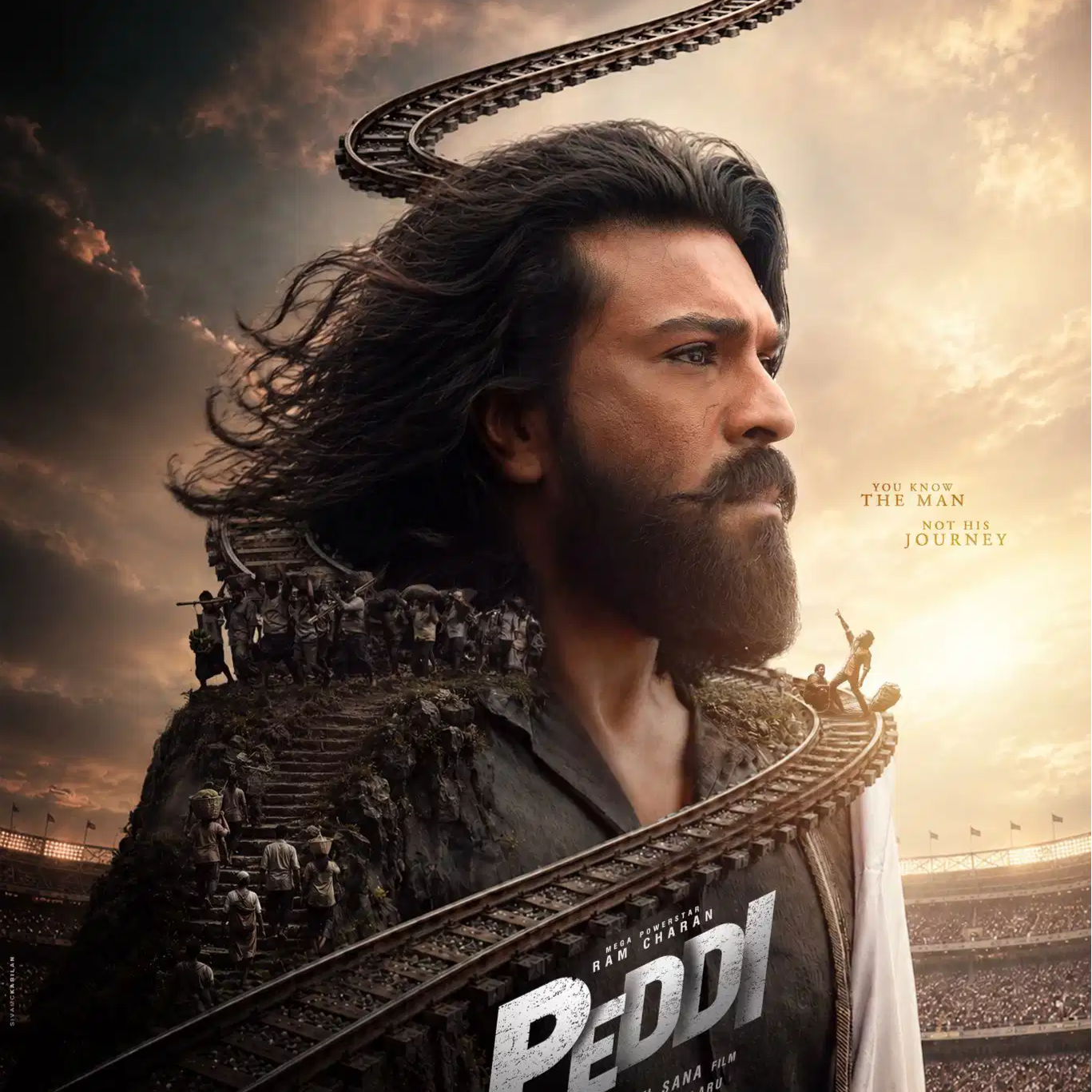
The Peddi controversy has brought about much discussion, which goes far beyond just the movie in question. After a backlash against the character played by Janhvi Kapoor, the director, Buchi Babu Sana, confirmed the complaints and said some changes will be made to some sections of the movie.
What is now in people’s minds, and what people are asking, is, can a movie really be edited after being shown in theaters? Yes, it can. Although most people think of movies as final products once they hit the theaters, technology has advanced greatly since then, making editing after the fact possible.
Also Read | Peddi nears ₹200 crore worldwide, overtakes Game Changer in just three days
How the Peddi debate began
The discussion began after sections of the audience criticised the depiction of Janhvi Kapoor's character Achiyamma in Peddi. Social media users raised concerns about certain dialogues, romantic sequences and camera framing choices, arguing that the character was reduced to a decorative role.
The conversation quickly expanded into a broader debate about the representation of women in mainstream commercial cinema. As criticism intensified online, the issue gained traction beyond fan circles and became a widely discussed topic.
Amid the backlash, director Buchi Babu Sana publicly addressed the criticism and apologised to viewers who felt uncomfortable. Reports later suggested that certain scenes involving Janhvi Kapoor's character could be modified or removed.
How films are changed after release
In the era of physical film reels, altering a movie after release was expensive and logistically difficult. New prints had to be produced and shipped to theatres, making changes rare
 X/ PEDDI
 The transition to digital cinema has transformed that process. Today, films are distributed as Digital Cinema Packages (DCPs), allowing studios to send updated versions directly to theatres. Scenes can be trimmed, dialogues muted, visuals altered or sequences removed altogether. Once a revised version is approved and distributed, theatres can replace the earlier file with the updated cut.
As a result, audiences watching a film weeks after release may not necessarily see the same version that appeared on opening day.
Why filmmakers make changes
There are several reasons why producers may choose to alter a film after release. Audience backlash is among the most common. In the age of social media, criticism can spread rapidly and influence public perception of a movie. Filmmakers may decide to make changes if they believe a controversy is overshadowing the film itself.
Other reasons include censorship concerns, legal disputes, objections from communities, trademark issues and commercial considerations. In some cases, producers may remove scenes that consistently receive negative reactions in an effort to improve audience reception.
Also Read | Peddi nears ₹200 crore worldwide, overtakes Game Changer in just three days
Streaming platforms have added another layer to the process. The version that eventually appears on OTT services may differ from the one screened in cinemas, with edits based on audience feedback, pacing concerns or content sensitivity.
Does the original version disappear?
Not necessarily. Even though the theatre might present the newly edited version of the film, sometimes the older version persists in reviews, archived versions, press articles and fan reactions.
This older version helps film scholars and other industry observers gauge the effect of the public reaction, censorship requirements and commercial pressures on the final product after its official release.
The recent Peddi case is yet another instance wherein feedback from audiences can have an impact on a film even after the release in the theatres. Whether one considers it an act of accountability, course correction or a compromise, it is evident that contemporary movies undergo modification well beyond their opening weekends.
FAQs
Q1. Is it possible for the creators to make changes to the movie once it is screened in the theatres?
Indeed, it is possible for the creators to make changes to the film due to the advanced systems of digital movie distribution.
Q2. What led to the change in scenes in Peddi?
The change was made following criticism from a particular section of the viewers about the portrayal of the character played by Janhvi Kapoor in the movie.