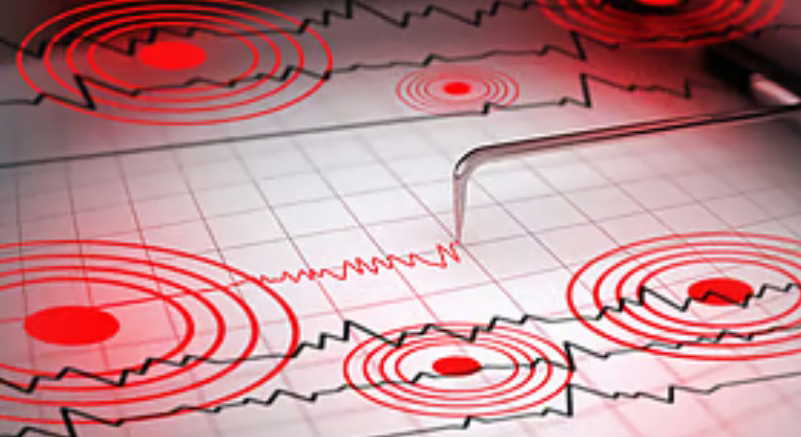
An earthquake measuring 4.1 on the Richter scale was recorded in Ladakh in the early hours of Thursday. The tremor occurred at 03:54:49 IST, with its epicentre located in Leh, as confirmed by the National Centre for Seismology (NCS).
There have been no immediate reports of damage or casualties following the quake.
Details shared by NCS
The NCS shared the technical details of the event in a post on X, stating, "EQ of M: 4.1, On: 30/04/2026 03:54:49 IST, Lat: 36.722 N, Long: 74.456 E, Depth: 150 Km, Location: Leh, Ladakh."
An earthquake of magnitude 4.1 on the Richter Scale hits Leh, Ladakh: National Center for Seismology pic.twitter.com/qbVTZBMoer
— ANI (@ANI) April 30, 2026
The earthquake originated at a depth of 150 kilometres beneath the Earth's surface. The coordinates place the epicentre in the Leh region, which is known to fall within a seismically active zone.
Also Read | Heatwave grips North India; rising hospital cases trigger alarm—are you staying safe?
Understanding earthquake depth
Earthquakes can occur at varying depths, ranging from near the Earth's surface to as deep as 700 kilometres. Based on depth, they are generally grouped into three categories.
Shallow earthquakes occur between 0 and 70 kilometres. Intermediate ones range from 70 to 300 kilometres, while deep earthquakes fall between 300 and 700 kilometres below the surface.
According to the classification used by the United States Geological Survey (USGS), earthquakes deeper than 70 kilometres are often referred to as deep-focus earthquakes. With a depth of 150 kilometres, the Ladakh tremor falls within the intermediate category.
Also Read | ₹10 petrol hike from May 1? Govt issues big clarification
Seismic activity in the region
Ladakh and the surrounding Himalayan regions frequently experience seismic movements due to tectonic activity. While low to moderate intensity earthquakes are not uncommon, their impact often depends on depth, location, and local geological conditions.
Authorities continue to monitor the situation, though no disruptions have been reported so far.