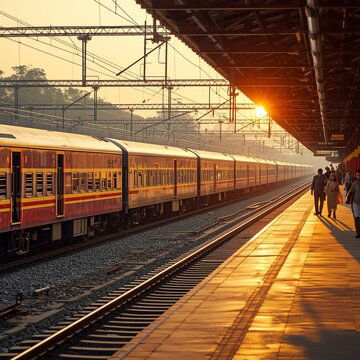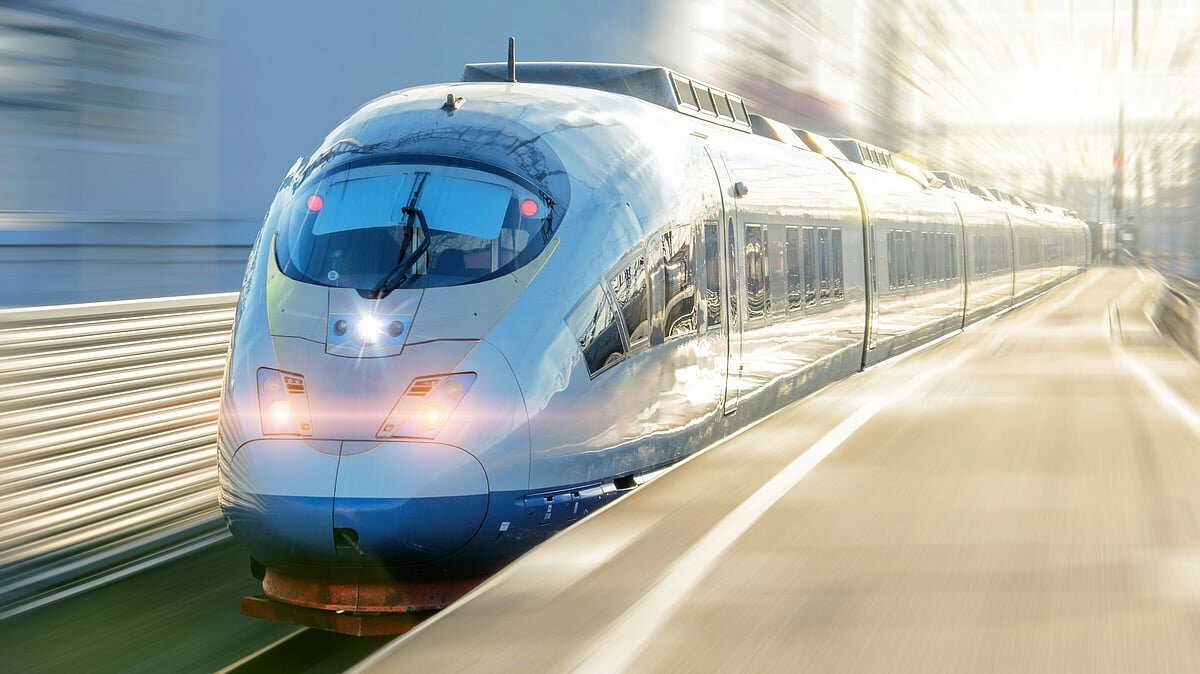
The seven proposed high-speed rail corridors announced in the recent Union Budget will span a combined length of over 4,000 kilometres. The routes include Mumbai–Pune, Pune–Hyderabad, Hyderabad–Bengaluru, Hyderabad–Chennai, Chennai–Bengaluru, Delhi–Varanasi and Varanasi–Siliguri. India’s bullet train project will exclusively use Japan’s Shinkansen technology, similar to how Russian metro technology was adopted for the Kolkata Metro. The trains are designed to operate at a maximum speed of 320 kmph. Following the Budget announcement, the Railways initiated preparatory work for these seven corridors.
However, construction on the Mumbai–Ahmedabad high-speed rail corridor had already commenced before the declaration of the new routes.
ALSO READ | No voter to be removed for minor mistakes, says Supreme Court; appeals allowed within 10 days
After Finance Minister Nirmala Sitharaman announced seven high-speed rail corridors together in the budget, Railway Board members sat in a high-level meeting. There, each of the seven corridors' DPR (Detailed Project Report) was discussed. A Railway Board member said, "We need to first get an idea of how much it might cost to build which route."
After that, another round of discussions was held with officials of the 'National High Speed Rail Corporation Limited (NHSRCL)'. This organisation is responsible for constructing the Mumbai-Ahmedabad bullet train corridor. NHSRCL was called to the meeting to get an idea of how quickly work on the seven new corridors could begin and how soon that work could be completed.
One of the key topics of discussion at the Railway Board was what type of personnel would be recruited for implementing this high-speed rail project. Railway Board members emphasised recruiting technically skilled personnel to make these projects effective. It was decided that progress on each 'action point' would be reviewed at appropriate levels to move the work forward. This ensures the central government stays informed about every phase of the work. Additionally, it was decided that dedicated field teams would be formed for each project to standardise this high-speed rail system across the country, and pre-construction activities would begin very quickly.
ALSO READ | Final electoral roll update delayed again as Election Commission extends revision schedule
The centre plans to run the country's first bullet train on a 100-kilometre stretch of the Mumbai-Ahmedabad corridor by 2027. The Mumbai-Ahmedabad high-speed rail corridor will be approximately 508 kilometers long. Of this, 352 kilometres will be in Gujarat and Dadra and Nagar Haveli, while 156 kilometres will be in Maharashtra. This corridor will connect Sabarmati, Ahmedabad, Anand, Vadodara, Bharuch, Surat, Bilimora, Vapi, Boisar, Virar, Thane and Mumbai.
Regarding rail projects in Bengal, Railway Minister Ashwini Vaishnaw often mentions land-related problems and accuses the state government of non-cooperation. But according to railway sources, the Mumbai-Ahmedabad bullet train project is also repeatedly facing land acquisition problems. Due to this, the initial cost of that bullet train project has increased from 1.08 lakh crore rupees to almost double.