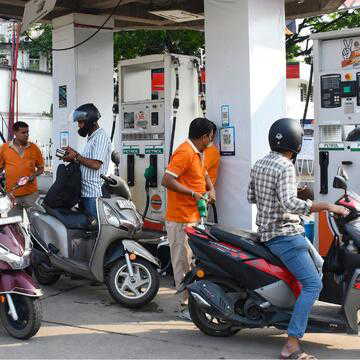
India's push towards cleaner mobility has opened up an unexpected debate among vehicle owners. Can using E20 fuel in older vehicles lead to insurance claim rejection if the engine gets damaged?
The concern has gained traction after social media users began questioning whether higher ethanol blends could negatively affect vehicles that were not originally designed to handle them.
The issue has become more relevant after the government exempted petrol blended with 22 to 30 per cent ethanol from central excise duty, extending benefits already available to E20 fuel and signalling a stronger push towards ethanol-based energy solutions.
However, while the transition supports India's energy security goals, many motorists are worried about the implications for their existing vehicles.
Government dismisses viral damage claims
The government's Press Information Bureau Fact Check Unit has rejected claims that E20 fuel inherently damages vehicles.
Authorities have clarified that E20 is a government-approved fuel and that viral messages broadly claiming E20 will automatically ruin engines are misleading.
The broader objective behind expanding ethanol blending is to reduce dependence on imported crude oil, cut emissions and support domestic biofuel production.
However, the clarification does not eliminate all concerns surrounding older vehicles.
Compatibility remains the key issue
Insurance companies and automobile experts say the real issue is not E20 fuel itself but whether a vehicle is designed to use it.
India's automobile industry began manufacturing E20-compatible vehicles from April 2023. Vehicles sold before this transition may not have been engineered to handle higher ethanol concentrations.
Ethanol has different chemical properties compared to conventional petrol. It attracts moisture and can potentially affect fuel lines, rubber components and engine parts in vehicles that were never designed for such blends.
If damage occurs because a vehicle owner repeatedly uses a fuel beyond the manufacturer's recommended specifications, insurers may examine whether negligence was involved.
According to NDTV, insurers could potentially question claims if a non-compatible vehicle suffers fuel-related damage due to improper fuel usage.
Also Read | Greenfield vs brownfield projects: Why India needs both new cities and old city upgrades?
Will insurance claims automatically be rejected?
The answer is no. There is currently no blanket rule stating that using E20 fuel will void your insurance policy.
According to NDTV, insurance companies assess claims individually based on the cause of damage, vehicle specifications and policy terms.
However, if investigators determine that an owner knowingly used incompatible fuel against manufacturer recommendations and that decision directly caused the damage, claim disputes may arise.
Experts advise motorists not to assume that standard comprehensive insurance automatically covers every type of engine failure.
Also Read | El Nino alert: Centre asks states to brace for drought risks, activates Kharif action plan
What should vehicle owners do now?
The simplest way to avoid complications is to verify whether your vehicle is E20-compatible.
Owners can check their vehicle manual, the manufacturer's website, or consult authorised dealerships. Most manufacturers have already published compatibility lists for their models.
Consumers should also carefully read their insurance policy documents and understand exclusions related to improper usage or negligence.
As India accelerates its ethanol transition, awareness will become just as important as adoption.
The fuel itself is not the problem. Using it in a vehicle never designed for it could prove one.