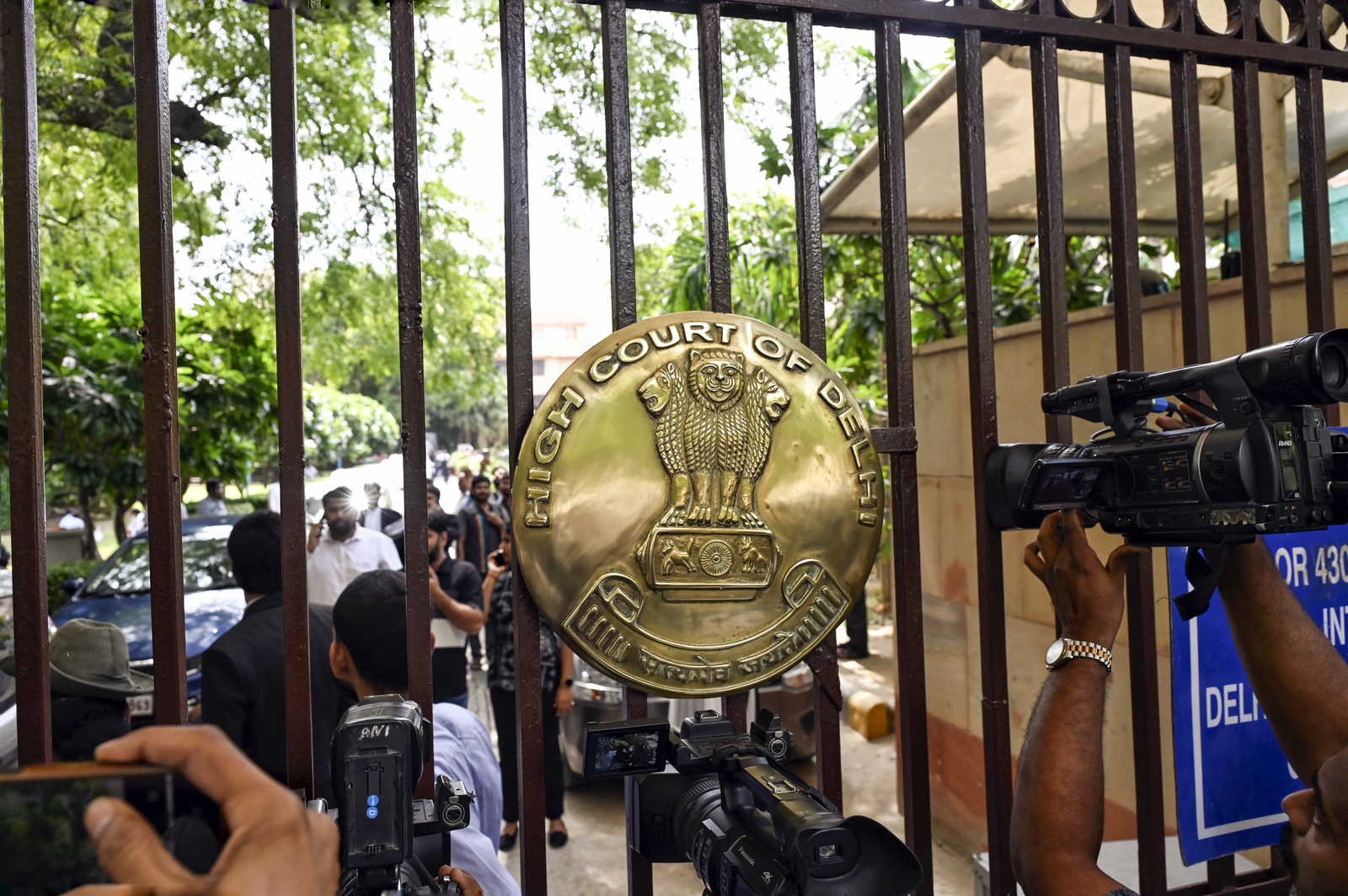
The Delhi court on Saturday remanded four accused to custody on concerns over national image and public order. The court observed that their alleged actions went far beyond the bounds of legitimate dissent. The court noted that the incident in question not only disrupted a significant event but also risked tarnishing India’s diplomatic standing before foreign stakeholders. With preliminary findings pointing toward a possible larger conspiracy and multiple absconding associates, the case has taken on serious legal and security dimensions.
Court’s sharp observations
Judicial Magistrate First Class Ravi of Patiala House Courts did not mince words while addressing the gravity of the allegations. In his order, he stated that the accused persons’ actions “imperil not merely the event’s sanctity but also the Republic’s diplomatic image before foreign stakeholders,” making them “wholly unprotected by constitutional safeguards.”
The court further remarked that the conduct in question “palpably transcends the ambit of legitimate dissent, metamorphosing into a blatant assault on public order.” Such observations signal that the judiciary views the matter not as a routine breach of law and order, but as a potential threat with wider ramifications.
Also Read | Delhi on high alert as intel warns of Lashkar-e-Taiba terror plot
Risk of absconding and conspiracy angle
A significant factor in the decision to remand the accused to custody was the perceived risk of absconding. The four individuals hail from remote regions across Bihar, Uttar Pradesh and Telangana. The court observed that their geographical dispersion, coupled with early investigation findings, heightens the possibility of evasion.
The order also referenced “external conspiracy links,” suggesting that investigators suspect coordination beyond the immediate accused. The presence of multiple absconding associates has further intensified concerns about tampering with evidence, particularly digital footprints, financial transactions and statements from co-accused.
Given that the alleged offences occurred in the context of an international forum, the court stressed that the matter attracts “stringent scrutiny,” as it potentially implicates state security and public order at a sensitive juncture.
Also Read | Delhi on high alert: Islamabad blast link, revenge angle, temple on hit list - key points explained
Police arrested IYC National Secretary Krishna Hari, a resident of Bihar; IYC National Coordinator Narasimha Yadav; and two other members, namely, Kundan Yadav and Ajay Kumar, shortly after the incident on Friday. Authorities are continuing to examine electronic records, financial trails and communication data to establish the extent of planning and coordination involved.
Investigators are also working to trace other individuals believed to be linked to the episode.
The court’s order sends a clear message: dissent may be protected, but actions perceived as jeopardising national security or diplomatic credibility invite rigorous legal consequences.