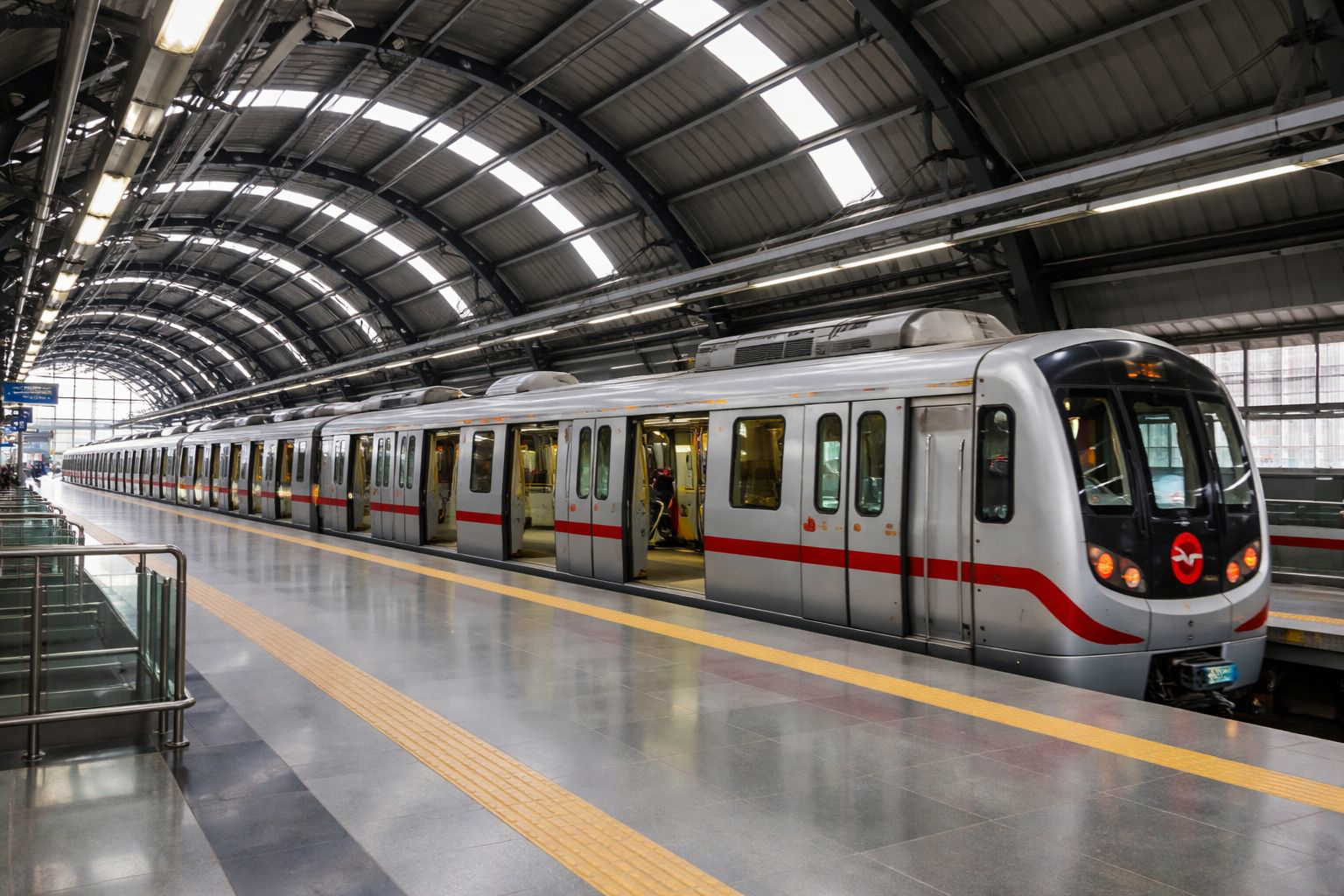
A major program of mid-life refurbishment has been launched by the Delhi Metro Rail Corporation (DMRC) to enhance the safety, comfort, and quality of the journey of passengers.
This project aims at improving the old rolling stock trains (RS-1), which are around twenty years old, to meet contemporary standards.
Also Read | Noida protest: UP govt begins talks as workers demand wage hike, weekly off, overtime pay
Phased upgrade of ageing trains in progress
According to DMRC, a total of 70 trains across the Red and Blue lines are being refurbished in phases. So far, 31 trains have been upgraded, including 12 in the first phase and 18 in the second. Work on additional trains is set to continue in subsequent stages.
The third phase will focus on 22 Blue Line trains, expected to be fully refurbished by November 2027. These trains, introduced between 2002 and 2007, have completed nearly 19 to 24 years of service.
Delhi Metro Managing Director Dr. Vikas Kumar recently inspected the first refurbished train under the latest phase before it was deployed for passenger service.
Upgraded interiors, smarter systems
The refurbishment initiative involves a full-scale upgrade of interiors and technology. The coaches and cabins have been freshly painted to repair wear and tear, and their electrical control panels have been refurbished.
Trains now have an IP-enabled Passenger Announcement and Passenger Information System (PA-PIS), CCTV cameras, and LCD Dynamic Route Map system. It helps passengers stay updated about routes and arrival timings at different stations.
Also Read | Ghaziabad shock: thief gets stuck between clinic shutter and wall during night break-in attempt
Passengers can also communicate directly with train operators during emergencies through the upgraded interface.
Focus on safety and passenger comfort
DMRC has also upgraded its fire detection system, which consists of fire detectors in all train cars. Old relays and Miniature Circuit Breakers have been replaced by state-of-the-art equipment.
In line with the requirements of present-day commuters, charging ports for mobile phones and laptops have been provided. Additional cables and connectors have been included to accommodate newer systems.