India is currently facing an LPG shortage in 2026, driven by disruptions in West Asia, where ongoing tensions have affected global gas supply routes. The impact is being felt across sectors. Commercial users like hotels and restaurants are dealing with higher cylinder costs, while households are experiencing delays in receiving refills.
Amid these challenges, attention is also turning to alternative cooking solutions. One emerging option is the hydrogen stove, which generates hydrogen gas using water and electricity within the unit itself. This hydrogen is then used for cooking, offering a potential alternative to traditional LPG cylinders.
About the hydrogen stove
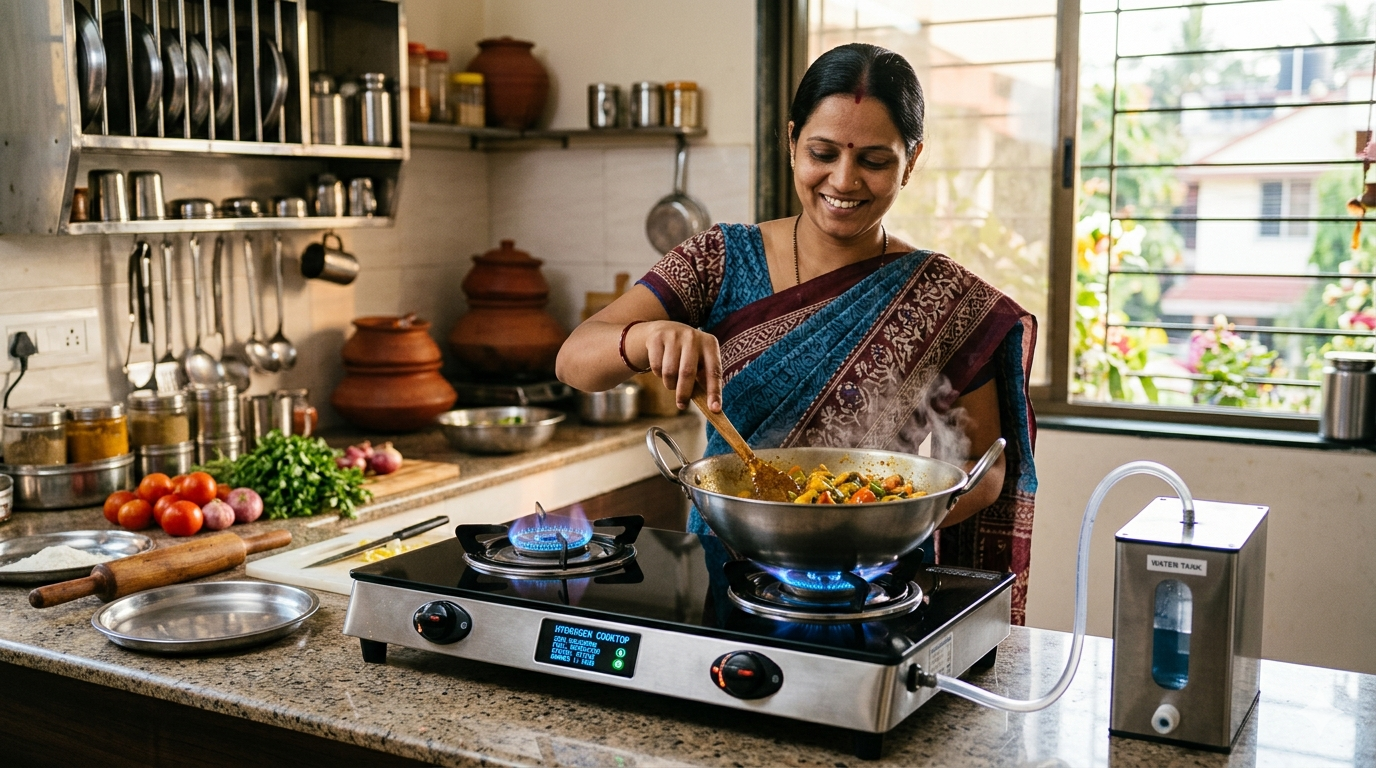
This is a Made-in-India hydrogen stove that claims to run completely on green hydrogen produced from water. It costs about a staggering ₹1.5 lakh and has been made as a modern cooking stove that can replace LPG gas stoves in the future.
It is easy to use and works like a plug-and-play machine. According to reports, inside it, there is a special part called a PEM electrolyser that helps turn water into hydrogen gas, which is then used for cooking.
This means it can generate hydrogen directly inside the stove using water, thus eliminating the need for gas cylinders or external fuel storage.
Right now, the technology is still in its trial stage and is being tested in places like community kitchens, canteens, and institutional cooking setups. Experts believe it could become a major clean cooking solution in the future if it can be made cheaper and easier to scale.
Also Read | Who is Nida Khan? TCS Nashik HR arrested in harassment, conversion case
How the hydrogen stove is different?
The hydrogen stove is different because it uses green hydrogen as fuel instead of LPG gas. It has two burners and looks like a normal table-top stove made of stainless steel, but it works in a very different way.
According to a PV magazine report, this gas stove was developed by a company called Greenvize. Inside the stove, there is a special machine that changes water into hydrogen gas right away. So, it does not need gas cylinders or pipelines. It only needs a little water and electricity to work.
As per the report, it uses about 100 ml of water and around 1 kWh of electricity to cook for up to six hours, which is less power compared to many induction stoves. Unlike induction cooking, it also works with any type of pot or pan, so no special utensils are needed.
Turning water into fuel instantly
According to the reports, the stove uses a small machine that turns water into hydrogen gas. This gas is then used for cooking instead of LPG cylinders, so there is no need to buy or store gas tanks.
It uses very little electricity and can cook food for a long time. It also works with any kind of pots and pans, unlike induction stoves which need special utensils.
Cooking without smoke or pollution
According to experts it only makes water vapour while cooking. There is no smoke or harmful gas, so it is very clean and safe to use indoors. It costs ₹1.5 lakh, making it too expensive for most families. Right now, it is only being tested in big kitchens, government schemes, and clean energy projects.
Also Read: Delhi weather today: Rising heat pushes NCR close to early heatwave conditions
Future potential, but costly and not widely usable yet
Even though the idea is good, experts say there are some problems. It is very costly, needs safe hydrogen handling, and still depends on electricity. It will only be used widely if these issues are solved.
The hydrogen stove shows a big step forward in India’s clean cooking future. It combines new technology with eco-friendly goals. But it is still very expensive and not fully tested for common use.
If it becomes cheaper and widely produced, it could change how kitchens work in the future with clean, zero-pollution cooking. For now, it is still an early technology that shows what future cooking might look like.