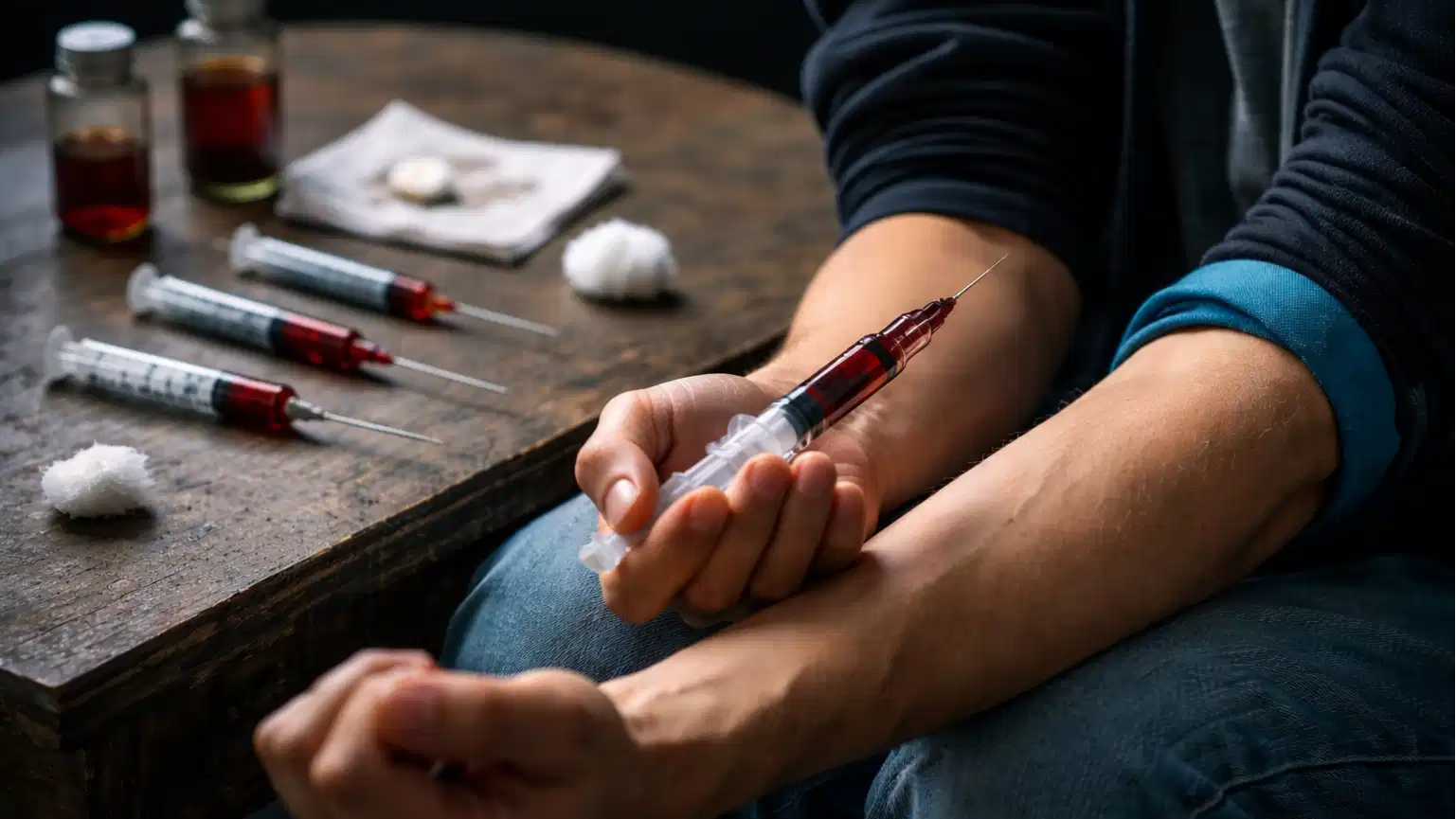
A troubling pattern has surfaced in Bhopal, where young individuals are engaging in a risky practice known as the "Blood Kick". Unlike substance abuse, this involves drawing one's own blood and injecting it back into the body in search of a brief high, NDTV reported.
Doctors say the trend, believed to have originated abroad, is now being reported locally, raising serious concerns.
At least five cases have been recorded at Gandhi Medical College since January 2026. All patients fall within the 18-25 age group, with families describing sudden behavioural changes that escalate quickly, per an NDTC report.
Also Read | Using AI for health answers? Here's how to get it right
A pattern that alarms families
According to doctors at Hamidia Hospital, cases often follow a similar trajectory. Parents initially notice unusual behaviour and attempt to intervene. However, within days, individuals become increasingly aggressive, leading families to seek psychiatric help.
Unlike conventional addiction, there are no visible signs such as substance use. Instead, doctors find self-inflicted needle marks. Patients report feeling a surge of energy, calmness, or control after reinjecting their own blood.
Understanding the psychological trap
NDTV quoted psychiatrist Dr JP Agarwal describing the condition as a "behavioral addiction". He explained that the brain begins linking the act with a sense of reward. Over time, this creates dependence on the experience rather than the substance itself.
"It's not about the blood. It's about the illusion of relief," he explained.
Experts say social media may be contributing to the spread of such behaviour. Online content that showcases extreme acts can spark curiosity, which may evolve into repeated actions and, eventually, compulsion.
Serious health risks involved
Doctors warn that repeated self-injection can have severe consequences. These include infections, sepsis, HIV, hepatitis, nerve damage, blood clots, anaemia, and even organ failure. In extreme situations, it can lead to sudden death.
Beyond physical harm, experts believe the behaviour often signals deeper mental health concerns, including depression, self-harm tendencies, or a need for control.
Also Read | What do ‘P, G, T, S’ mean in SMS? These hidden letters can help expose scams
"The same blood that keeps you alive can kill you if misused," said Dr Agarwal. "This is not a thrill. It is a step towards clinical death."
Medical professionals stress that treatment requires more than medication. Counselling, family involvement, and emotional support are key to addressing the issue. Doctors describe it as a psychological crisis that needs early recognition and sustained care.