Holi marks the arrival of spring and the joyful celebration of colours. It is a vibrant and lively festival observed across the country. This year, Holi will be celebrated on Phalguna Purnima, which falls on March 4, 2026.
The Purnima Tithi will begin at 05:55 PM on March 02, 2026, and will end at 05:07 PM on March 03, 2026.
North to South: Holi celebrations across India
North India
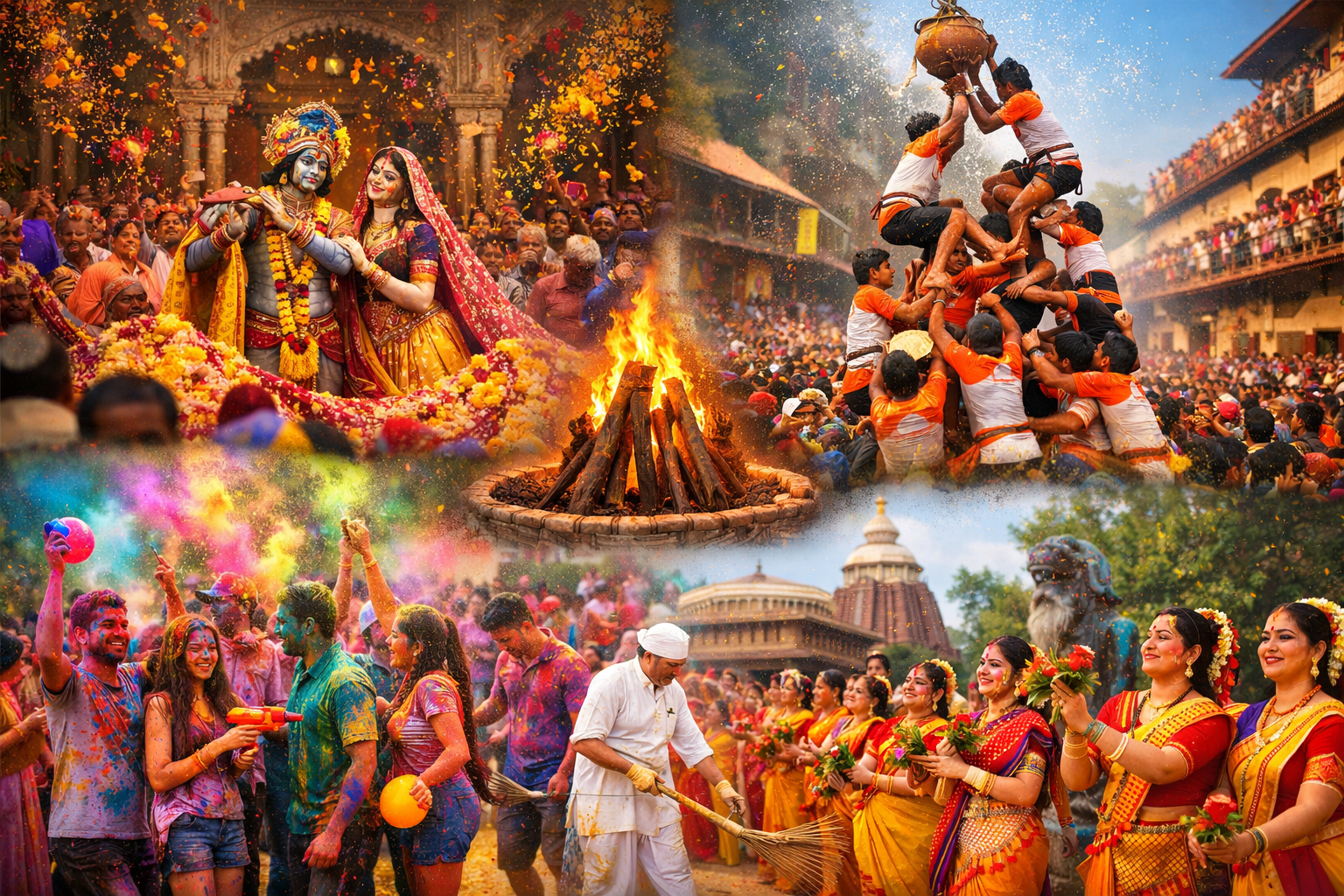
In North India, Holi is celebrated with great joy and enthusiasm, especially in Uttar Pradesh, Delhi, Rajasthan, and Punjab. As Holi is linked to Lord Krishna and Radha, places like Mathura and Vrindavan celebrate it with grand festivities. Here, Holi is known as Phoolon Ki Holi. Devotees gather at the Banke Bihari Temple in Vrindavan to celebrate the divine love of Lord Krishna and Radha. People play Holi not only with coloured powders but also with flowers.
Also Read । Middle East crisis disrupts Indian aviation: 444 flights likely to be cancelled on March 1
West India
In Maharashtra, Holi is celebrated with both fun and religious traditions. There is a popular custom known as Dahi Handi, where people form human pyramids to break a clay pot filled with yoghurt hung high above. In Gujarat, the festival, also known as Dhuleti, features Garba, a traditional dance where men and women perform energetically to drumbeats as colours fill the air.
South India
In South India, Holi is becoming increasingly popular, especially among young people. In Chennai and Bengaluru, Holi is generally celebrated with coloured powders, water balloons, and lively gatherings in parks and public spaces.
East India
In East India, particularly in West Bengal, Holi is celebrated as Dol Purnima, combining the festival of colours with traditional worship. People gather in temples, especially in Santiniketan, where Rabindranath Tagore’s Visva-Bharati University celebrates the occasion with songs and dances to welcome spring.
Also Read । Which place in India is known as 'Mini Iran'? Area shuts down after Ali Khamenei death
In Odisha, Holi includes rituals that symbolise the triumph of good over evil. People play with colours and exchange sweets as part of the festivities.
Why is Holi good for you?
Beyond its traditional significance, Holi offers several benefits. The vibrant colours uplift the mood, while outdoor celebrations in sunlight help the body produce vitamin D, which strengthens immunity. The festive atmosphere enhances mental well-being and helps reduce stress.