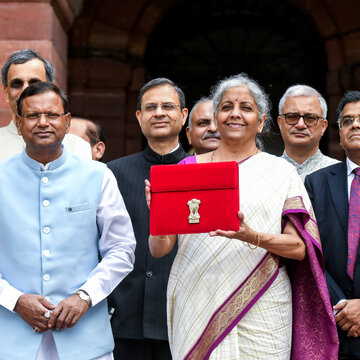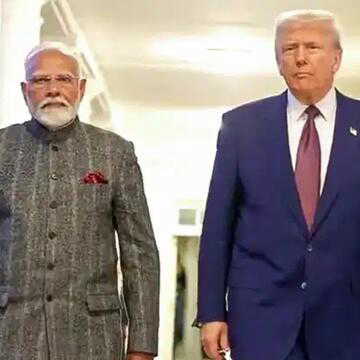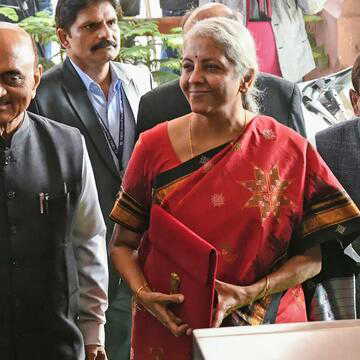
Nirmala Sitharaman, the Union Finance Minister (FM), on Sunday released a number of proposals for taxpayer relief in the FY27 Budget. Among them are a new structure for small taxpayers' compliance using automated rule-based processes and reducing tax collection at source (TCS) on major overseas spending categories.
How will the new scheme benefit?
While announcing the Budget in the Parliament, Sitharaman asserted that the new initiative will enable eligible taxpayers with smaller revenues to receive lower or no tax deduction certificates, eliminating the need for any entitlement or administered approval from tax officials.
"I propose a scheme for small taxpayers wherein a rule based automated process will enable obtaining a lower or nil deduction certificate. Instead of filing an application with the assessing officer," the FM said.
Also Read | Union Budget 2026-27: 17 cancer drugs become duty-free, rare disease medicines exempted
"I propose a scheme for small taxpayers wherein a rule-based automated process will enable obtaining a lower or nil deduction certificate instead of filing an application with the assessing officer. For the ease of taxpayers holding securities in multiple companies, I propose to enable depositories to accept Form 15G or Form 15H from the investor and provide it directly to various relevant companies."
The government noted that the change is expected to greatly lower the burdens of compliance for individuals with lower taxable incomes. It should also reduce delays and inconsistencies linked to manual processing.
Will the salaries of taxpayers be hit?
During the Budget presented on Sunday, no change in the income tax slabs for salaried individuals was announced by the FM. This means that the 'nil tax' threshold to Rs 12 lakh under the new tax regime stays in place.
The 2026 Budget came at a time when households in the middle and lower classes were looking to be given direct tax benefits or decreases that would help relieve their rising living expenses and economic concerns. However, these segments were largely left disappointed, as there were no changes to the marginal tax brackets or the standard deduction.
While the government has focused on long-term reforms, fiscal discipline and maintaining stability with the expectation of future tax relief, the lack of any type of direct relief has greatly impacted how the tax-paying citizens view the entire Budget in relation to their individual situations.
No tax slab change
For the middle class, the primary disappointment from the Budget was that the government left the income tax slab unchanged. With prevalent inflation, one area that the Budget should have provided relief to taxpayers was by raising the tax exemption limits and/or standard deductions. Unfortunately, the Budget did not address these near-term issues for salaried employees.
Instead, the government announced that a new Income Tax Act would take effect starting from April 1, 2026. The purpose of the new Income Tax Act is to reformulate the language in the Income Tax Act to make it more user-friendly and minimise disputes.
Does lower TCS on overseas spending offer relief?
Middle-class families will receive limited direct benefits from reduced Tax Collected at Source (TCS) under the Liberalised Remittance Scheme. TCS has been decreased from 5 per cent to 2 per cent for overseas education and medical treatment, and there is now no threshold for overseas tour packages with respect to TCS at 2 per cent.
This relief is narrowly focused as only a small number of taxpayers will benefit from the relief granted to families with international education or medical treatment.