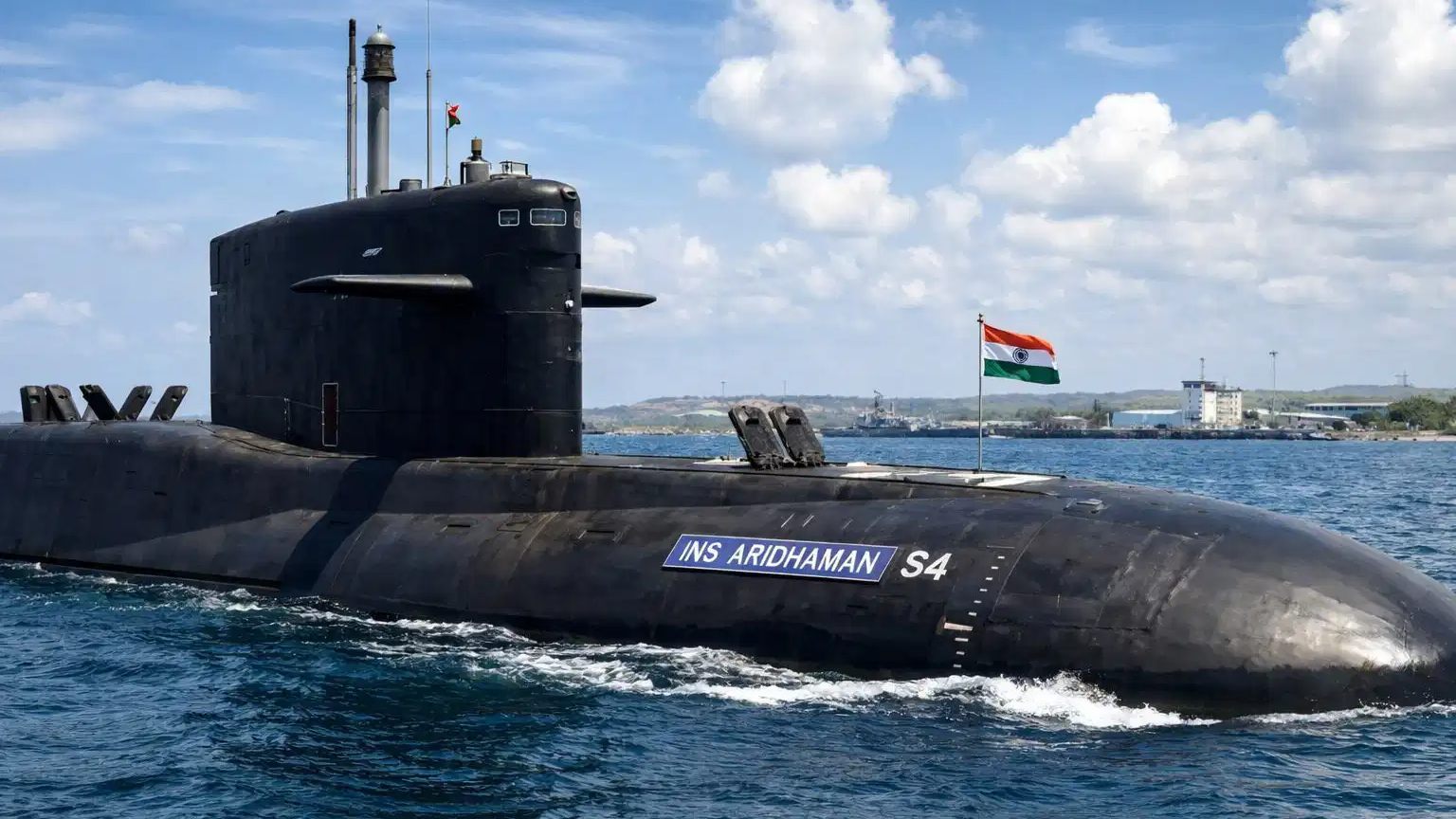
India on Friday commissioned INS Aridhaman, its third nuclear-powered ballistic missile submarine, in Visakhapatnam. The induction took place alongside the commissioning of INS Taragiri.
Defence Minister Rajnath Singh said the name “Aridhaman” reflects strength, adding that the platform will contribute to the country’s security framework.
Also Read | Planning your trip to Kashmir? Rain and snow likely to be part of your itinerary
Built under the Advanced Technology Vessel (ATV) programme, the submarine has a displacement of around 7,000 tonnes and includes a significant share of indigenous components.
Three submarines now operational
With INS Aridhaman joining Indian Navy service, India now operates three SSBNs—INS Arihant, INS Arighaat and INS Aridhaman. Officials said this allows for a rotation system where one submarine remains on patrol, one prepares for deployment and another undergoes maintenance.
The addition is part of India’s effort to maintain land, air and sea-based nuclear capabilities.
Upgrades over earlier submarines
INS Aridhaman is larger than the earlier submarines in the Arihant class and carries more missiles. It is equipped with eight vertical launch tubes, compared to four in its predecessors.
The submarine can carry K-15 and K-4 ballistic missiles. It is powered by a pressurised water reactor developed by the Bhabha Atomic Research Centre.
Also Read | Govt shifts over 16 lakh emails to Zoho cloud, spends about Rs 180 crore — here's why
It is also fitted with indigenous sonar and navigation systems designed for long-duration underwater operations.
Rajnath Singh emphasised the importance of maritime power, noting that nearly 95% of India’s trade moves through sea routes. He highlighted the Navy’s role in securing sea lanes, undersea infrastructure and critical trade corridors.
The Indian Navy maintains a constant presence in key areas such as the Persian Gulf and the Malacca Strait, contributing to regional stability and ensuring the safety of global maritime routes.