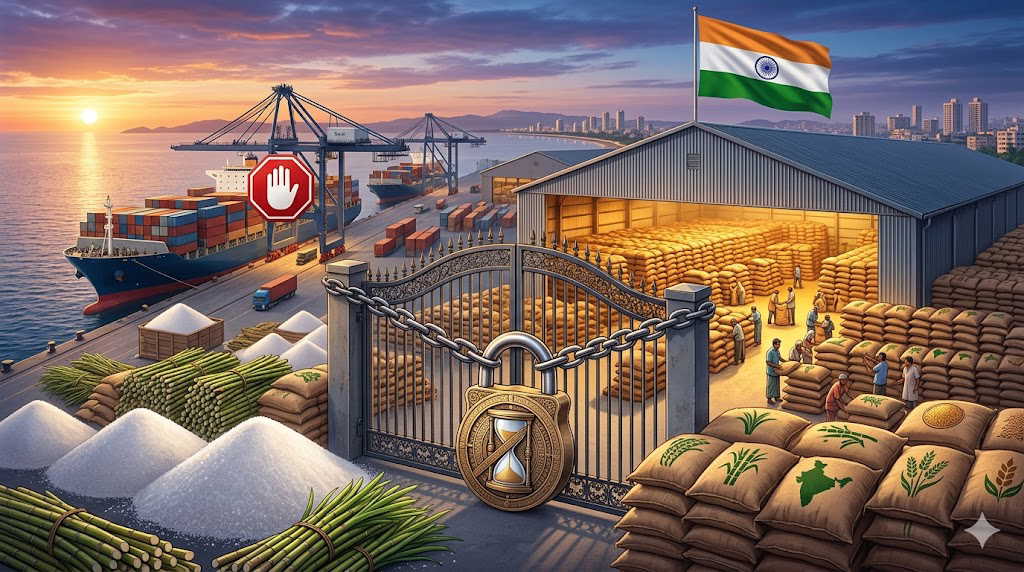
India has prohibited sugar exports with immediate effect until September 30, 2026, marking one of its strongest interventions in the commodity market in recent years. The decision, announced through a notification by the Ministry of Commerce and Industry, aims to protect domestic supplies and maintain price stability amid concerns over food security and fluctuating agricultural output.
The Directorate General of Foreign Trade amended the export policy for raw, white and refined sugar from the “Restricted” category to “Prohibited”, effectively closing the door on fresh international shipments for the next several months.
The move signals the government's intention to prioritise domestic consumption over export earnings at a time when food inflation and supply chain vulnerabilities continue to remain key concerns.
Government prioritises domestic availability
According to DD News, the export prohibition applies to sugar categories classified under specific ITC codes and will remain in force until September 30, 2026, unless withdrawn earlier.
Officials said the decision was taken to ensure sufficient stock remains available within the country and to avoid any pressure on domestic prices.
India is one of the world's largest sugar producers and exporters. However, erratic weather conditions, changing crop patterns and increasing ethanol production have repeatedly forced authorities to recalibrate export policies in recent years.
The latest decision is expected to provide a buffer for domestic consumers while allowing policymakers greater control over market dynamics.
Also Read | PoK unrest intensifies as children and women join anti-Pakistan protests
Exemptions remain for international commitments
Despite the ban, the government has carved out certain exceptions.
According to DD News, sugar exports to the European Union and the United States under CXL and Tariff Rate Quota commitments will continue under existing procedures.
Shipments under the Advance Authorisation Scheme will also remain operational under the provisions of the Foreign Trade Policy 2023.
Authorities have additionally protected consignments that were already in transit before the notification was issued.
Exports will still be allowed if loading had commenced earlier or if shipping bills had already been filed and vessels were anchored at ports before the new order came into effect.
Port authorities will verify these cases before granting final approval.
Also Read | Delhi driver's queue-jumping stunt in Shimla sparks outrage, internet demands strict action
Flexibility retained for humanitarian and strategic needs
According to DD News, the government has also retained the option to permit sugar exports to specific countries if formal requests are made to address food security concerns.
This provision gives India room to balance its domestic priorities with diplomatic and strategic obligations.
Officials have clarified that if the export ban is not extended beyond September 30, 2026, sugar will automatically revert to the “Restricted” export category.