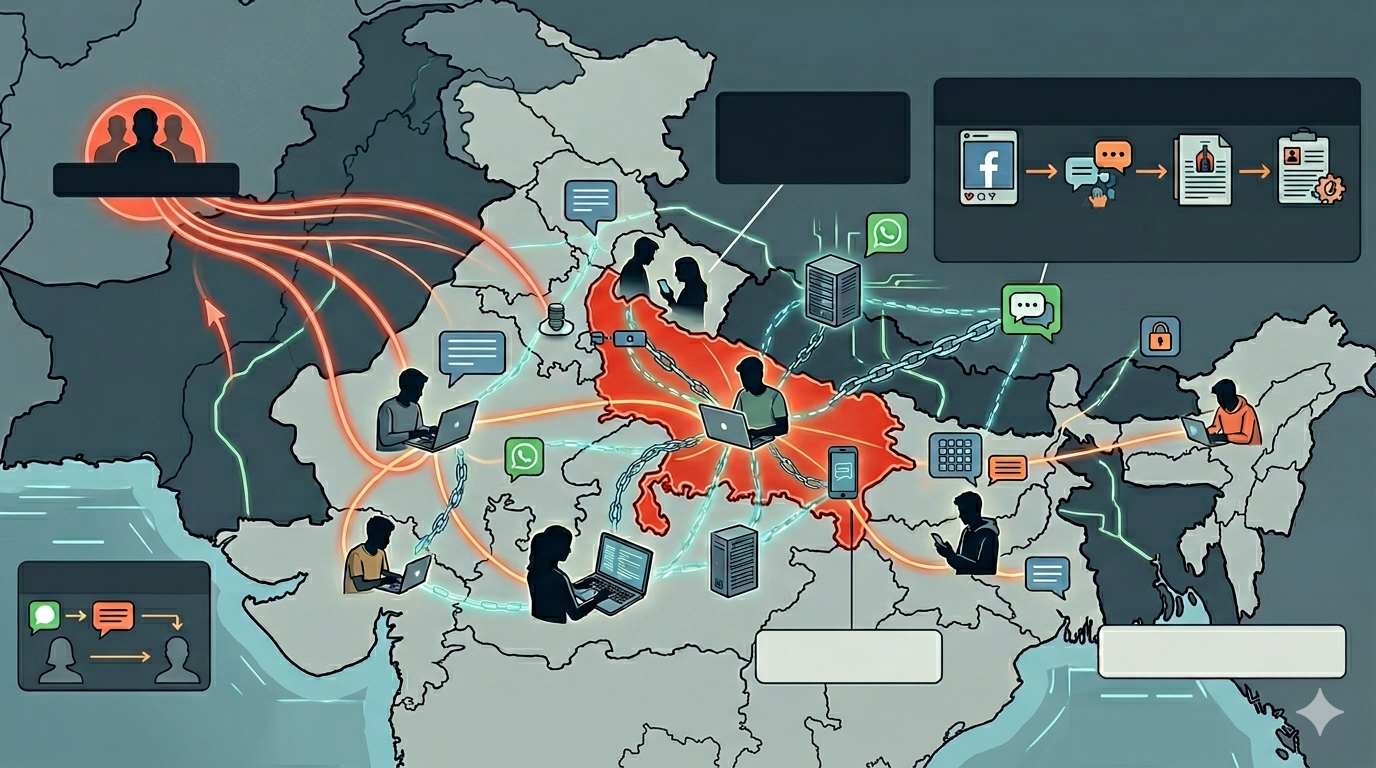
Uttar Pradesh has surfaced as a key focus in a wider investigation into a Pakistan-linked digital radicalisation and sleeper cell network. According to security agencies cited by Hindustan Times, the case reflects an evolving model of “hybrid threat” combining online influence, espionage, and organised crime through decentralised modules.
Digital radicalisation network under scanner
Investigators believe the network operates through social media platforms and encrypted communication channels to identify and influence vulnerable youth. The recruitment process reportedly begins with gradual online engagement, later escalating into extremist narratives and operational instructions, per a report by Hindustan Times.
Officials say such structures are designed to remain difficult to detect, as they function through multiple small, dispersed digital cells instead of a single identifiable organisation. The use of social media platforms and anonymous accounts has made tracking these activities more complex for enforcement agencies.
Also Read | 'Lack of understanding': India rejects claims of declining freedom after remarks in Netherlands
Uttar Pradesh is identified as a key target region
Security agencies have flagged Uttar Pradesh as a significant target due to its large youth population and widespread internet access. Recent arrests by the Anti-Terrorism Squad (ATS) in the state have further strengthened concerns about ongoing recruitment attempts through online channels.
Investigators have linked several recent cases to individuals who were allegedly contacted and groomed on social media before being drawn into deeper networks. These developments are part of broader multi-state operations conducted by central and state agencies across northern and central India.
Foreign handlers and coordinated influence operations
The probe suggests involvement of foreign-based handlers who allegedly use digital platforms to maintain contact with recruits in India. These handlers are believed to guide individuals through staged interactions, gradually introducing them to extremist content and operational tasks.
Officials have also pointed to the use of curated online personas and propaganda content designed to attract youth seeking identity, financial incentives, or social mobility. Such strategies are being described by agencies as part of a structured digital grooming process.
Also Read | Dating app romance turns into tragic dowry case in Bhopal as Noida woman dies six months after marriage
Hybrid threat model and evolving security challenges
Security officials describe the emerging pattern as a “hybrid threat” combining cyber radicalisation, espionage, and criminal activity under one loosely connected framework. The decentralised nature of these modules allows them to function across borders while remaining fragmented and harder to dismantle, as per Hindustan Times.
Authorities continue to monitor encrypted platforms and social media ecosystems as part of ongoing counter-radicalisation efforts, while further investigations are underway to map the full extent of the network and its linkages.