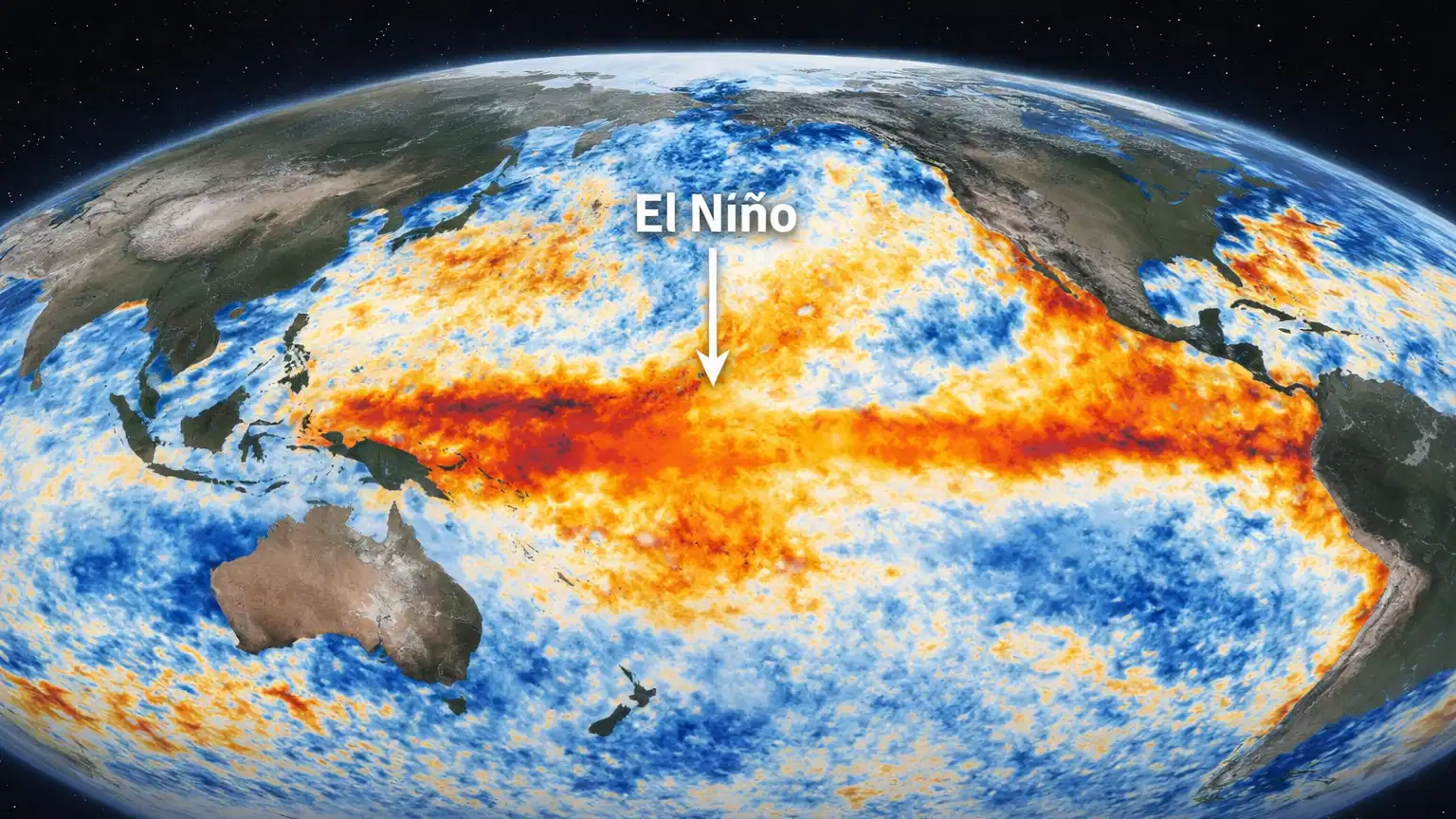
Climate scientists are closely monitoring the signs of a possible Super El Niño, a significant climate event, which might impact the weather worldwide and lead to extreme heat waves in India during the year.
According to new climate projections by the European Centre for Medium-Range Weather Forecasts (ECMWF), the Pacific Ocean could move into a strong El Niño phase during the second half of 2026. This might occur as early as June, as ocean and atmospheric conditions could combine to produce a strong warming event.
Super El Niño occurs when sea surface temperatures over the central and eastern Pacific Ocean rise well above normal. This warming of the sea causes changes to the circulation of the air and rainfall and temperature patterns.
How the El Niño pattern develops
In usual circumstances, strong trade winds blow warm surface waters to Southeast Asia and Australia. This process enables cooler waters to rise near the west coast of South America.
In an El Niño event, the trade winds are weaker. The warm waters are carried eastward across the Pacific. This changes the way heat and moisture are transported through the atmosphere. This change results in more rainfall occurring in some parts of the Pacific region, while other regions, such as the Indian Ocean region, receive less rainfall and experience higher temperatures.
Why India could see extreme heat
For India, El Niño years are frequently linked to weaker monsoon rainfall and hotter summer conditions.
The Indian monsoon is heavily dependent on the temperature difference between land and sea. An El Niño occurrence, therefore, leads to a weakening of the Indian monsoon winds. If an intense El Niño happens this year, meteorologists have suggested that there could be an increase in heatwaves in the northern and central parts of India. There are, however, fears about the possible variations in the Indian monsoon that may occur. According to climate experts, the prolonged heat and decreased rainfall may cause additional stress in the summer.
Global weather effects of a Super El Niño
A strong event like this can have significant effects on weather conditions worldwide. The last two big events occurred in 1997-98 and 2015-16, and they were accompanied by unusual weather occurrences like droughts, floods, and record high global temperatures.
Also Read | Need an LPG refill? Here's the fastest way to book your cylinder
According to scientists, a strong event like this could also have an effect on tropical storms. It could slow down hurricane development in the Atlantic Ocean and boost typhoons in the western Pacific Ocean.
While experts say that it’s still too early to say anything about the strength of the possible event, they agree that the signs of a strong event are becoming more and more evident, and for India, it’s essential to keep an eye on ocean temperatures and be prepared for possible heatwaves.