The ongoing conflict in West Asia is beginning to ripple through the Indian economy, pushing up prices of everyday essentials and several consumer goods. India's heavy reliance on energy imports means that disruptions in key supply routes, particularly the Strait of Hormuz, can quickly affect domestic costs.
The waterway is a crucial channel for global energy shipments and handles a large share of India's LPG and crude oil imports. As tensions rise in the region, higher freight costs, insurance premiums and supply uncertainties are already being reflected in prices across sectors.
Why the conflict matters for India
India imports a significant portion of its energy needs, and any instability in the Strait of Hormuz has direct implications for fuel supplies. The passage carries a major share of the country's LPG and crude oil imports, which means disruptions can quickly translate into higher transport and production costs.
Also Read | Centre revokes NSA detention of Sonam Wangchuk after 5 months in Jodhpur jail
These rising energy costs are now filtering through multiple industries, from food and household essentials to electronics and logistics.
Government urges calm amid shortages
Authorities have also warned that panic buying and rumours could worsen the situation. The government has invoked the Essential Commodities Act to keep supplies stable and prevent hoarding.
India currently maintains a strategic buffer stock of about 12 to 16 weeks, while domestic LPG production has reportedly been increased by around 25 per cent. Officials have urged people to rely only on verified information and avoid stockpiling essential items unnecessarily.
Imported inflation begins to show
As of mid-March 2026, global crude oil prices are hovering close to $120 per barrel. This surge has raised freight insurance costs and fuel surcharges, triggering what economists describe as "imported inflation".
While headline inflation had remained relatively stable at around 3.2 per cent in February, rising energy and transport costs could push the Consumer Price Index (CPI) closer to the 5 per cent mark. At the same time, the rupee has weakened to around Rs 93 against the US dollar, while gold prices have surged as investors move toward safer assets.
Items that are already getting costlier
Several everyday goods and services are already witnessing price increases.
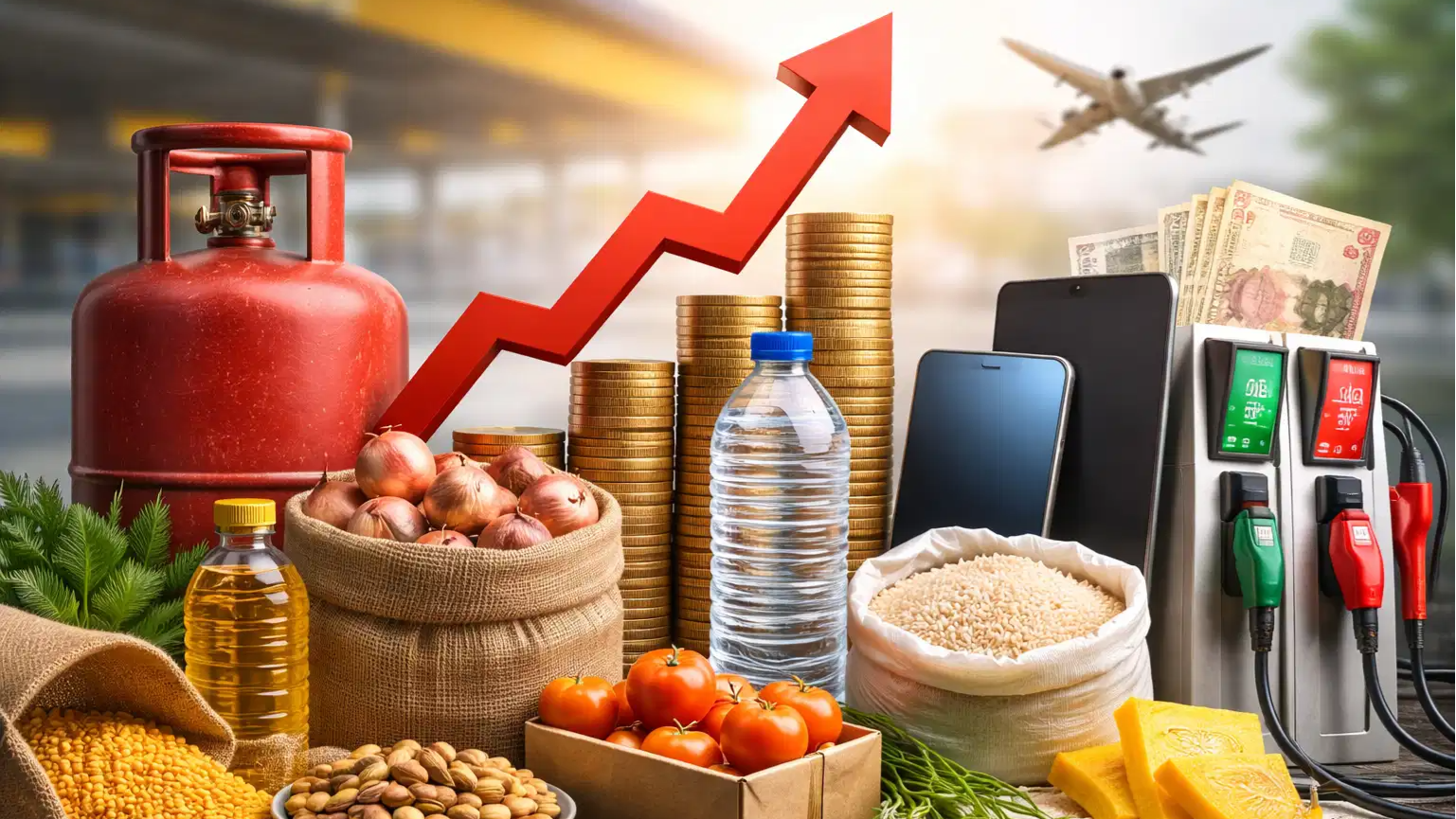
Domestic LPG cylinders have risen by about Rs 60, while commercial LPG prices have jumped by roughly Rs 115 due to supply pressures. Edible oils such as palm and sunflower oil have become costlier by Rs 15 to Rs 20 per kilogram.
Transport-related costs are also affecting other goods. Bottled drinking water may see a Rs 1 to Rs 2 increase due to higher plastic polymer prices, while restaurant bills in some places have risen by 10-15 per cent as businesses introduce fuel surcharges.
Also Read | Super El Niño alert: Why scientists say India could face intense heat this year
Electronics are also facing price pressure. Supply disruptions for materials like helium, copper and aluminium are pushing up the cost of smartphones, laptops and appliance repairs. At the same time, jewellery prices are climbing due to limited supplies of rough diamonds and rising global demand for gold.
Together, these changes highlight how geopolitical tensions abroad are gradually shaping everyday expenses for households across India.