Engineers from the Aviation Industry Corporation of China, or AVIC, were stationed in Pakistan during the battle that followed Operation Sindoor in May 2025, China has openly acknowledged.
One of the engineers identified in the broadcast, Zhang Heng of AVIC’s Chengdu Aircraft Design and Research Institute, said he had provided technical support during the conflict.
Also Read | Think you know India? Madhya Pradesh’s hidden wonders may surprise you
China has confirmed for the first time that it provided on site technical support to Pakistan during last year’s four day conflict with India.
— India Today Global (@ITGGlobal) May 8, 2026
Chinese state media aired interviews with engineers linked to fighter jet development, reviving debate over Beijing’s military role… pic.twitter.com/FjApKfPJoZ
China’s frontline technicians describe chaos behind the scenes
In comments aired by CCTV, Zhang described the conditions at the support base as intense, saying the team often heard fighter jets taking off and air-raid sirens, while temperatures in May were close to 50 degrees Celsius.
He said the aim was to ensure Chinese equipment could “truly perform at its full combat potential.” Another AVIC engineer, Xu Da, compared the fighter jet to a “child” and said the aircraft “just needed the right opportunity.”
Also Read | Hantavirus outbreak linked to MV Hondius: ICMR says virus poses no immediate danger to India
China has reportedly confirmed that its engineers provided on-ground technical support to Pakistan during last year’s conflict with India following Operation Sindoor. The revelation has intensified focus on growing China-Pakistan military cooperation.#China #Pakistan #India… pic.twitter.com/5MOmuSAmfa
— The Daily Jagran (@TheDailyJagran) May 8, 2026
More than just weapons?
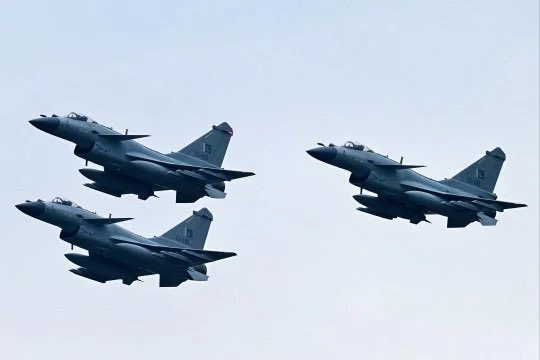
Pakistan’s air force operated Chinese-made J-10CE fighter jets during the conflict, a model produced by an AVIC subsidiary.
The admission marks the first public confirmation that Chinese personnel were directly involved in support operations during the India-Pakistan clash, rather than only supplying hardware or offering diplomatic backing.
Indian officials had repeatedly argued that Pakistan depended heavily on Chinese military assistance during Operation Sindoor.
Why Operation Sindoor changed the conversation?
It all started with a devastating terror attack in Pahalgam, Jammu and Kashmir, in April 2025, that took the lives of 26 innocent people. India's military response to that tragedy was what came to be known as Operation Sindoor.
India said the operation was aimed squarely at terrorist infrastructure — camps and bases in Pakistan and Pakistan-occupied Kashmir linked to groups like Lashkar-e-Taiba and Jaish-e-Mohammed. What followed was four intense days of military exchanges that included missile strikes, drone attacks, and aerial combat. It was the kind of escalation that had the world watching with bated breath.
Eventually, a combination of diplomatic back-channeling and international pressure brought both sides to the table, and they agreed to stand down. The guns fell silent, at least for now.
But one detail from the conflict sparked a separate conversation altogether — Pakistan's use of the J-10CE, a Chinese-made fighter jet. Built by the Chengdu Aircraft Corporation, the J-10CE is considered one of the most capable aircraft in Pakistan's arsenal, built to handle everything from aerial dogfights to precision ground strikes. Its reported deployment during Operation Sindoor put a fresh spotlight on just how deep China's military ties with Pakistan run—and what that might mean going forward.