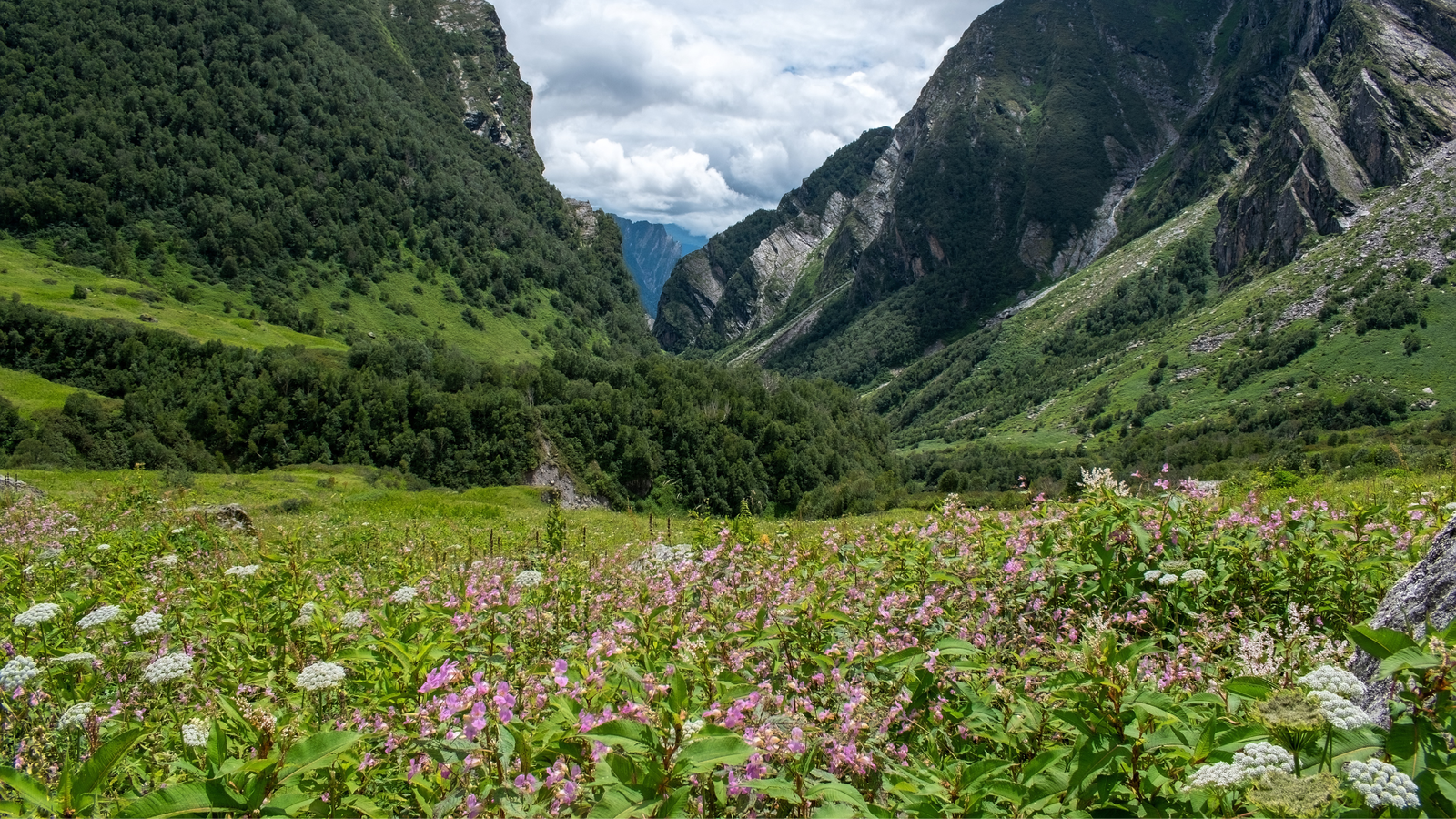
The Valley of Flowers National Park in Uttarakhand, a UNESCO World Heritage Site renowned for its spectacular alpine meadows and rich biodiversity, reopened to visitors on Monday for the new tourist season. Situated in the Chamoli district, the park attracts thousands of trekkers, photographers**,** and nature enthusiasts every year and will remain open to tourists until October 31.
Valley of Flowers reopens
The Valley of Flowers is accessible to visitors annually between June and October. However, officials consider the period from mid-July to mid-August to be the best time to visit, as the valley reaches its peak blooming season during these weeks. At this time, the landscape is covered with more than 600 species of flowers, creating one of the most colourful natural spectacles in the Himalayas.
Also Read | Old Manali or New Manali? Here’s what truly separates the two hill towns
According to the department, the Valley of Flowers currently hosts more than 300 species of flowers, along with several rare varieties of flora. While monsoon rains during the season can make trekking trails slippery, they also contribute to the valley’s vibrant appearance. Visitors may also spot the rare Brahmakamal flower, which grows at elevations of around 14,000 feet.
Travellers can reach the Valley of Flowers through multiple routes. The nearest airport is Jolly Grant Airport, although motorable roads extend only up to Govindghat. From there, visitors must undertake an approximately 16-km trek to reach the valley. The nearest railway station is Rishikesh, located about 273 kilometres from Govindghat along NH58. Visitors arriving by train can continue their journey by bus or taxi.
How to trek to the Valley of Flowers
The trek to the Valley of Flowers is generally considered moderate in difficulty, though it can become more challenging when combined with a visit to Hemkund Sahib. Most trekking operators offer itineraries ranging from four to six days, with Poolna or Pipalkoti commonly serving as base camps. Many travellers also choose to stay in Govindghat before beginning the trek.
Also Read | Darjeeling feels too crowded? Head to peaceful Peshok instead
The route from Poolna or Govindghat leads to Ghangaria, also known as Gobind Dham, which serves as the main base for visitors. The Valley of Flowers is located approximately four kilometres from Ghangaria. As overnight stays and camping inside the national park are prohibited, visitors are required to return to Ghangaria before 5 pm.
The Valley of Flowers National Park is managed by the Nanda Devi National Park Division, which also oversees Nanda Devi National Park. Together, the two parks form the core zones of the Nanda Devi Biosphere Reserve and enjoy UNESCO World Heritage Site status.