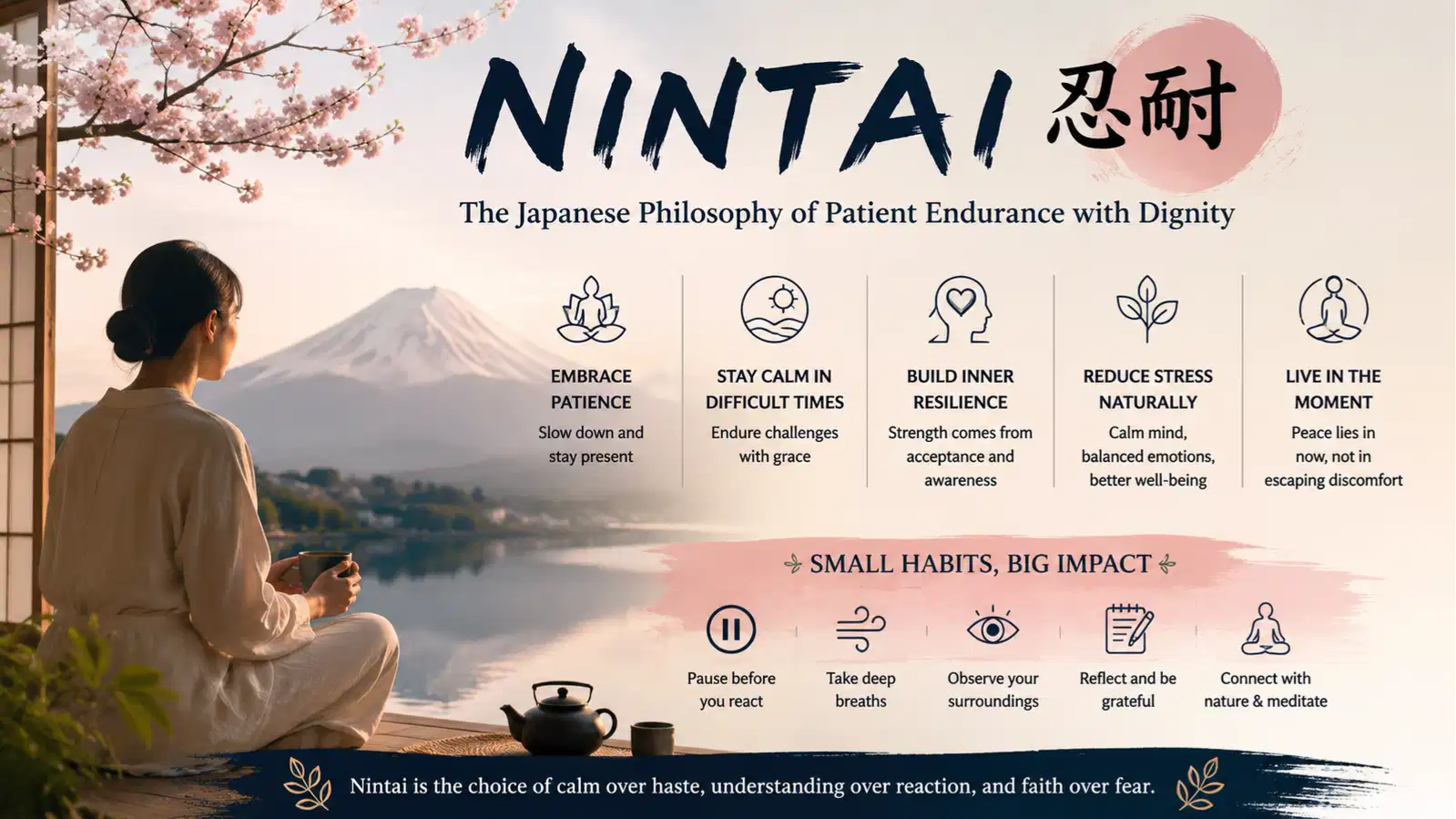
In a world driven by deadlines, instant results and constant productivity, the Japanese philosophy of Nintai is gaining attention for its focus on patience, acceptance and emotional balance. The concept encourages people to slow down, remain calm during difficult situations and develop resilience without rushing to overcome challenges.
Derived from the Japanese words Nin, meaning “to endure”, and Tai, meaning “to push through”, Nintai translates to “patient endurance with dignity”.
A different way of understanding resilience
According to Saamdu Chetri, Director of the Yogananda School of Spirituality and Happiness at Shoolini University, Nintai offers a perspective that differs from the modern understanding of resilience.
Also Read | From taboo to trend: Why young couples are trying swinging
“It’s not about rebounding, but about being with the challenge; enduring it calmly, with inner grace and mindfulness. Western psychology often focuses on coping strategies and recovering from the outside. In contrast, Nintai centres on acceptance, awareness, and inner change. It reminds us that resilience does not always have to be a reaction; it can be calm and steady, emanating from a sense of peace rather than struggle,” Chetri told The Indian Express.
Instead of treating difficulties as obstacles to quickly overcome, Nintai encourages individuals to stay present and face situations with patience and awareness.
How Nintai can reduce stress
Chetri says the practice can support emotional well-being and help people respond to stressful situations more calmly.
“When we cultivate Nintai through the five endowments of the divine: imagination, awareness, memory, will, and conscience, we slow the restless mind and become proactive rather than reactive,” Chetri notes.
He explains that this approach may help reduce stress levels and promote the body's natural state of rest and recovery.
“Nintai clearly tells us that peace lies in living in the moment,” he adds, “not in escaping discomfort.”
Small habits that build patience
Practising Nintai does not require major lifestyle changes. Simple actions such as taking a pause before replying to messages, breathing deeply while waiting or paying attention to one's surroundings can help.
“Nature, meditation, and conscious observation of thoughts,” he says, “nurture Nintai—the choice of calm over haste, understanding over reaction, and faith over fear.”
Also Read | What is a frontal lobe breakup? The relationship trend gaining attention
Over time, these small practices may help create a greater sense of patience, emotional balance and inner calm.
FAQs:
What does Nintai mean?
Nintai means “patient endurance with dignity” and emphasises calmness and resilience.
How can someone practise Nintai?
Simple habits such as mindful breathing, reflection and staying present can help cultivate Nintai.