
Yawning is usually seen as a sign of tiredness, boredom, or stress, but recent scientific research suggests it may have a deeper biological role. A study published in Respiratory Physiology & Neurobiology titled Biomechanics of contagious yawning: Insights into cranio-cervical fluid dynamics and kinematic consistency, examined how yawning affects cerebrospinal fluid (CSF) in the brain using MRI scans. Researchers wanted to find out whether yawning and deep breathing affect the brain in similar or different ways. While scientists are not clear about the impact of the findings, researchers from the University of New South Wales in Australia believe that the discovery can provide clues as to why humans and other animals evolved the capacity to yawn in the first place.
The study involved 22 healthy participants who were asked to yawn, take deep breaths, suppress yawns, and breathe normally while undergoing MRI scans. Scientists initially expected similar brain fluid patterns for yawning and deep breathing, but the results showed unexpected differences in how cerebrospinal fluid moved during these actions.
Researchers believe these findings may help explain why yawning evolved in humans and other animals, although its exact purpose is still not fully understood.
Also Read | Doomscrolling childhood? The debate just got louder
What MRI scans revealed about yawning
The scans showed that cerebrospinal fluid behaves differently during yawning compared to deep breathing. In some cases, CSF moves away from the brain during yawning, while deep breathing shows the opposite effect. This suggests yawning may have a unique role in regulating brain fluid movement. Researchers also found that blood flow leaving the brain increases during both yawning and deep breathing, allowing fresh blood to enter the brain more efficiently.
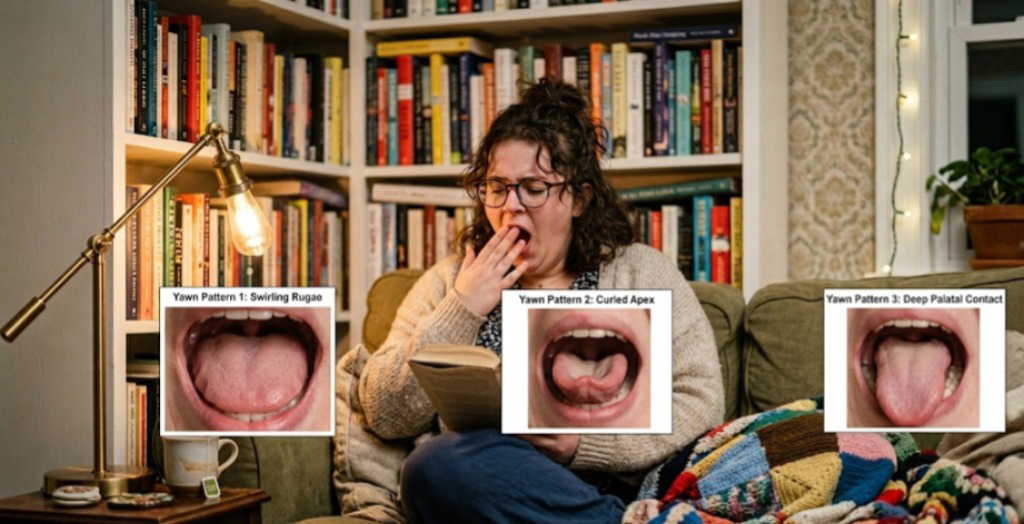 Different types of yawning patterns Ai generated
 How yawning patterns differ between individuals
Scientists also discovered that yawning is highly individualised. Each participant showed a unique yawning pattern that remained consistent every time. Neuroscientist Adam Martinac said, “Each person yawns in a unique way – so the tongue motion during the yawn is different between people, but very consistent for each person. It's almost like a fingerprint, so you could possibly identify someone just based on how they yawn." This suggests humans may have personal neural patterns controlling yawning behavior.
Also Read | Is buffet food really fresh? Chef Sanjeev Kapoor breaks buffet myths: leftovers, ladles and hygiene truths
Possible functions of yawning in the brain
Researchers are still exploring why yawning affects brain fluid differently. One theory suggests it may help clear waste from the brain through cerebrospinal fluid movement. Another possibility is that yawning helps regulate brain temperature by cooling it. These functions could explain why yawning is commonly seen across many animal species.
Although yawning is often seen as a simple reflex, this study suggests it may play an important role in brain maintenance. The distinct movement of brain fluid during yawning points toward deeper biological functions that are still being studied. Understanding this process could help scientists learn more about brain health, waste removal, and temperature regulation in the nervous system.