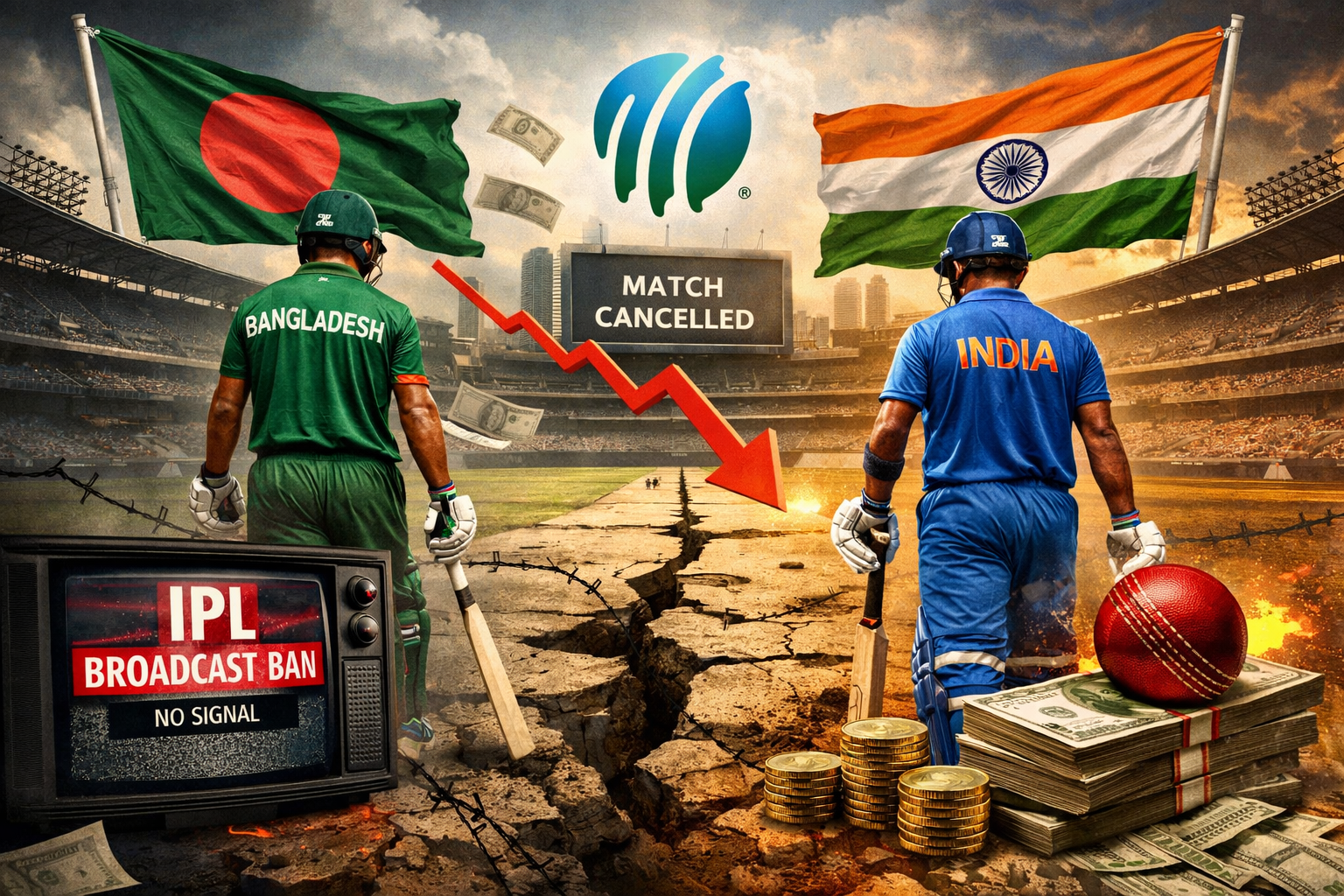
Bangladesh and India's conflict seems like it's not gonna to end anytime soon; the new year comes with new problems for BCCI. All the problems started when BCCI instructed Kolkata Knight Riders to release Mustafizur Rahman from their squad. With immediate effect, KKR released the left-arm pacer. After that, BCB asked ICC to shift their World Cup match venues to Sri Lanka, citing major security issues, and now, on Monday, the Bangladesh ministry halted the broadcasting of IPL in their country. This decision will lead to a loss of IPL broadcasting revenue. But the major question will remain on ICC, as if they approve the BCB’s request, then it can lead to a financial loss.
What will happen if ICC shifts matches?
A crucial detail in the ongoing discussion around match relocations lies in the ICC’s ticketing structure. Under ICC India ticket terms, all match tickets are owned by the ICC Business Corporation (IBC), with the BCCI designated only as the host board. This effectively places commercial control with the ICC, while the on-ground host earns revenue through agreed hosting, operational, and activation arrangements rather than full gate ownership.
As a result, the BCCI’s financial exposure is limited and largely concentrated around match-day surplus, local sponsorship activations, and hospitality demand tied to specific fixtures.
ALSO READ । What will happen if Bangladesh refuses to play T20 World Cup matches in India?
The eventual impact depends on how the ICC chooses to restructure the schedule.
Scenario A: Matches moved out, no replacement games
If matches are shifted out of India and the vacated venues are not backfilled, the gross gate revenue at risk is estimated to fall in the INR 7–30 crore range. This projection assumes stadium occupancy between 60 and 90 per cent, with blended realised ticket prices of INR 500–1,500. In this scenario, India absorbs the sharpest revenue hit.
Scenario B: Matches moved, but Indian venues backfilled
If replacement fixtures are allotted to Indian venues, the financial impact reduces significantly as ticket inventory continues to be sold. However, the quality of demand becomes the deciding factor. Replacing a high-profile fixture is commercially far more difficult than substituting a lower-interest matchup, leading to a softer but still material downgrade in returns.
Scenario C: Venue or date swaps within the existing schedule
If the ICC opts to reshuffle venues or dates while keeping India’s overall match allocation intact, the impact is largely logistical. Revenue loss is minimal, with costs restricted to re-planning, operational adjustments, and scheduling coordination.
ALSO READ । What's next after Mustafizur’s exclusion sparks an uncomfortable IPL 2026 debate?
However, right now, the ball is in the court of ICC and as per reports, ICC will make a major decision on this matter.