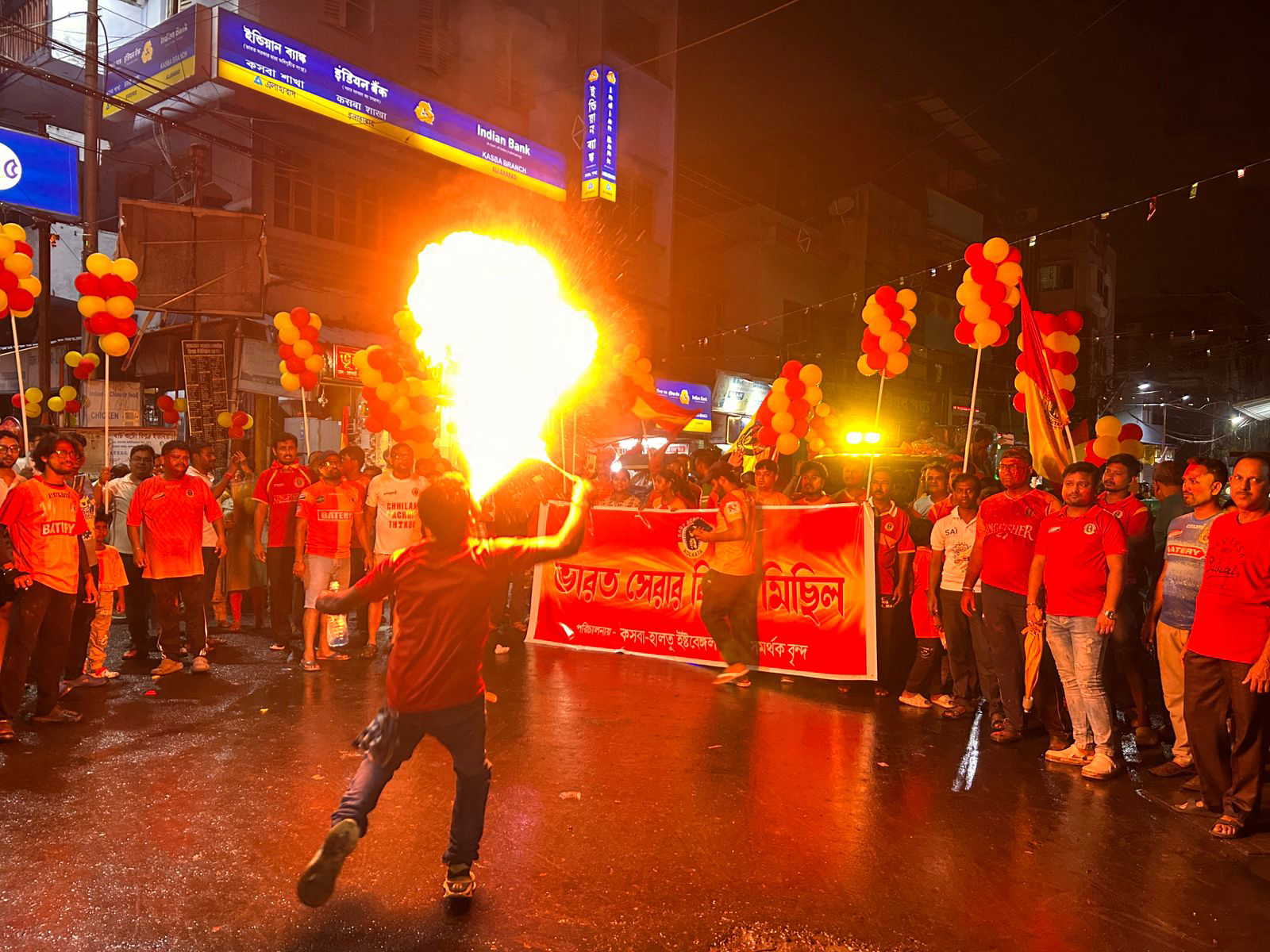
The moment Mohammed Rashid scored the winning goal and the final whistle confirmed East Bengal's Indian Super League triumph, Kolkata erupted into celebration. Across South Kolkata, spontaneous rallies emerged as supporters poured onto the streets waving red-and-gold flags, beating drums, lighting flares and singing club songs that have echoed through generations.
What made the celebrations particularly special was the diversity of those taking part. Young children sat on their parents' shoulders, waving East Bengal scarves; teenagers danced on motorcycles draped in club colours. At the same time, elderly supporters walked proudly through the crowds carrying flags and memorabilia collected over decades of following the club. For many veteran fans, this was a moment they had waited 22 long years to witness.
Founded in 1920, East Bengal FC is not merely a football club but a cultural institution deeply woven into the social fabric of Bengal. Established by migrants from East Bengal, now part of Bangladesh, the club became a symbol of identity, belonging and resilience for generations of supporters. Over the decades, East Bengal built one of the richest trophy cabinets in Indian football and became part of the country's most famous football rivalry with Mohun Bagan Supergiant.
However, despite success in cup competitions, a national league title had remained elusive since the 2003-04 season. That long wait only amplified the emotions on display as supporters finally celebrated a return to the summit of Indian football.
Also Read | India FIFA ranking 2026: Blue Tigers climb ahead of Tajikistan friendlies
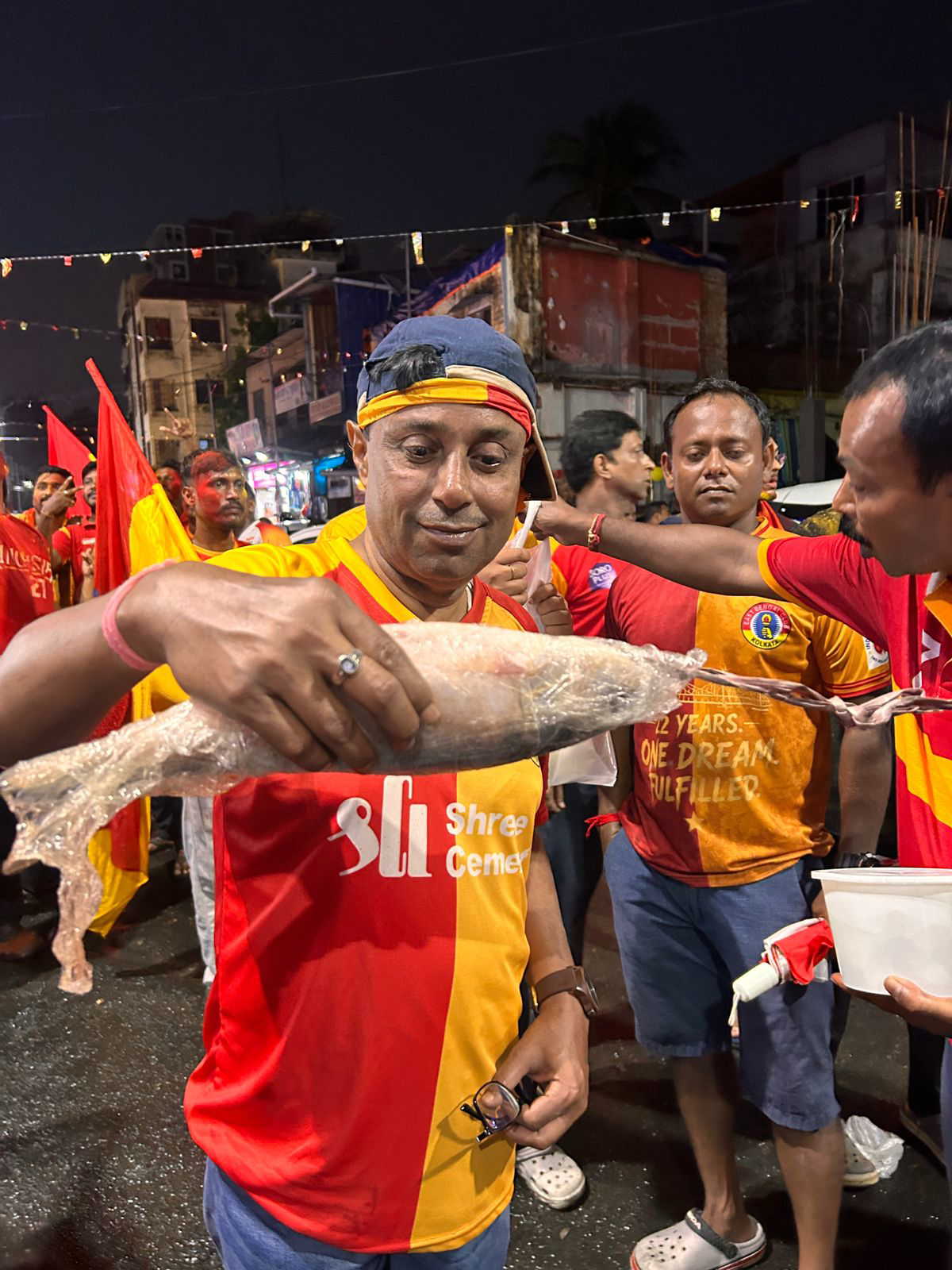 Rally processions moved through neighbourhoods with supporters carrying giant flags and chanting club slogans. (File Image)
 Illish on the streets
In Bangal cuisine, ilish occupies a near-sacred status. From shorshe ilish (hilsa in mustard gravy) and bhapa ilish (steamed hilsa) to ilish paturi and ilish macher tel, every part of the fish is valued. The arrival of fresh hilsa in the market often becomes a family occasion, especially during the monsoon season when the fish is at its best.
The fish also plays an important role in rituals and celebrations. In many Bangal families, gifting ilish during weddings, festivals and Jamai Shashthi is considered auspicious. During Poila Boishakh, the Bengali New Year, ilish remains one of the most cherished dishes on the dining table.
For supporters of East Bengal FC, the connection is even more pronounced. The club was founded in 1920 by migrants and residents from eastern Bengal, becoming a cultural institution for the Bangal community. Over time, ilish emerged as a symbol of Bangal pride in the famous rivalry with Mohun Bagan Super Giant, whose supporters are traditionally associated with the "Ghoti" community of western Bengal.
The iconic "Ilish versus Chingri" (hilsa versus prawn) divide became a playful representation of the Bangal-Ghoti rivalry. Whenever East Bengal won a major derby or title, supporters would often celebrate with ilish feasts, while Mohun Bagan fans would counter with chingri (prawn), reflecting the culinary preferences historically associated with the two communities.
Also Read | Thigh injury forces Wesley out of Brazil’s World Cup squad, Ederson named replacement
South Kolkata becomes a sea of red and gold
As news of the title spread, major roads across South Kolkata transformed into celebration zones. Rally processions moved through neighbourhoods with supporters carrying giant flags and chanting club slogans. Cars, buses and motorcycles adorned with East Bengal colours joined the festivities, while local clubs organised victory marches that stretched late into the night.
"This rally was a long-awaited moment for every East Bengal supporter. We've waited years for occasions like this, and it was truly special to be part of it. Here's hoping our beloved club continues to bring us many more memorable victories and celebrations in the years ahead," said Sayandeep Chakraborty, one of the organisers of the rally.
The scenes reflected the unique place football occupies in Kolkata's sporting culture. Entire families stepped out together, turning the celebration into a community event rather than merely a sporting victory.
A triumph generations waited to witness
For younger supporters, the title was their first experience of seeing East Bengal crowned league champions. For older fans, it was the culmination of more than two decades of hope, disappointment and unwavering loyalty.
The club's ISL triumph therefore represented more than a trophy. It was the revival of a footballing giant, the fulfilment of a dream shared across generations and a reminder of why East Bengal remains one of the most passionately supported institutions in Indian sport.
As chants rang through the streets and victory rallies continued long after midnight, Kolkata celebrated not just a championship, but the return of one of Indian football's greatest clubs to its rightful place at the top.