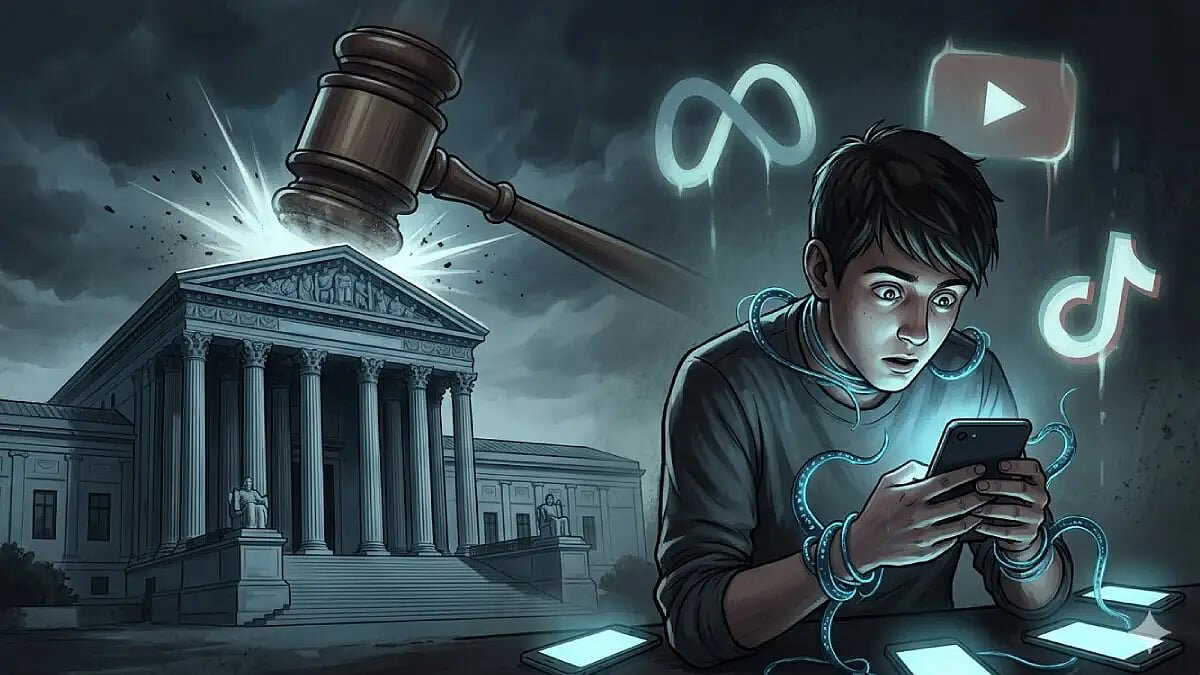
Is social media harming people through addiction? This question has been raised for a long time. Now that question has reached the courts. One major lawsuit after another has begun in America over this issue. In those lawsuits, platforms like Meta, YouTube, TikTok, and Snap have been accused of deliberately creating addiction.
In a lawsuit in Los Angeles, a jury board held Meta and YouTube responsible for addiction and ordered them to pay a total of $6 million in compensation. This is the first major verdict in this type of case, which could determine the direction of future legal battles.
Also Read | What is AEO? New advent of search-related term hits the Internet, all you need to know
Social media 'designed addiction'?
The plaintiffs claim that social media platforms are designed in such a way that users keep coming back and remain stuck for long periods. Infinite scroll, algorithm-based content suggestions, auto-play videos, and notification features have been blamed for this. According to lawyers, these features are much like cigarettes or casino slot machines, which make users addicted. Various lawsuits have claimed that this addiction is increasing depression, anxiety, body discomfort, eating problems, and even suicidal tendencies.
First case
The first complainant in this case was a 20-year-old young woman from California who started using social media from a very young age. She began using YouTube at age 8. Her Instagram journey started when she was 9 years old. She claims that these platforms have caused her mental harm. Her lawyer told the court that these apps are actually 'digital casinos', designed to grip people's minds. The hearing of this case continued for nearly five weeks.
Other cases
Thousands of lawsuits related to social media addiction have been filed across America. Nine more important cases will be heard in Los Angeles. Additionally, a new series of cases will begin in federal court in Oakland, California. In all those cases, social media's role in the 'public health crisis' will be in the dock.
In a case in New Mexico, Meta has already been held liable. There the court has ordered a fine of $375 million. In another case, it is alleged that companies have failed to protect children's safety.
Companies' response
Meta, Snap, TikTok, and YouTube, all these companies have denied the allegations against them. Their argument is that there is no direct scientific evidence between social media and addiction. The platform is not responsible for user behavior.
Meta CEO Mark Zuckerberg and Instagram head Adam Mosseri clarified their position on this in court. They stated that users' personal problems or family circumstances also play an important role in many cases. YouTube has also said that it is not right to view their platform as social media and their features are not designed to create addiction.
All these technology companies have raised an important law in their defense. That is Section 230 of the Communications Decency Act (1996). Under this law, platforms cannot be held responsible for what users post. This law has provided major protection to social media companies all this time.
Impact of this lawsuit
The impact of these lawsuits is not limited to fines or financial aspects alone. Its impact is deeper. Along with compensation, the plaintiffs have also demanded changes to platform design. If the court orders design changes, then the business model of social media itself could change.
Also Read | Google expands AI music tool, introduces Lyria 3 Pro for 3-minute tracks
Experts are comparing this lawsuit to the legal battle against tobacco companies in the 1990s. Even then the allegation was that companies knew the product was harmful but kept it secret. Now the same question is being raised about social media.
In the Indian context, there are already multiple laws regarding children's online safety. According to the Digital Personal Data Protection Act, 2023, companies must obtain parental consent when collecting data from users under 18. At the same time, there are prohibitions on tracking children's behavior or showing them targeted advertisements.
Besides this, the Information Technology Act, POCSO Act, and Bharatiya Nyaya Sanhita have provisions for taking strict action against online crimes against children such as sexual abuse, grooming, or harassment. However, according to experts, while there is a legal framework, there are still some gaps in practical implementation.