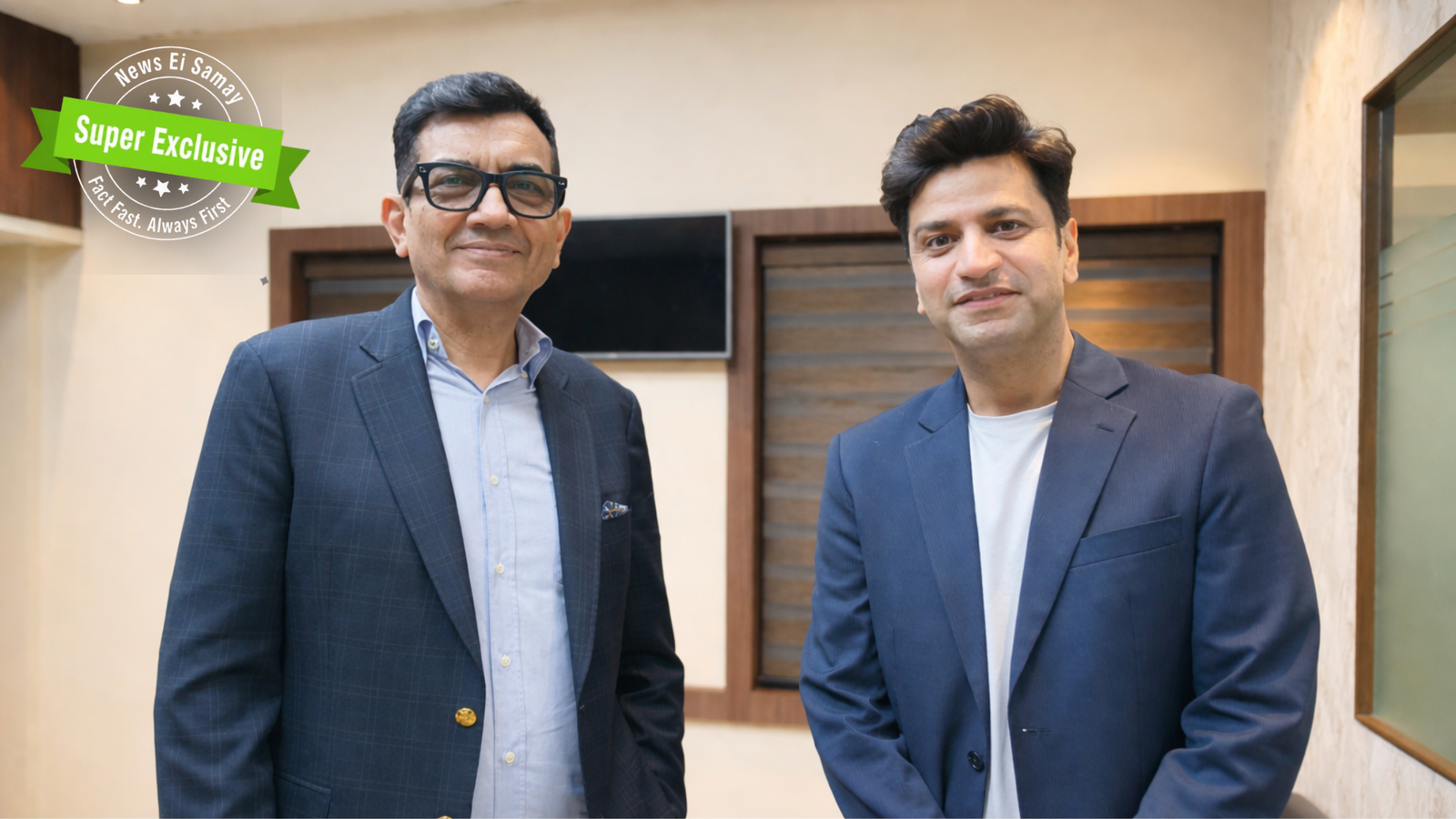
Two of India’s most celebrated culinary icons, Chef Sanjeev Kapoor and Chef Kunal Kapur, have played a defining role in taking Indian cuisine from home kitchens to global platforms. While Kapoor became a household name through television and built a worldwide brand around Indian food, Kapur carved his space as a celebrated chef, restaurateur, and familiar face on cooking shows.
In an exclusive interaction with News Ei Samay, Chefs Sanjeev Kapoor and Kunal Kapur shared insights into their journeys, the philosophy of Indian cuisine, and what lies ahead for kitchens in a rapidly evolving, tech-driven world. Their words reflect not just experience, but a deep-rooted passion for food that goes beyond the plate.
A journey shaped by people and passion
For Sanjeev Kapoor, the rise from a young chef to a global name still feels surreal. “It’s been very, very good. It’s been like a dream. It’s a journey which is worth living,” he said, summing up decades of hard work in a few heartfelt words.
When asked about the mentors who shaped him, Kapoor avoided naming just one. Instead, he highlighted the collective role of those around him: “My parents, my siblings, my teachers, my friends… all of them in my early years.”
Kunal Kapur, meanwhile, reflected on his journey with humility. “No, I just joined because I enjoyed the process of cooking,” he admitted, adding, “I’m still a student of culinary… I still have so much to learn.”
That sense of continuous learning, he believes, is what keeps the craft alive.
Also Read | From Dickens to Orwell: 10 iconic opening lines that shaped the course of literature
Why Indian cuisine cannot be restricted
When posed with the challenge of representing India through just three dishes, both chefs pushed back strongly.
Sanjeev Kapoor questioned the idea itself: “Why would I restrict? Just because you ask me a question, I would restrict to three dishes? I would not.”
He went on to underline a key philosophy: “Restriction is something which is not in food… we believe abundance.” Instead of limiting choices, he suggested showcasing something unique from every district of India, urging people to “open our minds.”
Kunal Kapur echoed the sentiment, calling the idea nearly impossible. “I wouldn’t introduce India with three dishes… it’s just impossible. I don’t think any amount of dishes can encapsulate the essence of India.”
The untapped richness of regional cuisines
Despite Indian food’s global reach, both chefs believe many regional cuisines are still waiting to be discovered.
Kapoor pointed out, “Look at food of Bengal… there’s so much that people don’t know. Whole of North-East, people don’t know. Food of different tribes in India… people don’t know.”
His words highlight a crucial gap while butter chicken and biryani dominate global menus, India’s true culinary diversity remains far deeper and more layered.
When food becomes emotion
For Kunal Kapur, cooking is not just technique: it’s deeply personal. He shared the story of a dish close to his heart: Doodh Wali Bread.
“To a lot of people, it’s like milk and bread, but for me, it’s a lot of emotion and passion,” he said. The dish, once made by his grandmother, now finds a place on his restaurant menu, carrying memories with every serving.
“When you explain the story and the emotion behind it, people understand and appreciate it more,” he added, reinforcing how storytelling enhances the dining experience.
Also Read | Homemade Aam Panna: Chef Kunal Kapur shows how to make it step by step | WATCH
A smarter, more exciting kitchen ahead
Looking ahead, both chefs are optimistic about the future of kitchens.
Sanjeev Kapoor described it as “very bright,” adding that there is “a lot of excitement, a lot of newness, a lot of learning and a lot of discoveries.”
Kunal Kapur offered a more tech-focused vision. “The kitchen of the future will be very technology-driven,” he said, pointing to the rise of smart appliances. “Everything has become smart… your fridge is smart, your microwaves are smart, your hobs are smart.”
He believes automation and precision cooking will soon become the norm, with kitchens adapting to individual dietary and lifestyle needs.
Beyond food, a philosophy of abundance
What stands out from both conversations is a shared belief that Indian cuisine is too vast, too rich, and too emotional to be confined.
As Sanjeev Kapoor aptly put it, “Let’s not do restrictive thinking.”