Four astronauts aboard NASA’s Orion spacecraft flew around the Moon on Monday, marking the first time for humans to have done this in over 50 years. The mission launched on April 1. It took off from Launch Pad 39B at Kennedy Space Center in Florida. The launch time was 6:35 pm EDT. It was a planned test flight around the Moon and back.
The flyby lasted nearly seven hours. It began at around 6.45 pm GMT (12.15 am IST/2.45 pm US Eastern time) and was set to end at approximately 1.20 am GMT. NASA streamed the event live on its website. It was also available on YouTube, Amazon, and Netflix. The livestream included commentary from the crew and experts at Mission Control in Houston. However, NASA warned that the large distance could affect video quality, as cited by Hindustan Times.
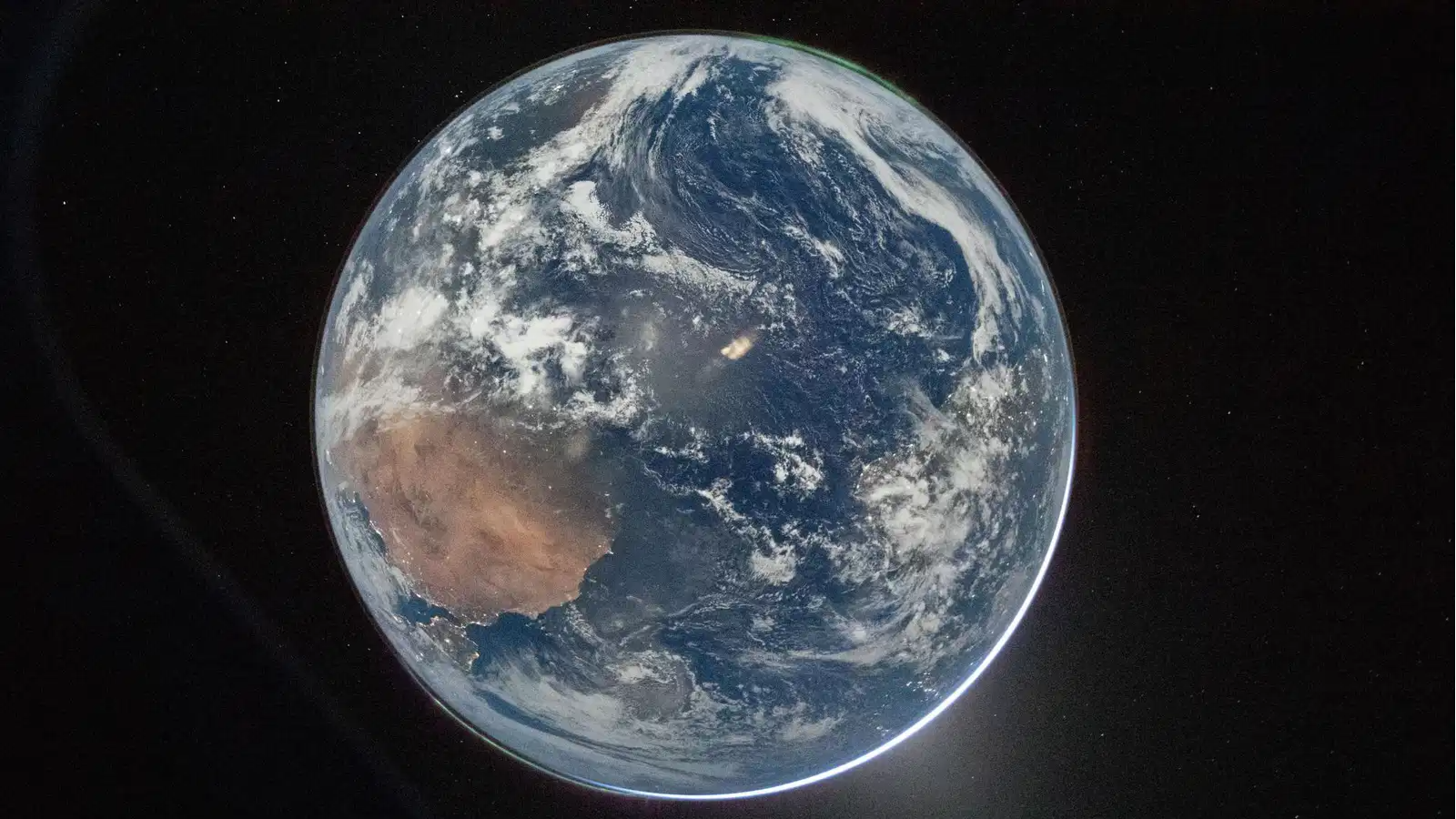
Also Read | ‘Our home looks gorgeous from space’: Artemis II releases first stunning Earth images
The journey and distance
The report of the Hindustan Times reported that just before the flyby began, the Artemis II crew reached the farthest distance any human has ever traveled from Earth. The spacecraft surpassed Apollo 13's distance record by 4,102 miles (6,600 km), reaching a maximum distance of 252,757 miles (406,772 km) from Earth.
Before this, the astronauts entered a crucial phase where the Moon's gravity began pulling on the spacecraft more strongly than Earth's. The Orion capsule then whipped around the Moon, putting the crew on course to travel farther from Earth than any human before.
What happened during the flyby?
As per the report of the Hindustan Times, the crew passed behind the far side of the Moon, which cannot be seen from Earth. They took photographs and made observations of the lunar surface, becoming the first people to see certain areas of the far side.
Also Read | NASA Artemis II astronauts face Outlook email glitch in space: Here's what went wrong
NASA said that although the far side was only partially lit, long shadows would stretch across the surface, making ridges, slopes, and crater rims easier to see than under full illumination. Noah Petro, head of NASA's planetary geology lab, told AFP the Moon looked "about the size of a basketball held at arm's length."
As the spacecraft passed behind the Moon, all communication with Artemis II was cut off for around 40 minutes, according to AFP. Towards the end of the flyby, the crew experienced a rare phenomenon, a solar eclipse. For about 53 minutes, the spacecraft aligned perfectly between the Moon and the Sun, causing the Sun to disappear from the astronauts' view.
Breaking from the Apollo era
The last humans to reach the Moon were Apollo-era astronauts: all white American men who flew between 1968 and 1972.
1972 ➡️2026
— NASA (@NASA) April 3, 2026
Apollo 17 ➡️ Artemis II pic.twitter.com/wGc2wtY0e2
The United States first landed humans on the Moon in 1969. With Artemis II, humans have now flown around the Moon for the first time in over half a century.