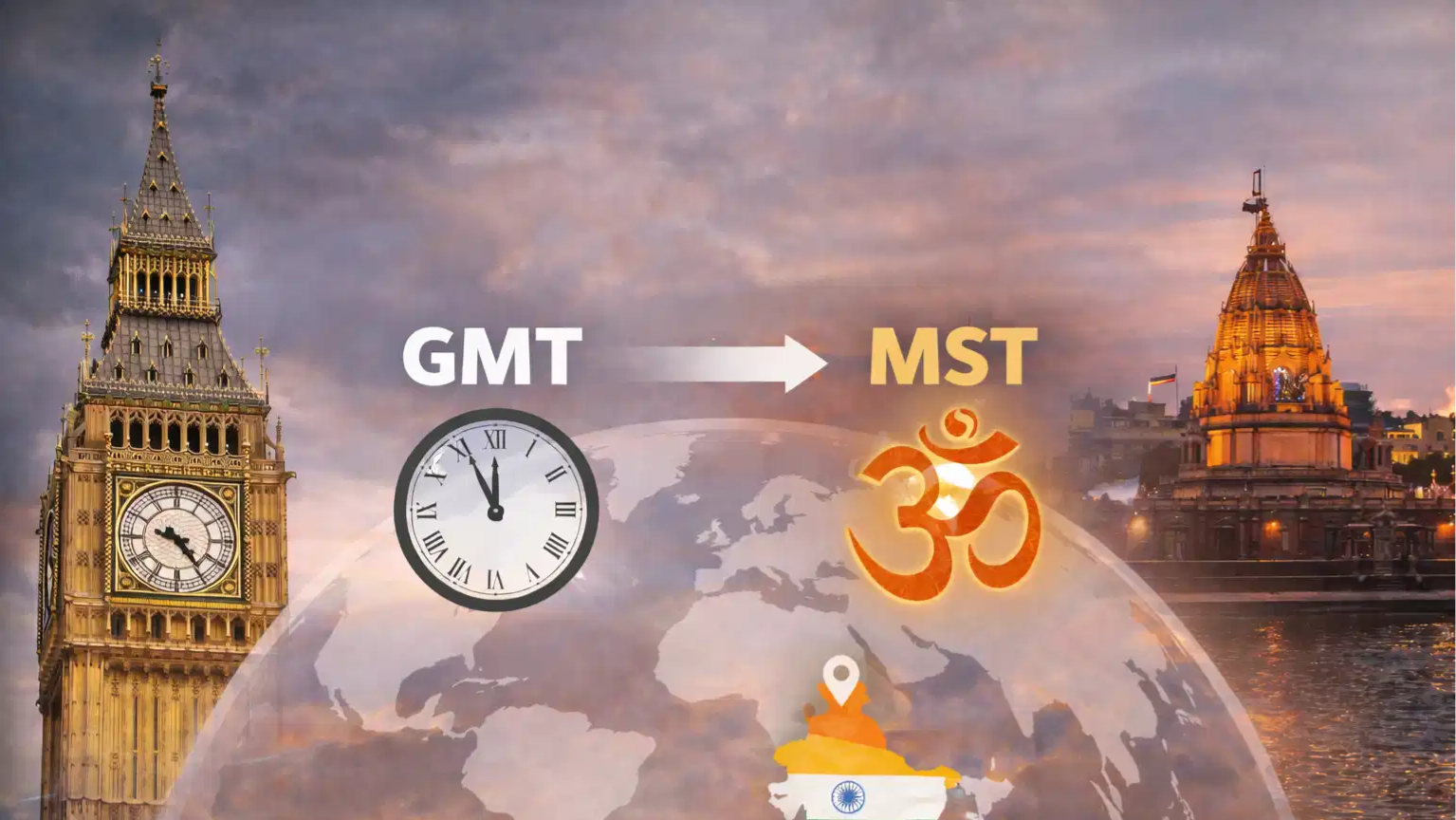
There is a proposal to replace the internationally recognised Greenwich Mean Time (GMT) and adopt an alternative system of measurement known as Mahakal Standard Time (MST). This has stirred debates in various political and academic communities since its presentation as a move to restore India’s legacy in time measurement.
This proposal, which was made by India’s Union Education Minister, Dharmendra Pradhan, in April 2026, argues that the city of Ujjain in the state of Madhya Pradesh in India should be the prime meridian of the world, thus serving as the point from which all other points around the globe can measure time.
Also Read | New version of Prithvi missiles? DRDO focuses on speed and mobility
Why Ujjain is being proposed as ‘centre of time’
Supporters of this idea say that since Ujjain is a city which has been associated with various calculations relating to astronomy in ancient India with regards to time and planetary motions.
It has been mentioned that this particular place is situated near India’s ancient zero meridian and the Tropic of Cancer, making it a suitable reference point for the world with respect to measuring time.
There is also an issue of culture associated with this particular proposal. Proponents have claimed that GMT was created during the colonial period and by adopting MST, India would be reclaiming its scientific heritage.
Some proponents have even said that the traditional system of calculating time through the positions of planets and the sun is more in tune with nature than the current method of doing so.
Proposal gains attention, but questions remain
The proposition was brought up during an international meeting titled ‘Mahakal: The Master of Time’. Although it enjoys support from parts of the state government and cultural associations, it is also being questioned by political adversaries and scholars.
Also Read | Highway travel rules to change from April 10: What commuters need to know
Opponents question the feasibility of substituting the Greenwich Mean Time (GMT) or Coordinated Universal Time (UTC), which currently is the standard for time throughout the globe. It will take a consensus worldwide for any change to be made, and this makes the possibility of doing so quite unlikely for now.
Despite the fact that it is still just a concept, it has led to a wider debate on the relationship between history, science, and universal standards of timekeeping.