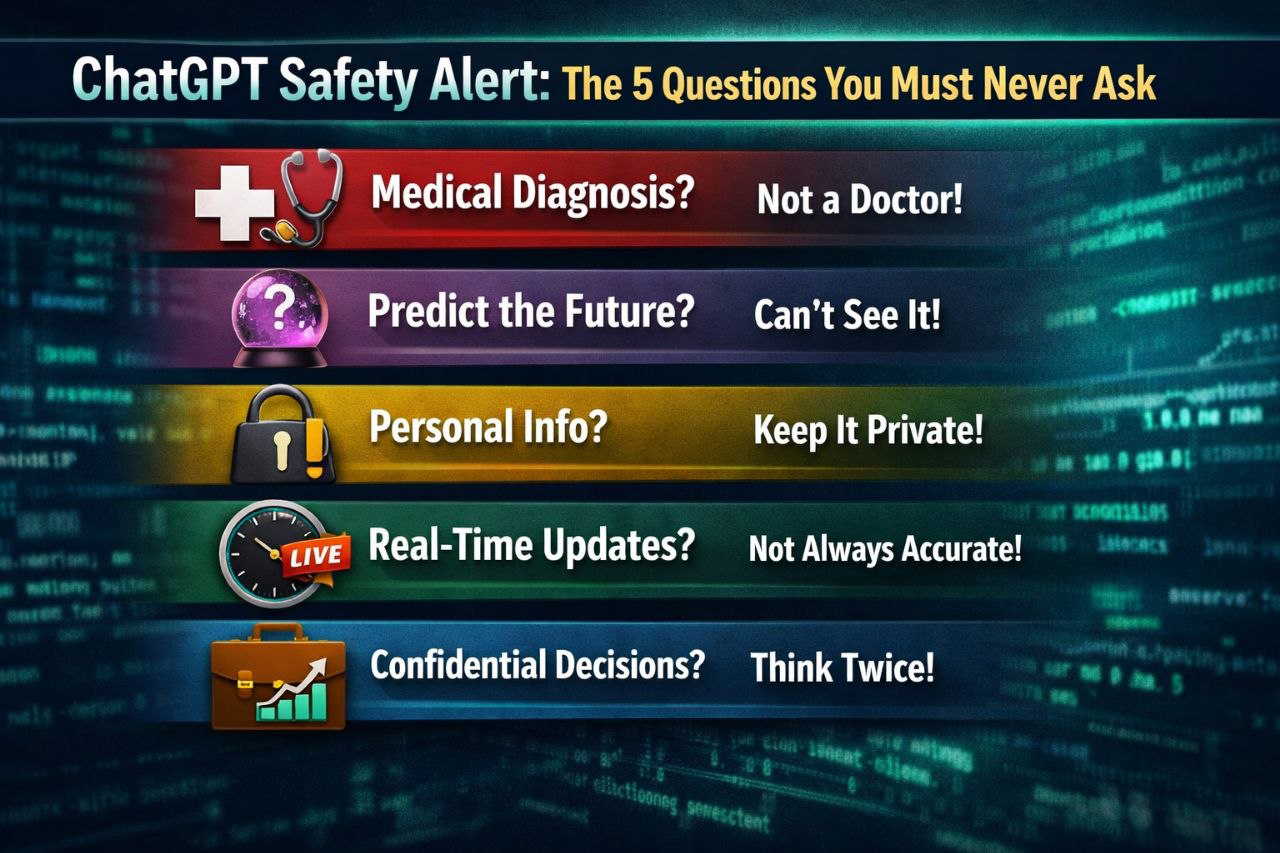
Tools like ChatGPT have quickly become part of everyday life. From writing emails to solving doubts, people rely on it for quick answers. However, experts warn that not everything should be asked. Some types of questions can lead to misinformation, privacy risks, or poor decisions.
Here are five kinds of questions you should avoid and why:
Don’t ask for medical diagnosis
It may feel convenient to type symptoms into ChatGPT and expect a clear answer. But that can be risky. AI can explain general health information, but it cannot examine you, run tests, or fully understand your medical history. Even common symptoms can point to very different conditions. Relying on AI for diagnosis may lead to unnecessary panic or, worse, ignoring something serious. The safer approach is to use AI for basic awareness, not for treatment or diagnosis.
Avoid asking it to predict the future
Questions like “Who will win a match?” or “What will happen in my life in 10 years?” are common, but unrealistic. ChatGPT works using past data and patterns; it cannot foresee future events. While it can suggest possibilities based on trends, it cannot guarantee outcomes.
Also Read | What is ‘personal intelligence’? Google Gemini unveils its latest update: here are the key details
Instead of asking what will happen, it’s better to ask what could happen under certain conditions.
Never share sensitive personal information
Many users treat AI like a private space and share personal or financial details but that’s a mistake.
Information such as passwords, bank details, or deeply personal data should never be entered. Even if platforms are secure, sharing confidential data online always carries some level of risk.
A simple way to think about it: ChatGPT is helpful, but it’s not a place to store secrets.
Also Read | Chat, call, connect—WhatsApp's CarPlay update explained
Don’t rely on it for real-time information
Another common mistake is asking ChatGPT for breaking news, stock updates, or live weather.
AI systems are trained on existing data and may not always reflect the latest developments. This can lead to outdated or incomplete answers when timing is critical. For real-time updates, it’s better to check verified news platforms or live sources.
Avoid using it for confidential business decisions
Some people use AI tools to plan strategies or make business decisions. While it can help with brainstorming, relying on it entirely can be risky. ChatGPT does not know your company’s internal data, real-time market conditions, or competition. Sharing sensitive business information may also raise privacy concerns. Experts suggest using AI as a support tool, not the final decision-maker.