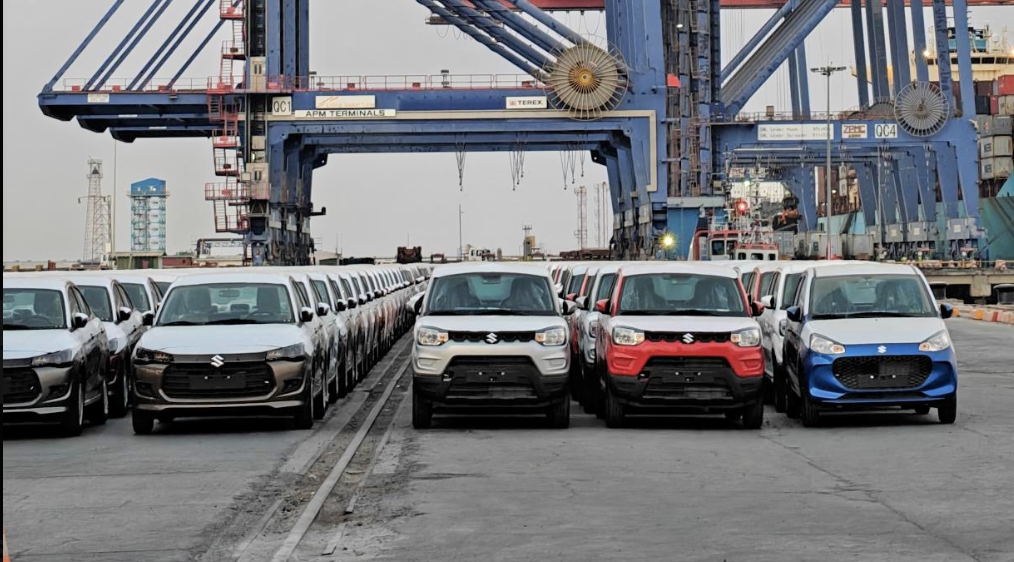
Maruti Suzuki India, long regarded as the backbone of India’s passenger vehicle segment, is witnessing a steady erosion of its market dominance. In FY26, the company’s market share dropped to 39.26 per cent, marking its lowest level in 13 years and extending a three-year streak of decline, according to data released by the Society of Indian Automobile Manufacturers.
The fall is particularly notable given the company’s historical position as a near-monopoly player, once commanding close to half of the domestic market. Since FY20, Maruti Suzuki has seen its share shrink significantly, highlighting a structural shift in India’s automobile landscape.
SUV boom leaves Maruti playing catch-up
A key factor behind the decline has been the rapid rise of the utility vehicle segment. SUVs and crossovers now account for a dominant share of the passenger vehicle market, reshaping consumer preferences.
While Maruti Suzuki has attempted to strengthen its portfolio with models such as the Jimny, it has struggled to gain substantial ground in this high-growth category. Its share in the utility vehicle segment remains under 25 per cent, a stark contrast to the segment’s overall expansion.
Rivals, on the other hand, have capitalised on this shift more effectively, offering a wider range of feature-rich SUVs that appeal to evolving buyer expectations.
Small car stronghold loses momentum
The company continues to hold a commanding position in the sub-4 metre segment, driven by popular models like the Wagon R, Swift and Baleno. This category has historically been Maruti Suzuki’s biggest strength, delivering consistent volumes and reinforcing its mass-market appeal.
However, growth in this segment has slowed considerably. With expansion of less than 2 per cent in FY26, it pales in comparison to the double-digit growth seen in the SUV segment. The slowdown suggests that entry-level and compact cars are no longer the primary growth drivers they once were.
Also Read | Royal Enfield’s electric Himalayan edges closer to production-ready form
Challenges mount beyond sales numbers
Adding to its concerns, the automaker is also facing regulatory and financial pressures. A recent draft assessment order from tax authorities involving a demand of Rs 5,786 crore has introduced fresh uncertainty.
Also Read | Dominar 350 vs KTM 350 Adventure: Which one to choose between comfort cruiser or hardcore explorer?
Together, these factors underscore a critical transition phase for Maruti Suzuki. To regain momentum, the company may need to accelerate its strategy in the SUV space while reimagining its approach to a market that is rapidly moving beyond its traditional strengths.