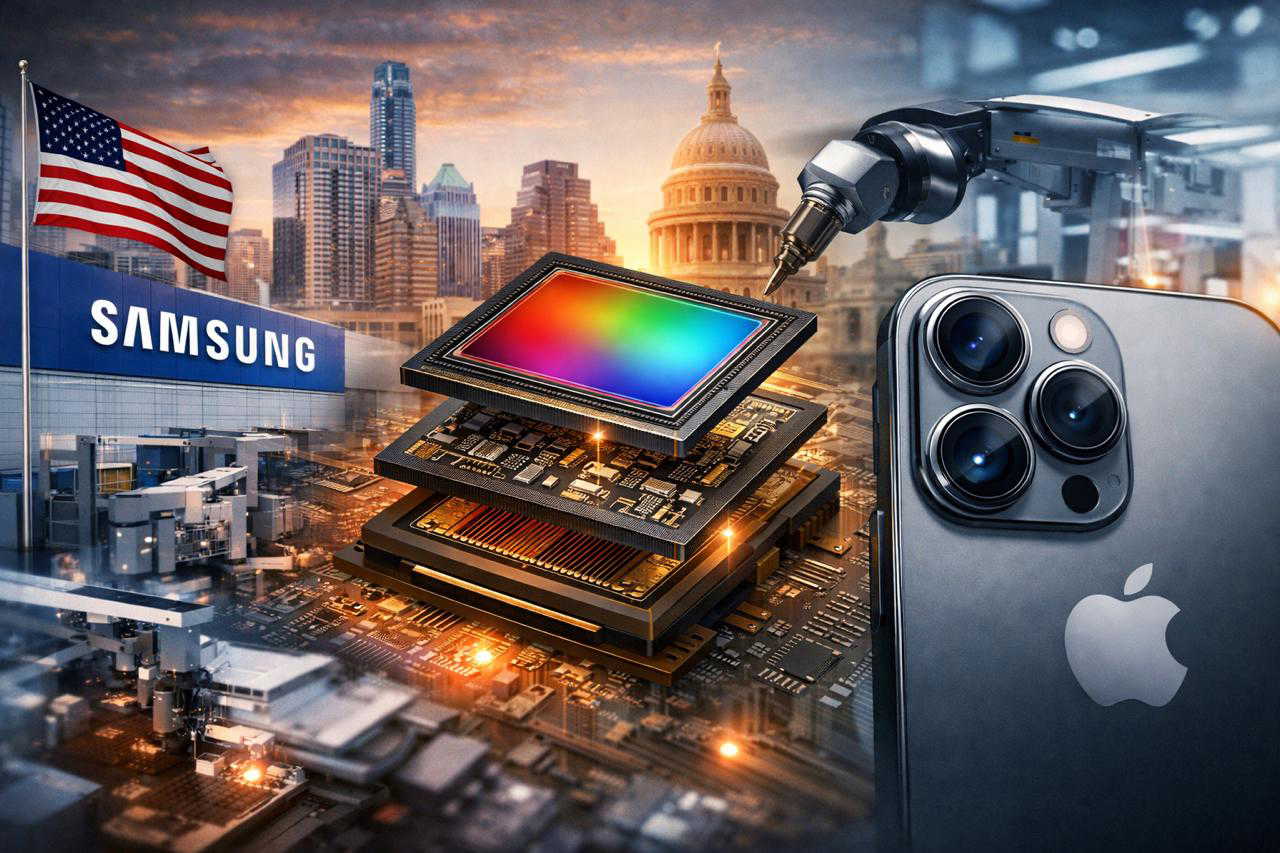
Samsung may soon play a much bigger role in Apple’s iPhone camera story. According to a recent report, the South Korean tech giant is preparing to make advanced image sensors for future iPhones at its Austin, Texas, facility- a move that could reshape Apple’s long-standing supply chain.
If confirmed, this would be the first major shift away from Sony, which has been Apple’s exclusive camera sensor supplier for years.
ALSO READ | ChatGPT integrates Apple Music, let users search songs and create playlists via chat
Reports from South Korean publication The Elec suggest that Samsung is working on a new generation of camera sensors using a three-layer stacked design. Unlike traditional sensors, this technology stacks different layers of circuitry vertically, allowing more data to be processed in less space.
In simple terms, this could mean sharper photos, faster image processing, better low-light performance, and improved power efficiency for future iPhones. The technology is considered advanced and has not yet been mass-produced at this scale, making Samsung’s project an important technical step for its semiconductor division.
These sensors are expected to debut with the iPhone 18 series, which is likely to launch in 2027. Reports also say Apple finalised an agreement with Samsung in August to secure the supply.
Austin facility expansion and US production
To support this move, Samsung is reportedly upgrading its existing Austin plant. The company has begun hiring engineers, technicians, and management staff to prepare for the new production line. Earlier this month, Samsung is said to have informed the City of Austin about plans to invest nearly $19 billion into the site.
ALSO READ | OpenAI introduces ‘Your Year with ChatGPT’: Here's how to check your top interactions of 2025
Production could begin as early as March, once equipment installation and testing are completed. Making sensors in the US may also help Apple reduce dependency on a single supplier and strengthen its American manufacturing footprint.
Until now, Sony has manufactured iPhone camera sensors in Japan, with final integration handled through TSMC. If Samsung joins the supply chain, it would mark a major strategic change for Apple and a significant win for Samsung’s foundry business.
For Apple, the move signals diversification and risk management. For Samsung, it positions the company as a serious player in next-generation mobile imaging- and a direct competitor to Sony in one of the most critical smartphone components.