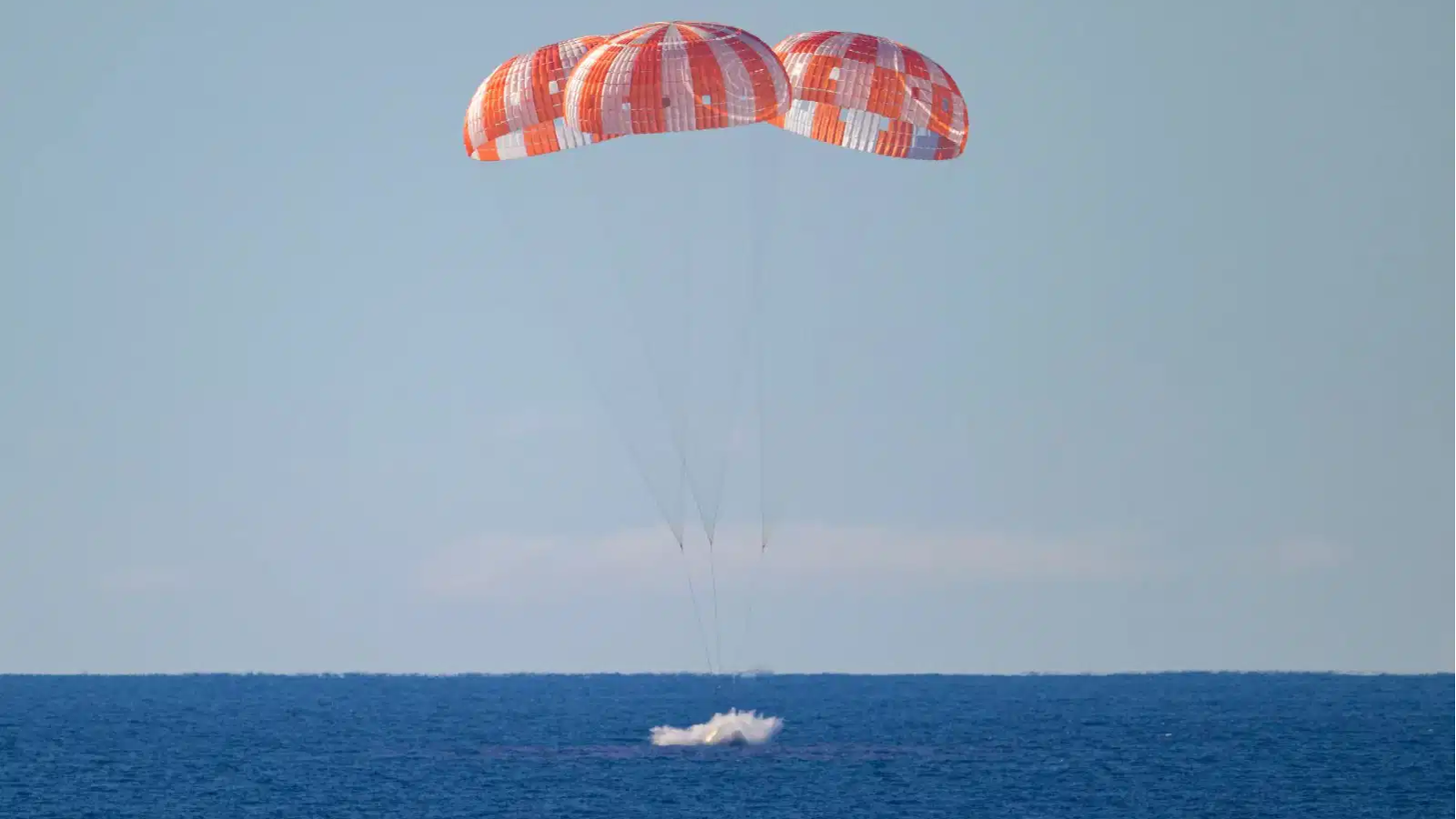
Artemis II's astronauts returned to Earth early Saturday morning (IST) after a historic 10-day trip to the moon and back. The spacecraft carrying the astronauts splashed down safely in the Pacific Ocean.
NASA regained contact with the Artemis II crew, which includes Commander Reid Wiseman, pilot Victor Glover, Christina Koch, and Canada’s Jeremy Hansen, after they entered the Earth's atmosphere.
Also Read | How will NASA bring Artemis II crew safely back from deep space? Here's all you need to know
High-speed reentry and automated flight
During the mission, the Orion capsule endured extreme conditions, with speeds reaching up to Mach 33, velocities not experienced since the Apollo era of the 1960s and 1970s. The spacecraft operated in a fully autonomous mode throughout the mission, with manual control reserved only for emergencies.
Welcome home Reid, Victor, Christina, and Jeremy! 🫶
— NASA (@NASA) April 11, 2026
The Artemis II astronauts have splashed down at 8:07pm ET (0007 UTC April 11), bringing their historic 10-day mission around the Moon to an end. pic.twitter.com/1yjAgHEOYl
Lead flight director Jeff Radigan acknowledged the tense moments before landing, noting he expected a degree of "irrational fear that is human nature", particularly during the six-minute communication blackout before parachute deployment, The Times of India reported.
Recovery operations and crew condition
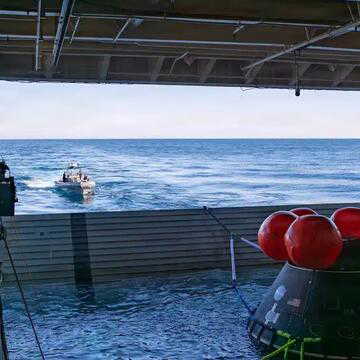
Once in the water, recovery teams worked to stabilise the capsule. A US Navy diver explained that a collar is attached to the module to keep it steady, followed by the installation of a "front porch", a platform described as a "waiting room" for astronauts before helicopter transfer, BBC reported live.
Also Read | Meet ‘Spider granny’ who climbed down 6 floors after getting locked inside
However, NASA noted that ocean currents initially made it difficult to deploy the stabilisation equipment.
A medical officer inside the Orion capsule confirmed that all four astronauts were in good condition. "Green, meaning they are feeling great, not the complexion of their skin," joked Megan Cruz, speaking on behalf of Nasa from the USS John P Murtha, where the astronauts will be taken shortly, BBC quoted him as saying.
A step towards future Moon missions
Artemis II marks a major step in NASA's plan to return humans to the Moon, with the mission validating life-support, navigation and propulsion systems in deep space. It also represents the first joint NASA–US Defense Department recovery of a lunar crew since Apollo 17.
US President Donald Trump welcomed the astronauts' return in a social media post, "Congratulations to the Great and Very Talented Crew of Artemis II. The entire trip was spectacular, the landing was perfect and, as President of the United States, I could not be more proud! I look forward to seeing you all at the White House soon. We’ll be doing it again and then, next step, Mars!"
'What a journey'
"What a journey," Artemis II commander Reid Wiseman said as the crew splashed down, BBC reported.
"We are stable one, four green crew members," he said as he described the capsule's position and the health of his team. There was a communications problem with the crew since, but Nasa has called their return a "textbook touchdown".
In a livefeed, an announcer could be heard saying the four astronauts were "in great condition".
"They're all in excellent shape."
The mission details
The Artemis II mission, which lifted off on April 1, sent Commander Reid Wiseman, pilot Victor Glover, mission specialist Christina Koch and Canadian astronaut Jeremy Hansen on a lunar flyby designed to test critical deep-space systems.
During the journey, the crew reached a distance of 4,06,771 kilometre from Earth on the Moon's far side, the farthest humans have ever travelled in space. This surpasses the previous record set during Apollo 13.
Also Read | Artemis II returns to Earth today: Here’s when and where to watch it live in India
The astronauts spent several hours observing and documenting views of the Moon before beginning their return trajectory to Earth.