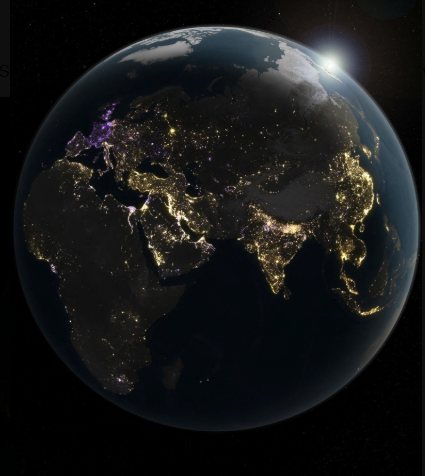
Satellite data shows that Earth is getting brighter at night due to artificial lights, but this change is not the same everywhere. As per Reuters, some regions are getting brighter while others are becoming dimmer.
As per Reuters, researchers found a 16% increase in global night-time light between 2014 and 2022. However, the pattern is uneven, with growth mainly driven by urbanisation, infrastructure, and better access to electricity.
The study also highlights that factors like conflicts, disasters, and energy-saving policies are affecting how bright different parts of the world appear at night.
Earth getting brighter at night in different ways
As per Reuters, satellite images show that Earth is getting brighter at night because of lights, but not everywhere the same.
Scientists found a 16% increase in night lights from 2014 to 2022. Some countries like the United States, China, India, Canada, and Brazil are the brightest.
This is mainly because of growing cities, better roads and buildings, and more electricity reaching villages.
"For decades, we've held a simplified view that the Earth at night is just getting steadily brighter as human population and economies grow," said Zhe Zhu, a professor of remote sensing and director of the University of Connecticut's Global Environmental Remote Sensing Laboratory, senior author of the study published in the journal Nature. "We discovered that the Earth's nightscape is actually highly volatile," Zhu said. "The planet's lighting footprint is constantly expanding, contracting and shifting."
Growing areas getting more electricity
The biggest increase in brightness was seen in developing regions like sub-Saharan Africa and Southeast Asia, where countries such as Somalia, Burundi, Cambodia, Ghana, Guinea, and Rwanda became much brighter at night, and researchers say this is not only due to growing cities but also because more people are getting access to electricity.
"This isn't just urbanization. It is a massive expansion of energy access," Zhu said. "These numbers represent a profound shift as entire regions transition from near-total darkness to becoming part of the global electric network."
Also Read: NASA’s AVATAR experiment sends astronaut organ chips to space to study how the body reacts.
Places getting darker and why
At the same time, some places have become darker at night. This happens because of natural disasters, power cuts, and wars. Countries like Lebanon, Ukraine, Yemen, and Afghanistan saw big drops in light. Money problems also made places like Haiti and Venezuela less bright.
"In Ukraine, we observed a sharp, sustained decrease in light that aligned perfectly with the escalation of the conflict in February 2022," Zhu said. "We see similar abrupt darkness falling over regions in the Middle East during periods of conflict," Zhu said. Europe, on the other hand, recorded a 4% decline due to planned efforts like switching to energy-efficient LED lights and reducing light pollution.
"It is driven by a widespread shift from older, less-efficient streetlights like high-pressure sodium lamps to newer, directional LED systems, as well as strict national energy-efficiency mandates and dark-sky conservation efforts," Zhu said. "Europe is fascinating because it presents a very structured dimming pattern."
The study shows that Earth’s lights at night keep changing and are not always increasing. Things like cities growing, new technology, and world events affect how bright it looks from space.
As countries grow and change, these patterns can also change. It shows that what people do and the rules they make can affect how Earth looks at night.