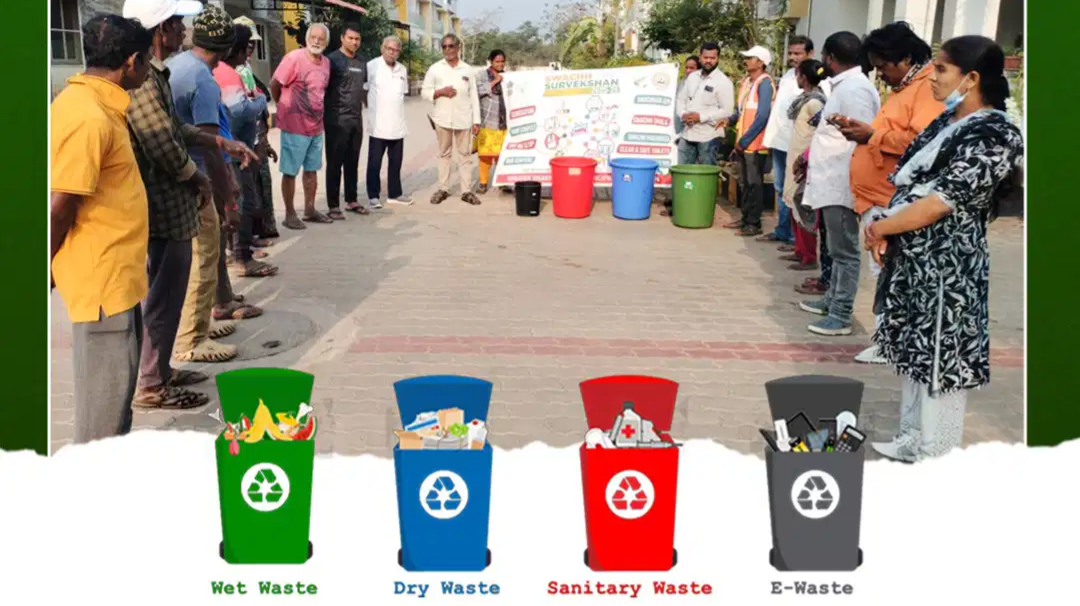
Starting on April 1, a new waste separation system went into effect. Instead of using two bins, people in India now have to sort their trash into four different groups.
The Ministry of Environment, Forest, and Climate Change announced the changes in January as part of the updated Solid Waste Management (SWM) Rules, 2026. The new framework adds color-coded bins to make it easier to sort and handle trash at the source.
Also Read | ED raids IPAC offices in Delhi, Bengaluru, Hyderabad in coal smuggling probe
What each bin means
The rules specify the following colour-coded system:
Green bin: Wet waste such as vegetable peels and food scraps
Blue bin: Dry waste including paper, plastic, and packaging materials
Red bin: Sanitary waste like diapers and sanitary napkins
Black bin: Hazardous waste including medicines, bulbs, and e-waste
Citizens have also been advised to wrap sanitary waste securely in designated pouches before disposal.
Rules apply across sectors
The new guidelines will be applicable to all local bodies, including rural and urban areas. This will include residential areas, industrial areas, special economic zones, airports, railway areas, ports, defense areas, and even religious and heritage sites.
Bulk generators, including large housing societies and institutions with areas over 5,000 square meters, will have to process their own wet waste.
The new guidelines have also banned the mixing of biomedical wastes with other wastes and have made it mandatory to process construction and demolition wastes separately.
Penalties and ‘polluter pays’ principle
The new guidelines have made the enforcement mechanism stronger by imposing penalties on those who do not adhere to the norms. Environmental compensation will be imposed by the authorities through the ‘polluter pays’ principle.
The civic authorities in Delhi have asked citizens to take certain steps to adhere to the norms. These include proper segregation of waste, proper disposal of waste at appropriate time, and not disposing of it openly.