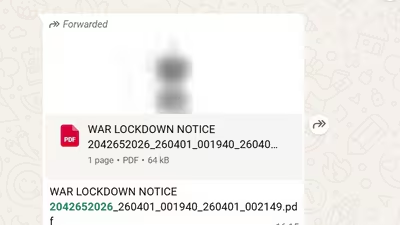
A “war lockdown notice” going viral on social media on April 1st has created confusion and apprehensions among people, only to be revealed as an April Fool’s joke.
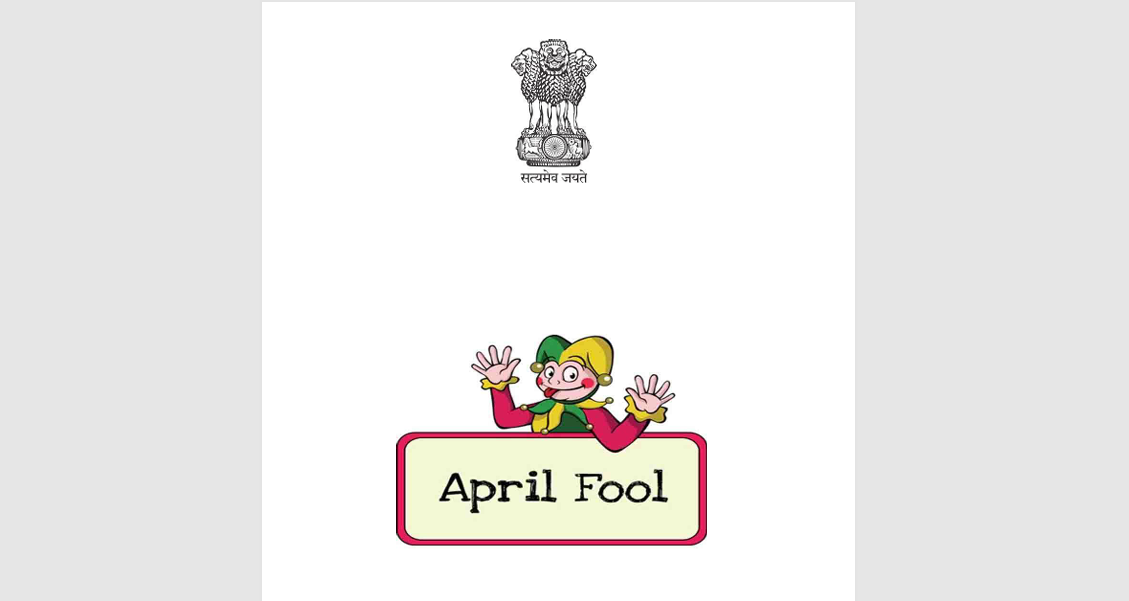
The “war lockdown notice,” resembling an official government notification, looks alarming at first glance. However, once opened, it contains a jester image with “April Fool” scribbled across it. It also contains images resembling India's national emblem with “Satyamev Jayate.”
Also Read | Why is April 1 celebrated as April Fool's Day? Know its history, origin and meaning
The timing of this going viral on social media can be seen as an added reason for people's apprehensions, considering the escalated tensions worldwide due to the ongoing war between the United States, Iran, and Israel.
No official lockdown announcement
However, there has been no such announcement made by the Government of India regarding a lockdown.
Nonetheless, the notification spread fast on various platforms, with many people sharing it without verifying the authenticity of the notification.
This prank comes at a time when the phrase ‘lockdown in India 2026’ has been trending on Google in recent days. This shows the anxiety among people. The lockdown concerns are also linked to the memory of the lockdown enforced in the country in 2020 due to the Covid-19 pandemic.
Recent comments made by Narendra Modi in Parliament, where he made a comparison between the lockdown caused by the pandemic and the geopolitical tensions in the country, are also linked to the lockdown concerns.
However, the tensions caused by the war in West Asia and the disturbances in the global supply chain due to the war are adding to the tensions in the country.
Also Read | What is a zigzag career? Why switching roles can future-proof your career
A prank in a sensitive moment
While April Fool’s Day often brings light-hearted pranks, the circulation of such notices in the current geopolitical climate highlights how easily misinformation can gain traction when public sentiment is already on edge.
Users are advised to verify such claims through official government channels before sharing them further.