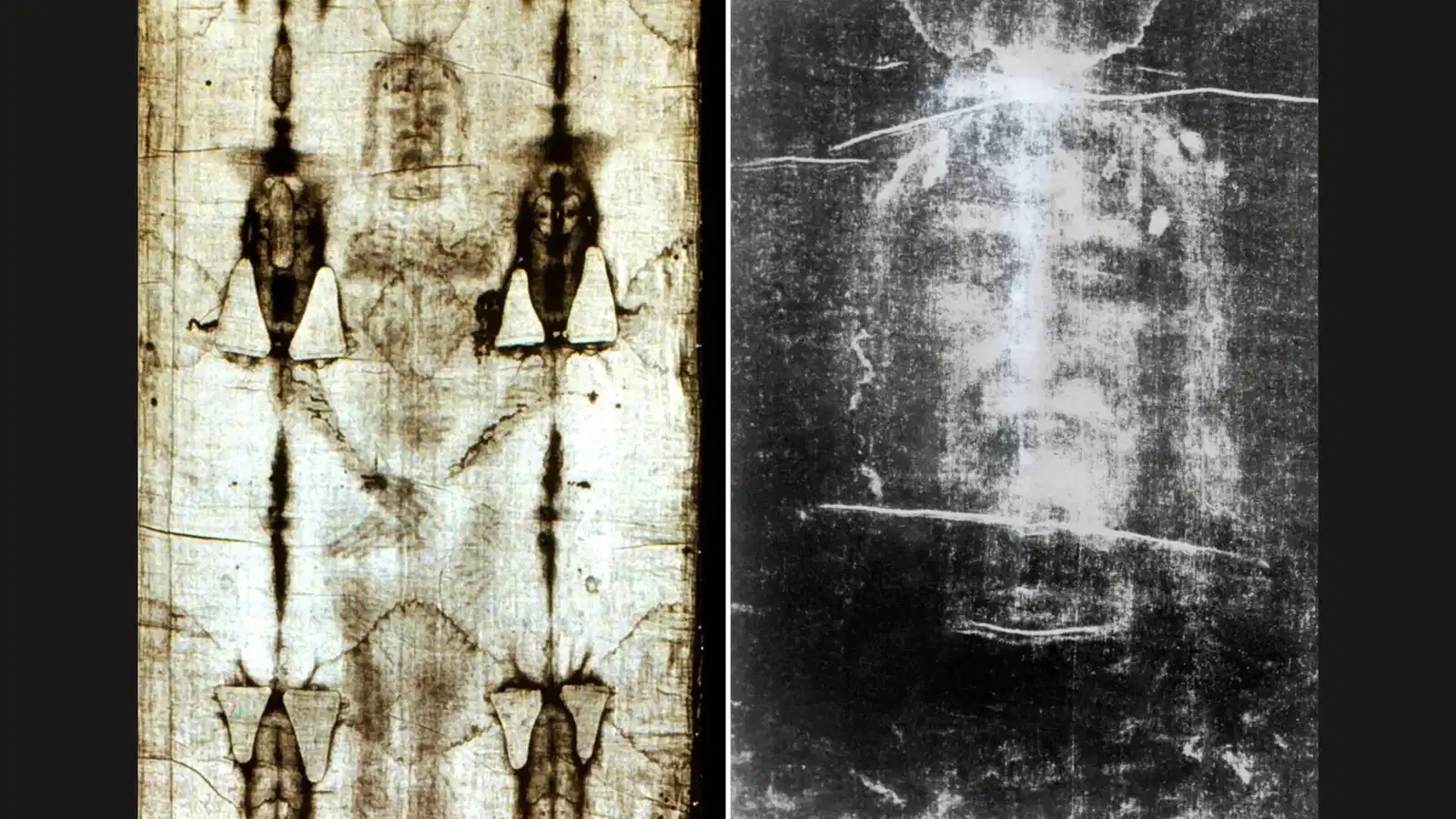
The long-puzzling mystery surrounding the Shroud of Turin has taken yet another turn, with recent findings indicating possible connections to ancient India. The linen cloth, believed to be the burial cloth of Jesus Christ, has been at the centre of debate for decades. However, recent findings are providing yet another dimension to the mystery, as highlighted in a recent report by Firstpost.
Biological samples collected from the cloth revealed genetic evidence of several possible locations, with a significant number indicating possible connections to ancient Indians.
Also Read | New Covid variant 'Cicada' found in 23 countries — here's all you need to know
What the study found
As per the findings, it is seen that around 40 per cent of the human DNA traces found in the cloth relate to the Indian sub-continent. This prompted the scientific team to consider the possibility that the cloth or the material used to create it might have originated in ancient India, perhaps in the Indus Valley.
The study also revealed the presence of DNA traces from different sources, such as human, plant, animal, and bacterium. This suggests that the cloth was handled extensively in different environments over the years. This diversity in the DNA traces suggests that the shroud might have travelled extensively over the years through different regions such as Asia, the Middle East and Europe.
Why does this change the debate
For decades, the discussion surrounding the Shroud of Turin has been dominated by the question of whether it is a relic from the time of Jesus or a medieval creation in Europe. In 1988, radiocarbon dating of the Shroud of Turin found it to have originated between 1260 and 1390 CE.
The recent DNA study, however, has provided a more complicated history for the Shroud of Turin. Rather than being from Europe, it appears the Shroud of Turin might have had ties to several different locations, including India, before it finally found its way to Europe. Despite the recent DNA study, it appears that the origins of the Shroud of Turin will still not be able to be pinpointed based on DNA evidence. This is because it is possible for DNA to have been transferred from one location to another.
What it means going forward
This study has not yet been peer-reviewed in its entirety. Experts have advised caution in the interpretation of the results. Although the presence of Indian DNA has implications, it does not necessarily confirm the origins of the shroud as being from India.
Also Read | Why is International Fact-Checking Day celebrated on April 2? Significance, history, all you need to know
This new research adds another dimension to the long debate over this ancient relic. The research has also emphasised the possibility of the existence of the Shroud of Turin in the context of cultural and economic exchanges beyond the European continent. As scientific inquiry advances further, the riddle of the shroud remains unsolved. However, the more it advances, the more the riddle becomes international in scope.