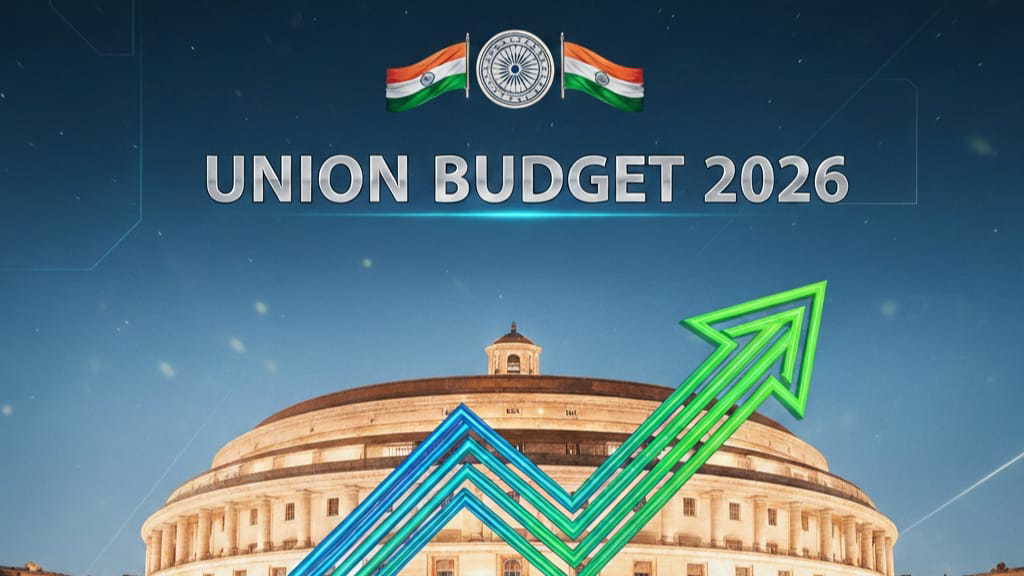
At first glance, Union Budget 2026 does not rely on dramatic giveaways or headline-grabbing populism. Instead, it reads like a document built around patience, one that places long-term capacity building above short-term applause. The central question is whether the government is deliberately playing the long game. The structure of the Budget suggests the answer is yes.
A capital expenditure bet
The biggest signal lies in the record infrastructure outlay. By pushing capital expenditure to historic highs, the government is betting on the multiplier effect of roads, rail, logistics and digital infrastructure.
Capital spending tends to deliver slower political rewards compared to subsidies or tax sops, but it builds productivity over time. Better logistics reduce business costs, attract manufacturing and strengthen domestic supply chains. In that sense, this Budget prioritises economic architecture over immediate consumption.
Also Read | What are some of the key numbers for the Union Budget 2026? From Capex to fiscal deficit, a complete guide
Fiscal discipline as a message
Maintaining the fiscal deficit target, despite global uncertainty, is another long-horizon decision. Governments facing elections often loosen fiscal discipline to stimulate growth quickly. This Budget instead signals continuity.
By sticking to the deficit glide path, policymakers are telling investors that macroeconomic stability remains non-negotiable. Over time, credibility lowers borrowing costs and attracts long-term capital, the kind that funds factories and infrastructure, not just financial speculation.
Skills, research and domestic capability
A quieter but equally important pillar is investment in human capital. Expanded emphasis on skilling, research and innovation suggests recognition that India’s demographic advantage is not automatic.
A young population becomes an asset only if it is employable and technologically competitive. The Budget’s focus on science, advanced manufacturing and domestic capability also aligns with a global shift toward strategic self-reliance in critical sectors.
Also Read | What is the Finance Bill? The Budget document that turns proposals into law
Infrastructure meets digital economy
Another long-game element is the integration of physical and digital infrastructure. Investments in energy efficiency, logistics modernisation and data ecosystems show an attempt to future-proof growth. India’s digital economy is expanding rapidly, but it needs reliable infrastructure, power, connectivity and storage to scale sustainably. The Budget treats digital capacity as core economic infrastructure, not a side sector.
What the Budget avoids
Equally revealing is what the Budget does not aggressively pursue: large-scale consumption stimulus. There are no sweeping cash transfers or dramatic tax relaxations designed purely to trigger immediate spending. That restraint suggests policymakers are prioritising structural reform over quick boosts.
The long view
Playing the long game carries risks. Infrastructure returns take years. Skill investments do not translate into jobs overnight. Political patience is often shorter than economic cycles. Yet the Budget appears designed around the idea that durable growth requires foundations first, rewards later.
Whether this strategy succeeds will depend on execution, project delivery, institutional efficiency and private sector participation. But as a statement of intent, Budget 2026 reads less like a seasonal announcement and more like a multi-year blueprint.
In that sense, it is not chasing headlines. It is trying to build an economy that can outlast them.