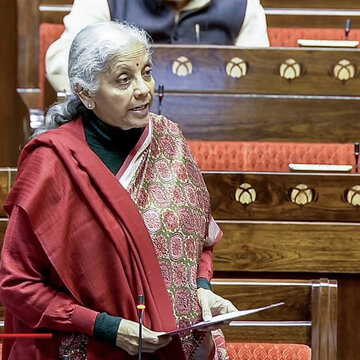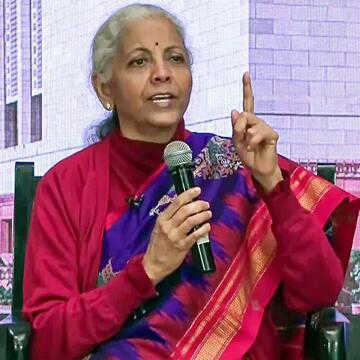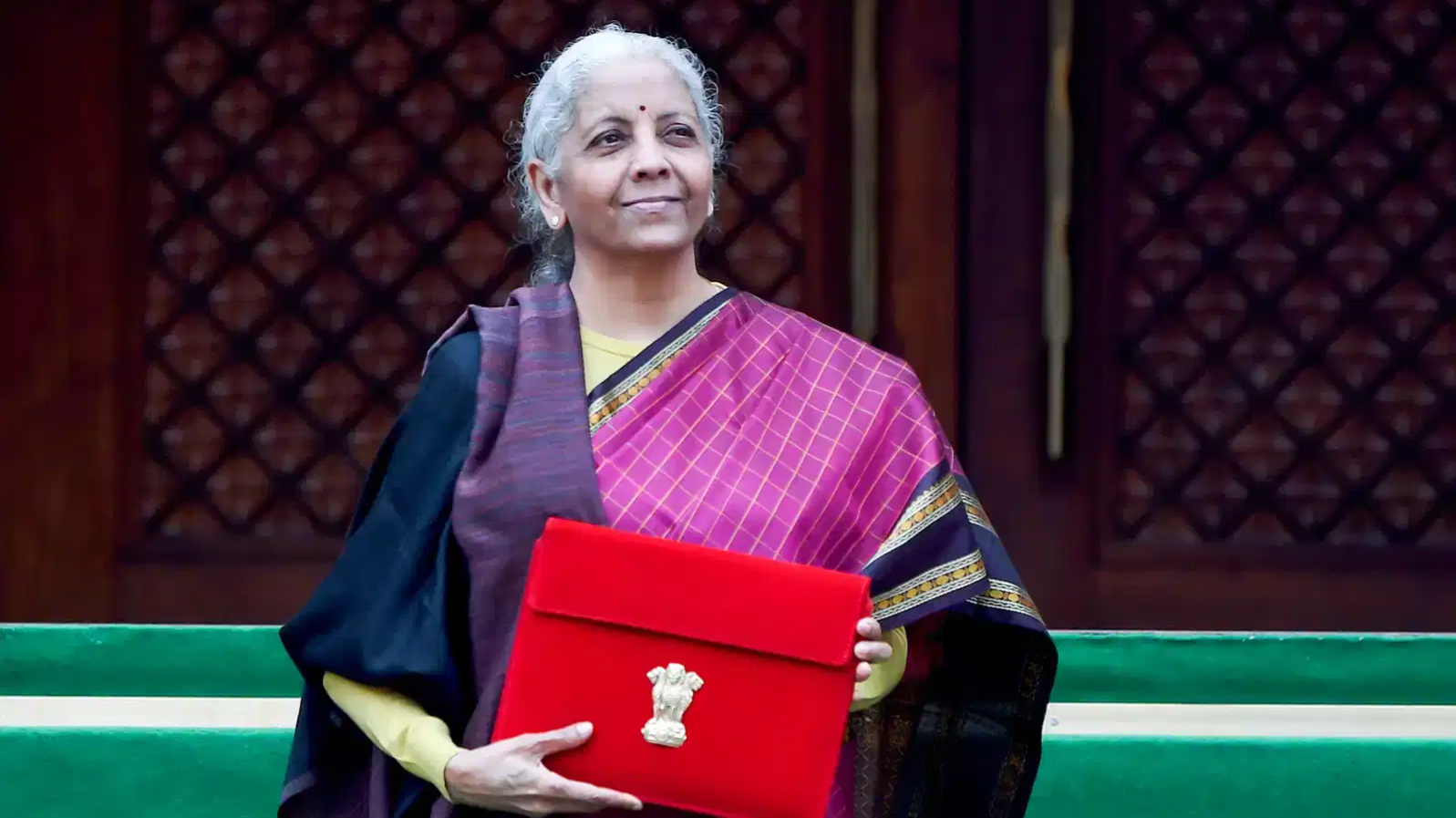
Finance Minister Nirmala Sitharaman will present the Union Budget 2026 on February 1 at a time when global trade is under pressure and domestic growth remains uneven. The budget will set out how the government plans to raise revenue and where it intends to spend public money in the coming financial year.
With India targeting faster growth and higher manufacturing output, the allocation of funds and the sources of revenue will be closely tracked. A breakdown of one rupee earned, and one rupee spent offers a clearer picture of fiscal priorities than headline figures alone.
Also Read | 'Budget inspired by Kartavya....': Finance Minister Nirmala Sitharaman starts off Budget 2026 in style
Where the government gets its money
Based on the structure of the previous Union Budget (2025), for every rupee collected by the central government:
39 paise came from direct taxes
22 paise from personal income tax
17 paise from corporate tax
27 paise came from indirect taxes
18 paise from GST
5 paise from excise duty
4 paise from customs duty
24 paise came from borrowings and other liabilities
9 paise came from non-tax revenue, including disinvestment
1 paise came from non-debt capital receipts
Tax collections remained the main source of revenue, while borrowings continued to account for nearly a quarter of government receipts.
How the government spends one rupee
On the expenditure side, the allocation of every rupee in the 2025 budget was as follows:
22 paise transferred to states as their share of taxes
20 paise spent on interest payments
16 paise on central sector schemes
8 paise on centrally sponsored schemes
8 paise on defence
8 paise on Finance Commission transfers
6 paise on subsidies
4 paise on pensions
8 paise on administrative and other expenses
Interest payments and transfers to states together accounted for more than 40 paise of every rupee spent.
Also Read | Union Budget 2026: Five key sectors likely to stay in focus today
What Budget 2026 will be judged on?
Budget 2026 is expected to maintain focus on capital expenditure while keeping the fiscal deficit in proper check. The balance between welfare spending, infrastructure investment and debt servicing will remain central to the government’s economic strategy.
How revenue is raised and how spending is prioritised will shape India’s fiscal position as it moves toward the end of the decade.