It was around 12:30 on a Monday afternoon. The early trends had already begun sketching a picture. Perhaps it was the anticipation of results or a quiet fear of unrest, but the streets were unusually sparse. At the Sinthee crossing in North Kolkata, a middle-aged couple sat in the backseat of an auto-rickshaw, engaged in a conversation that felt both ordinary and profound.
They were discussing the election results. The husband was attempting to reason out what could have led to such a dramatic setback for the Trinamool Congress. The woman, seemingly unassuming, responded, “A party that ruled for 34 years had to step down. Another, after 15 years, is losing like this. People create governments; governments don’t create people. If you underestimate people, this is what happens.”
ALSO READ| Mud thrown at Raj Chakraborty, ‘thief’ chants ring out as he leaves counting centre
Brief exchange now echoes across Bengal
Because what unfolded on Monday was nothing short of a political earthquake. Brushing aside almost every exit poll prediction, the BJP stormed past the double-century mark in West Bengal.
History, in hindsight, seems to offer clues. Like, in 2006, the Left Front under Buddhadeb Bhattacharjee secured a record 235 seats, only to collapse within five years. In 2021, Mamata Banerjee returned with 216 seats, appearing firmly entrenched. Yet, just like before, the inability to read public sentiment proved costly.
This time, the Trinamool’s campaign leaned heavily on narratives that branded the BJP as an “outsider party,” raised alarms over the Special Intensive Revision (SIR), which allegedly removed around 9 million names from voter rolls, and accused central agencies and forces of bias. But the electorate seemed to look beyond these claims.
Political analysts point out that this shift cannot be pinned to a single factor. It is the culmination of accumulated discontent, allegations of corruption, lack of industrial growth, shrinking employment opportunities, and the rise of local-level strongman culture. These were not new issues. They had been simmering for years. But this time, they ignited.
Many believe that the BJP’s persistent focus played a role in the result on the “infiltration” narrative. The claim that unchecked migration was altering Bengal’s demographic and political landscape was amplified consistently during the campaign. Combined with a strengthened grassroots works painstakingly built over time, particularly among sections of the Hindu middle and lower-middle classes.
ALSO READ| Are the Bengal election trends a symbol of public verdict or anger?
Numbers tell their own story
Compared to 2021, the Trinamool’s vote share dropped by roughly 7 percentage points to 40.8%, while the BJP’s rose by a similar margin to 45.52%. The Left and Congress saw only marginal changes.
Notably, high voter turnout added another dimension. Nearly 93% participation, far exceeding the previous record. While the Trinamool expected this surge to reflect anger over voter list revisions, analysts argue it was, instead, a broader expression of dissatisfaction with governance.
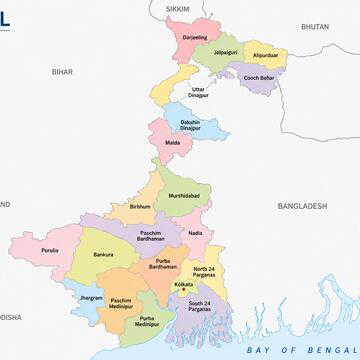
Even traditional support bases showed signs of drift. Minority votes, once firmly consolidated behind the Trinamool, appear to have fragmented in districts like Malda and Murshidabad. Meanwhile, communities like the Matuas, despite concerns over documentation and citizenship, retained faith in the BJP.
ALSO READ| Voting preparations expose water shortage, prompt quick fix at primary school in Medinipur
Welfare schemes, Kanyashree, Lakshmir Bhandar, and others had long been Trinamool’s strength. But this time, promises of increased benefits from the BJP, combined with a growing desire for stable employment among the youth, diluted their impact.
Mamata Banerjee’s enduring political persona now seemed to lose its edge against structural fatigue within the party and government.